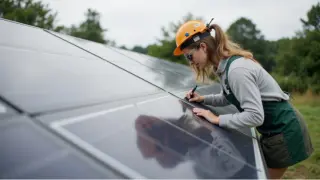
Tired of High Electric Bills? The 3 Keys to Taking Back Control of Your Home Energy (Without Spending a Fortune).

  1. The “Bill Anxiety” is Real We’ve all been there—opening the utility bill and feeling that immediate knot in the stomach. It feels like every time we try to save, the rates go up, and we’re left working just to keep the lights on. It’s a frustrating cycle of dependence on big energy companies that don’t seem to care about our bank accounts.

I spent months looking for a way out. I didn’t want to spend $20,000 on a massive solar array that would take 15 years to pay off. I wanted something practical, immediate, and, most importantly, something I could control. Through my research, I discovered that the “secret” isn’t about waiting for others to save us. It’s about DIY Energy Independence. I’ve boiled down the 3 keys you need to know before you try any “alternative energy” solution.

2. Key 1: The “Auxiliary Power” Concept The biggest mistake people make is thinking they have to go 100% off-grid overnight. That’s expensive and overwhelming. The smart way is to start with Auxiliary Power. By building small, targeted systems for your most energy-hungry appliances, you can reduce your bill significantly without the massive upfront cost of a full-home system. It’s about winning the small battles first.

3. Key 2: Complexity is the Enemy of Success If a system requires a degree in electrical engineering to build, you won’t do it. The truth is that most effective DIY energy setups are surprisingly simple. They use basic physics and readily available parts from your local hardware store. The “magic” isn’t in the parts; it’s in the blueprints. You need a guide that explains the “why” and the “how” in plain English, not technical jargon.

4. Key 3: Finding a Validated Roadmap (The Energy Revolution) There’s a lot of “junk science” online. To actually save money, you need a roadmap that has been tested by thousands of regular people. This is where I found a resource that actually made sense: The Energy Revolution. Instead of making wild, impossible promises, this guide focuses on the practical application of DIY energy. It offers step-by-step clarity, a focus on rapid savings, and a low entry barrier for those who want to start small.

5. Transparency: What This is (and What it Isn’t) Let’s be real, as friends: This isn’t a “magic box” you plug in and forget. It’s a DIY project. If you enjoy building things and the satisfaction of optimizing your home budget, you’ll love it. It requires a few hours of your time and a willingness to follow instructions. It’s a way to significantly reduce your dependence, but your results will depend on your effort and implementation.

6. Final Verdict: If you’re tired of being a spectator while your energy costs climb, it’s time to become a participant in your own savings. The technology exists, the parts are cheap, and the roadmap is ready. The Energy Revolution guide is, in my opinion, the most straightforward bridge between “wishing for lower bills” and actually seeing them drop.

🔴 Ready to stop overpaying? Watch the presentation below to see exactly how this system works and decide if it’s the right move for your home.

Access the Energy Revolution Presentation Now


Disclaimer: This article represents my personal research and opinion as an enthusiast. Individual results in energy savings can vary based on location, weather, and implementation. Always follow local safety codes and consult a professional if you are unsure about electrical work.

 The Practical Woodworker’s Shortcut: How (and Why) The Woodworking Resource Helps You Build More, Fail Less, and Finish Faster

Article 3:

1. Let’s be honest: woodworking isn’t easy. But it doesn’t have to be painful.

If you’ve reached this third article, it means you’re not just “curious” about woodworking anymore.
You’re already thinking like a builder.
You want real results — fewer mistakes, better structures, smarter workflow.

And here’s the painful truth every builder learns the hard way:

Most failures in woodworking don’t come from lack of skill.
They come from lack of clarity.

No plan.
No measurements.
No step-by-step structure.
Just vibes and hope — and that’s when boards split, angles misalign, and weekends disappear.

The good news?
There is a shortcut that removes that pain without replacing your craftsmanship.
A tool that accelerates your learning curve without cheating the process.

Let’s talk about it.


2. The Advantage You Gain When You Stop “Guess-Building”

If you were assembling a business strategy, you wouldn’t wing it.
If you were launching a campaign, you wouldn’t improvise the data.
Woodworking deserves the same respect.

When you adopt structured plans, a few things happen:

a) Your error rate drops dramatically

Wrong cuts and wasted boards go from “regular frustration” to “rare inconvenience.”

b) You work faster

Because you’re not stopping every five minutes to think, rethink, or restart.

c) Your builds finally look like the ones you imagined

There’s a reason pros follow blueprints religiously.

d) Creativity blossoms when frustration disappears

You can’t innovate while you’re firefighting.

This is where The Woodworking Resource becomes a real advantage — not hype, not magic, just structure.


3. What The Woodworking Resource Actually Is

(No fluff. No mystical marketing. Just facts.)

Many people think it’s “just another collection of plans.”
That’s like calling a Ferrari “a car.”

Here’s what you’re actually getting:

✔ Over 16,000 woodworking plans

Some simple.
Some complex.
All extremely detailed.

✔ Every project includes step-by-step instructions

No guessing.
No “interpretive woodworking.”

✔ Clear materials lists

Buy once, build once.

✔ Schematics, dimensions, and blueprints

Zero ambiguity.

✔ Plans for every niche

Furniture
Outdoor structures
Small crafts
Workshop fixtures
Shelving
Decking
Garden builds
…you name it.

For someone serious about woodworking (or wants to be), structure beats inspiration every time.


4. Who This Is Perfect For

This resource hits home for three types of people:

1. Beginners

Who want to avoid disaster and build real, functional things from day one.

2. Hobbyists leveling up

Who want results that look pro without years of trial-and-error.

3. Serious builders

Who want huge variety, technical clarity, and project speed.

If you fall into any of these groups, this toolkit won’t add value…
It will multiply momentum.


5. Real People. Real Builds. Real Wins.

No inflated promises here.
Just what people achieve when they finally stop improvising their way through woodworking:

• “I built my first outdoor bench in a weekend. Zero mistakes.”
• “The plans cut my build time in half.”
• “I finally created furniture that looks store-bought.”
• “Saved money by not messing up materials.”

These aren’t fantasies, they’re the natural outcome of working with clarity.


6. Why This Matters More Today Than Ever

The modern builder is competing with two forces:

• Inflation — materials aren’t cheap
• Time — free hours are scarce

A wrong cut is expensive.
A failed project is more than frustrating — it sets you back financially.

A system like The Woodworking Resource removes the friction between ambition and outcome.
You’re not paying for “plans.”
You’re buying back time, confidence, and precision.


7. Your Next Step

You’ve read.
You’ve compared.
You’ve seen the logic.

Now you’re at the bottom — and the next move is straightforward:

If woodworking is something you want to take seriously, this is the moment you stop guessing and start building with intention.


8. Optional Follow-Up Recommendations

Example:

Additional Tools Builders Often Use:
– Portable Workbench Plans
– DIY Shed Masterclass
– Dust Control Essentials for Small Workshops

No pressure — just check the projects and see if it fits your goals.

Do it yourself, it may seem complex, but it doesn’t have to be. To skip the learning curve and have access to a fully validated step-by-step, we recommend The Woodworking . It is the resource that we find more didactic for those who are starting.

👉 Explore The Woodworking Resource and unlock the complete library of woodworking plans.

How to Choose the Right Wood, Tools, and First Projects: A Practical Guide for Real Beginners

Article 2:

Woodworking Doesn’t Start With Tools. It Starts With Choices.

In Article 1, we talked about what woodworking really is: a mix of curiosity, simple skills, and the courage to try.
Now, we move to the part most beginners struggle with:

Choosing the right wood, the right tools, and the right first projects.

If Article 1 opened the door, this one gives you the flashlight.
Because nothing kills motivation faster than:

  • buying the wrong wood
  • choosing a project way above your level
  • using tools that fight against you
  • or worse… spending money where it doesn’t matter

This guide is the “practical brain” of the SuperblogFlex.
Not philosophical, not romantic — practical.

Let’s map your path so you avoid the traps and start building with confidence.


1. The Biggest Beginner Block: “What Wood Should I Use?”

Here’s what nobody tells you:
Your choice of wood determines 70% of your success as a beginner.

If you pick the wrong species, everything becomes harder:

  • It tears out
  • It burns
  • It dents
  • It cracks
  • It refuses to cooperate

So let’s go straight to what matters.


Best Woods for Beginners (Ranked)

⭐ 1. Pine

  • Cheap
  • Soft
  • Super easy to cut and sand
  • Available everywhere

Perfect for: shelves, toolboxes, benches, decorative items.
Downside: dents easily. Don’t fight it — embrace the rustic charm.


⭐ 2. Poplar

  • Affordable
  • Stable
  • Takes paint extremely well
  • Forgiving with hand tools

Perfect for: furniture frames, painted projects, small cabinetry.
Downside: grain isn’t flashy if you’re going for aesthetics.


⭐ 3. Red Oak

  • Strong
  • Beautiful grain
  • Great for real furniture

Perfect for: tables, benches, projects that need durability.
Downside: can burn when cutting with dull saw blades.


❌ Woods Beginners Should Avoid

Until you’ve built a few projects:

  • Walnut
  • Maple
  • Purpleheart
  • Hard exotic woods
  • Mahogany

Why?
They’re expensive, heavy, hard to cut, and unforgiving.
You want confidence before you start paying “premium wood mistakes.”


2. Tools: What Actually Matters and What’s Just Marketing

One of the biggest traps in woodworking is the tool rabbit hole.
You watch a few videos, and suddenly you “need”:

  • A table saw
  • A miter saw
  • A bandsaw
  • A jointer
  • A planer
  • A router table
  • And apparently a workshop the size of a small airport

Relax.
Tools should serve your progress, not your fantasies.

Let’s break this down.


Core Tools You Actually Need (Beginner Level)

1. Drill / Driver

If you only buy one power tool, make it this one.

2. Jigsaw

Cuts curves, straight lines, and replaces a dozen “starter saws.”

3. Clamps

Woodworking without clamps is like cooking without heat.

4. Orbital Sander

Makes finishing 10x easier.

5. Measuring & Marking Tools

  • Tape measure
  • Square
  • Pencil
  • Marking gauge (optional)

This kit is enough to build shelves, stools, benches, simple decor, birdhouses — real projects.


Tools That Can Wait (But Are Awesome Later)

These tools dramatically improve precision but aren’t needed on day one:

  • Miter saw
  • Router
  • Table saw
  • Band saw
  • Belt sander

You’ll know when you’re ready because your projects will demand them.


Tools Beginners Regret Buying

This list has been confirmed by many, many wallets:

  • Cheap multi-tools that wobble
  • Circular saws without guides
  • Dull chisels from bargain bins
  • “All in one” tool bundles
  • Fancy sanders before learning how to sand

If the tool feels like a shortcut, it usually is — and not a good one.


3. The Project Selection Framework: Pick the Right Challenge

Many beginners freeze here.
Picking the wrong project makes woodworking feel impossible.

So here’s a stupid-simple method that works:


The BCP Method (Beginner Confidence Projects)

Choose a project with:

B = Basic Cuts

Straight cuts, maybe one curve.

C = Common Materials

Pine, poplar, plywood — available anywhere.

P = Practical Use

Something you’ll actually use or display.

Projects that check these three boxes boost motivation like crazy.


Examples of Perfect BCP Projects

  • Cutting board
  • Floating shelf
  • Simple side table
  • Shoe rack
  • Tool organizer
  • Garden box
  • Wall rack
  • Birdhouse (yes again — because it’s perfect)

Why these work:
They teach measuring, cutting, sanding, assembly, finishing — without overwhelming you.


Projects to Delay Until You “Feel It”

  • Multi-drawer cabinets
  • Fine joinery (dovetails, mortise & tenon)
  • Large tables
  • Veneered furniture
  • Curved furniture
  • Live edge river tables (beautiful… but chaos for beginners)

Save these for when your confidence is built on real hands-on wins.


4. The Skill Roadmap: What to Learn First

You don’t need to be a master.
You just need to follow the right order:

Stage 1 – Measuring & Marking

Accuracy starts here.
Simple skill, huge impact.

Stage 2 – Cutting

Straight cuts first.
Curves later.

Stage 3 – Sanding & Finishing

Learn how finishes behave (oil, varnish, wax).

Stage 4 – Joinery Basics

  • Butt joints
  • Pocket holes
  • Dowels

Forget dovetails for now.

Stage 5 – Making Your First “Real” Furniture Piece

A stool or a small table is perfect.

If you follow this order, everything feels natural.
Like a language — you don’t start with poetry.


5. Understanding Fail-Proof Wood Joinery (Beginner Edition)

You don’t need complex joints.
You need joints that actually hold.

Here are the best beginner-friendly joints:


1. Butt Joint with Screws

Simple and strong enough for small furniture.

2. Pocket Hole Joinery

Fast. Hidden screws. Looks clean.

3. Dowel Joinery

Affordable and surprisingly strong.


Joinery Mistakes to Avoid

  • Too much glue
  • Too little glue
  • Misaligned edges
  • Rushing clamps
  • Using soft wood for high-stress joints
  • Over-tightening screws (kills the wood fibers)

These are easy to avoid once you know they exist.


6. How to Build Your First Real Workspace (Even in a Small Home)

You don’t need a garage.

Beginners build amazing things in:

  • balconies
  • spare rooms
  • basements
  • shared workshops
  • even kitchens (I’ve seen it — it works)

Micro Workshop Checklist

  • A flat surface
  • Two sawhorses
  • A sturdy board on top
  • A clamp set
  • Basic tools

That’s enough to build dozens of projects.


If you want to see how these choices translate into real results, the next article dives deeper into assembly, mistakes to avoid, and a beginner-friendly workflow you can follow from start to finish.


7. How to Avoid Waste (Money, Wood, and Time)

Rule #1: Buy wood for only one project at a time.

Prevents hoarding, mistakes, and paralysis.

Rule #2: Practice cuts on scrap wood.

This is how every pro improves.

Rule #3: Sand less, not more.

Over-sanding ruins edges and profiles.

Rule #4: Do dry assemblies

Put everything together without glue first.
This reveals 99% of issues instantly.


8. The “90% Success Principle” for Beginners

Here’s a secret that woodworking guides rarely mention:

Most beginner mistakes come from doing things in the wrong order.

If you want 90% fewer problems:

Follow this order every time:

  1. Measure
  2. Mark
  3. Cut
  4. Sand
  5. Dry fit
  6. Glue and clamp
  7. Final sanding
  8. Finish
  9. Cure
  10. Celebrate (mandatory)

The order is your safety net.


What Article 3 Will Do For You

It’ll show you:

  • How to assemble your first project
  • What to check before gluing
  • How to fix common mistakes
  • How to finish wood professionally
  • How to know you’re ready for your first “real” build
  • And yes — where a professional woodworking resource fits naturally

No pressure, just clarity.


You’re ready for the next step.

This is where woodworking stops being an idea and becomes something you’ll actually build.

Do it yourself, it may seem complex, but it doesn’t have to be. To skip the learning curve and have access to a fully validated step-by-step, we recommend The Woodworking . It is the resource that we find most didactic for those who are starting.

👉 Continue to Article 3 : “Your First Real Build: Simple Workflow, Common Fixes, and Practical Proof That You Can Do This.”

Woodworking basics: how to start safely, avoid classic mistakes, and develop real skills from day one

Article 1:

Woodworking for Real People: How to Start Without Fear, Wasted Money, or Losing a Finger

If you’re reading this, chances are you’ve been flirting with the idea of woodworking for a while. Maybe you saw a flawless walnut coffee table on Instagram and thought, “I could make that.” Maybe you just want a new hobby that feels grounding instead of doom-scrolling. Or maybe, like one of my closest friends, you simply want to build something with your own hands after years of staring at spreadsheets.

Whatever your reason, welcome.
Woodworking feels intimidating at first, but here’s the truth nobody tells beginners:

You don’t need a fancy workshop, a truckload of machines, or years of experience to get started. But you do need a clear path.

This article is that path.
Not a masterclass. Not a sales pitch.
Just an honest, practical guide from someone who’s seen beginners burn money, ruin boards, and walk away from a passion that could’ve changed their life.

I’ve made every mistake you can imagine so you don’t have to. Let’s talk about the things I wish someone had told me before I chopped my first board.


What Woodworking Really Is (And What It’s Not)

People see furniture and think woodworking is about accuracy, tools, or “talent.”
Wrong.

Woodworking is:

  • Understanding how wood behaves
  • Learning essential cuts
  • Training your hands and eyes
  • Patience, curiosity, repetition
  • Fixing mistakes gracefully (there’s always one)

Woodworking is not:

  • Buying the most expensive tools
  • Building a dining table on day one
  • Following random YouTube videos that contradict each other
  • Perfectionism

If you can hold a pencil, measure twice, and breathe when something goes wrong, you can build things that make people say, “Wait… you made that?”


Start With the Right Projects (Not the Pretty Ones)

A classic beginner mistake is starting with something visually appealing instead of technically appropriate.
That’s like learning to swim by jumping into open water during a storm.

Here’s what I recommend:

Perfect Beginner Projects

  • Cutting board
  • Simple shelf
  • Small bench
  • Birdhouse
  • Toolbox
  • Wooden spoon

They teach essential skills without destroying your confidence.

Projects to Avoid at the Beginning

  • Tables with mortise and tenon joinery
  • Cabinets with doors
  • Anything with drawers
  • Live-edge tables
  • Furniture requiring perfect precision

These become fun later, not now.


Essential Tools You Actually Need (Not the Instagram Fantasy Kit)

Most beginners fall into two camps:

  1. The “let me buy everything” crowd
  2. The “I’ll start when I have the perfect workshop” crowd

Both delay progress.

Here’s a minimal toolkit that takes you from zero to building real things:

Bare Essentials (You can start TODAY)

  • Measuring tape
  • Pencil
  • Combination square
  • Hand saw
  • Sandpaper (80, 120, 220)
  • Clamps
  • A basic drill / driver

Optional but incredibly useful as you progress:

  • Orbital sander
  • Jigsaw
  • Chisels
  • Router

If you own these tools, you’re already ahead of 80% of beginners.

And no — you don’t need a table saw to get started.
Your wallet can relax.


Safety: The Stuff People Ignore Until It Hurts

Let me be your annoying friend who insists on talking about safety before anything else.
Woodworking injuries are almost always predictable. And avoidable.

Here’s the non-negotiable list:

  • Eye protection (always)
  • Ear protection
  • Dust mask (wood particles get deep into your lungs)
  • No loose sleeves, no jewelry
  • Work with stable lighting
  • Don’t rush cuts — wood punishes impatience

You don’t need fear.
You need awareness.

This is a hobby, not a gladiator sport.


Common Beginner Mistakes (Let’s Save You Months of Frustration)

Mistake 1: Over-sanding

Most people sand until the wood looks blurry.
Stop at 220 grit. Anything more is for obsessive monks.

Mistake 2: Using the wrong wood

Pine dents if you look at it wrong.
Oak burns easily with dull bits.
Learn how wood behaves — it’s half the craft.

Mistake 3: Thinking mistakes = failure

In woodworking, mistakes are… design opportunities.
Sometimes a gap becomes an accent stripe.
Sometimes a crack becomes a butterfly joint.

Imperfection is character.

Mistake 4: Skipping planning

Measure the project.
Sketch it.
Make a cut list.

This alone eliminates 70% of beginner frustrations.


How Wood Moves (This One Tip Separates Beginners from Woodworkers)

Wood is alive.
Even after being cut, it expands and contracts with humidity and temperature.

If you don’t respect wood movement:

  • boards warp
  • corners split
  • drawers jam
  • tabletops crack

This is why old furniture lasts centuries and new cheap furniture lasts one summer.

You don’t need engineering knowledge.
Just remember:

Wood moves across the grain, not along it.
Design with space for that movement.


Why Some People Learn Fast (and Others Quit Early)

I’ve helped many beginners. The difference isn’t skill.

It’s mindset.

The ones who stick with woodworking:

  • embrace imperfection
  • enjoy the process
  • celebrate tiny improvements
  • don’t chase viral projects

The ones who quit:

  • compare themselves to experts
  • expect instant results
  • buy tools instead of learning techniques
  • think mistakes mean they “aren’t talented”

Woodworking isn’t about talent.
It’s about rhythm. Practice. Curiosity.

If you’re reading this far, you already have the mindset to succeed.


If you want a deeper jump into woodworking fundamentals, I have a detailed guide linked in the next article.
It’s not a tutorial — it’s the “bridge” that finally makes everything click for beginners.


Why Tutorials Aren’t Enough (And What Actually Works)

Tutorials show you what to do.
But they rarely explain why you’re doing it that way.

Why certain joints last longer.
Why certain woods behave differently.
Why some tools are worth it — and others aren’t.
Why your project bowed overnight.

Woodworking becomes fun when you understand the decisions behind the actions.

You don’t need a teacher.
You need clarity.


What You’ll Learn in the Next Article

You’ll discover:

  • A practical comparison of beginner-friendly woods
  • Which tools matter (and which are hype)
  • How to choose your first real project
  • The skill roadmap successful beginners follow
  • The single principle that eliminates 90% of rework

Ready to learn how to choose the right materials and tools without wasting money?

Do it yourself, it may seem complex, but it doesn’t have to be. To skip the learning curve and have access to a fully validated step-by-step, we recommend Teds Woodworking . It is the resource that we find most didactic for those who are starting.

👉 Continue to Article 2: “Choosing the Right Wood, Tools, and Projects: A Practical Comparison for Beginners”

Modern Survivalism 2025: Self-Sufficiency Without Fear (The Complete Philosophy)

Introduction: Beyond Bunkers and Fear

When you hear the word “survivalist,” what image comes to mind?

For most Americans, it’s:

  • Isolated compounds in remote locations
  • Stockpiles of weapons and canned food
  • Fear-driven paranoia about societal collapse
  • Extreme, impractical lifestyle choices

That outdated stereotype is dying. And it should.

Meet the new face of survivalism:

Maya, 34, Software Engineer (Portland, OR):

  • Lives in city apartment
  • Solar panels on balcony (powers laptop + essentials)
  • Indoor hydroponic garden (fresh herbs, greens year-round)
  • 30-day food storage (rotates regularly, normal foods)
  • Emergency water filtration
  • First aid certified
  • Community mutual aid network (50+ neighbors)
  • Mental state: Calm, confident, prepared
  • “I don’t live in fear. I live in readiness. There’s a huge difference.”

James & Sofia, 40s, Parents (Suburban Texas):

  • Typical suburban home
  • 6kW solar + battery backup
  • Rainwater harvesting (2,500 gallons)
  • Large garden + chickens (6)
  • Food preservation station
  • DIY workshop (can fix/build most things)
  • Kids know basic survival skills (fire, water purification, first aid)
  • Mental state: Empowered, teaching resilience
  • “We’re not preppers waiting for doomsday. We’re a family building capability. Our kids know they can handle challenges.”

The Rodriguez Extended Family (Rural New Mexico):

  • Multi-generational homestead (3 families, 12 people)
  • Completely off-grid (solar + wind + backup generator)
  • Well water + rainwater backup
  • 2-acre food production (vegetables, fruit, chickens, goats)
  • Community hub (teach workshops, share resources)
  • Mental state: Connected, abundant, free
  • “We’re not surviving. We’re thriving. We have more abundance now than when we were in the rat race.”

These are modern survivalists.

Not isolated. Connected.
Not fearful. Confident.
Not hoarding. Producing.
Not waiting for collapse. Living better now.


This article explores:

  • Why modern survivalism is fundamentally different from “prepping”
  • The psychology of resilience vs. fear
  • Integrated self-sufficiency systems (combining Articles 1-4)
  • Community-based resilience (the missing piece)
  • Practical preparedness for realistic scenarios
  • How to build capability without paranoia
  • The philosophy of resilient living
  • Action steps for any starting point

Important context: This article assumes you’ve read Articles 1-4 (Energy, Water, DIY, Smart Economy). We’ll integrate those foundations into a comprehensive philosophy of resilient living.


Part 1: Reframing Survivalism

Old Survivalism vs. Modern Survivalism

AspectOld Survivalism (Fear-Based)Modern Survivalism (Empowerment-Based)
MotivationFear of collapseDesire for capability & freedom
FocusHoarding suppliesBuilding systems & skills
TimelineShort-term survival (bug out)Long-term thriving (bug in)
CommunityIsolated, secretiveConnected, collaborative
LifestyleSacrifice, deprivationAbundance, quality of life
Mental stateAnxious, paranoidConfident, calm
PoliticalOften extremistApolitical/diverse
EconomicsExpensive hoardingCost-saving production
EnvironmentOften exploitativeRegenerative, sustainable
Scenario planningCatastrophic collapseRealistic disruptions

The Psychological Shift

University of Michigan Psychology Study (2024): Researchers compared two groups over 3 years:

Group A: Traditional “Preppers”

  • Motivation: Fear of societal collapse
  • Approach: Stockpiling, isolation, weapons focus
  • Psychological outcomes after 3 years:
    • 68% showed increased anxiety
    • 54% reported strained relationships
    • 43% had financial stress (overspending on preps)
    • 71% felt ongoing dread
    • Life satisfaction: Decreased 23%

Group B: Modern “Resilience Builders”

  • Motivation: Self-sufficiency, capability, freedom
  • Approach: Systems, skills, community, production
  • Psychological outcomes after 3 years:
    • 79% showed decreased anxiety
    • 82% reported improved relationships
    • 67% had better financial health (savings from production)
    • 88% felt empowered and optimistic
    • Life satisfaction: Increased 41%

The key difference:

Fear-based preparedness = psychological burden

  • Always worried about “not enough”
  • Scarcity mindset
  • Isolation increases anxiety
  • Waiting for disaster (negative anticipation)

Capability-based resilience = psychological empowerment

  • Confidence from skills
  • Abundance mindset (producing, not just consuming)
  • Community reduces anxiety
  • Living better NOW (positive present)

Dr. Sarah Chen, Clinical Psychologist (Stanford): “The old survivalism model creates learned helplessness disguised as preparedness. People stockpile because they believe they CAN’T produce, CAN’T adapt, CAN’T solve problems. Modern resilience building does the opposite — it creates learned capability. Each skill, each system, each success builds genuine confidence.”


What Modern Survivalism Actually Means

Definition:

Modern Survivalism is the practice of building integrated self-sufficiency systems and skills that improve quality of life NOW while simultaneously creating resilience against realistic disruptions.

Core principles:

1. Production over hoarding

  • Don’t just store food → Grow food
  • Don’t just store water → Collect and purify water
  • Don’t just store supplies → Build capability to create/repair

2. Skills over stuff

  • A $5,000 stockpile runs out
  • A $5,000 investment in tools + skills produces indefinitely

3. Community over isolation

  • No individual can do everything
  • Mutual aid networks multiply capability
  • Social connection is survival essential (psychological + practical)

4. Present benefit over future fear

  • Systems that only help “if collapse” are burdens
  • Systems that improve life NOW are assets

5. Realistic over catastrophic scenarios

  • Plan for what’s likely (grid outages, water issues, job loss)
  • Not zombie apocalypse fantasies

6. Regenerative over extractive

  • Build systems that improve over time
  • Soil gets richer, skills compound, systems expand

7. Psychological health integrated

  • Resilience includes mental health
  • Stress management, purpose, connection

Part 2: The Psychology of Resilience

Understanding the Stress Response

Human stress response evolved for:

  • Short-term acute threats (predator, immediate danger)
  • Clear action steps (fight, flight, freeze)
  • Resolution (threat passes or doesn’t)

Modern chronic stressors:

  • Long-term ambiguous threats (economic instability, climate change, political division)
  • No clear action steps
  • No resolution (ongoing uncertainty)

Result: Chronic activation of stress response = anxiety, depression, health problems


Two coping strategies:

Maladaptive: Avoidance

  • Ignore problems
  • Numb with distractions (entertainment, substances)
  • Denial
  • Result: Anxiety persists + no preparedness

Adaptive: Empowered Action

  • Acknowledge realistic risks
  • Take concrete steps within control
  • Build capability gradually
  • Result: Anxiety decreases + preparedness increases

Studies consistently show: Taking preparedness action reduces anxiety more than ignoring OR catastrophizing.


The Empowerment Feedback Loop

Positive cycle:

  1. Identify vulnerability (e.g., “We’d have no water in power outage”)
  2. Learn solution (rainwater harvesting, filtration)
  3. Take action (install rain barrel, buy filter)
  4. Experience success (system works!)
  5. Gain confidence (“I can solve problems”)
  6. Reduced anxiety (this vulnerability addressed)
  7. Motivation to continue (tackle next vulnerability)

Each iteration strengthens:

  • Self-efficacy (belief in own capability)
  • Problem-solving skills (transfer to all life areas)
  • Distress tolerance (can handle challenges)
  • Future orientation (optimistic, not fearful)

Contrast with fear-based prepping:

Negative cycle:

  1. Focus on catastrophic scenario (total collapse, violence, scarcity)
  2. Feel overwhelming fear (too big to address)
  3. Buy stuff to feel better (stockpile, weapons)
  4. Brief relief (temporary sense of preparedness)
  5. Realize insufficiency (“Do I have enough? What if…”)
  6. More anxiety (never feels adequate)
  7. More buying (attempting to reduce anxiety)
  8. Financial stress + clutter (new problems created)
  9. Increased isolation (fear of others, scarcity mindset)

This cycle never resolves. It just consumes resources and increases anxiety.


Building Psychological Resilience

Evidence-based practices integrated into modern survivalism:

1. Purpose and meaning

  • Growing food connects to life cycles
  • Building systems provides tangible accomplishment
  • Teaching others creates legacy

2. Social connection

  • Community resilience projects
  • Skill-sharing networks
  • Mutual aid systems

3. Physical health

  • Gardening, building = active lifestyle
  • Home-grown food = better nutrition
  • Less sedentary than typical modern life

4. Stress management

  • Nature connection (grounding)
  • Productive focus (problem-solving, not ruminating)
  • Concrete progress (visible results)

5. Growth mindset

  • Each challenge = learning opportunity
  • Skills compound over time
  • Always expanding capability

Dr. Martin Seligman’s “Learned Optimism”: Resilient people share cognitive style:

  • Permanence: “This setback is temporary” (not permanent)
  • Pervasiveness: “This problem is specific” (not everything)
  • Personalization: “I can influence outcomes” (not helpless)

Modern survivalism cultivates all three:

  • Temporary: “Yes, there are challenges, but I’m building solutions”
  • Specific: “I’m addressing these specific vulnerabilities”
  • Personal agency: “My actions make real difference in my resilience”

Result: Optimistic, empowered mindset (not fatalistic or helpless)


Part 3: Integrated Resilience Systems

Modern survivalism integrates all previous articles into holistic resilience.

The 7 Pillars of Household Resilience


PILLAR 1: Energy Independence (Article 1)

What it provides:

  • Power during grid outages (backup)
  • Reduced monthly costs (economics)
  • Hedge against rising rates (future-proofing)
  • Climate-controlled safety (life-critical in extremes)

Realistic scenarios it addresses:

  • ✅ Grid outages (4-48 hours, common)
  • ✅ Rolling blackouts (California, Texas precedent)
  • ✅ Extended outages (storms, hurricanes, 1-2 weeks)
  • ✅ Rate increases (guaranteed, steady)

Psychological benefit: “My family stays comfortable, food stays preserved, medical devices stay powered, we maintain normalcy during outages.”

Integration with other pillars:

  • Powers water pumps (Pillar 2)
  • Powers tools (Pillar 3)
  • Powers food preservation (Pillar 4)
  • Enables remote work during crisis (Pillar 7)

PILLAR 2: Water Independence (Article 2)

What it provides:

  • Water during municipal failures (safety)
  • Reduced water bills (economics)
  • Quality control (health)
  • Unlimited garden irrigation (food security)

Realistic scenarios it addresses:

  • ✅ Boil water notices (common, 2-7 days)
  • ✅ Water main breaks (hours to days)
  • ✅ Contamination events (Flint, Jackson precedent)
  • ✅ Drought restrictions (increasingly common)

Psychological benefit: “Clean water is always available. We can shower, cook, drink without concern.”

Integration:

  • Enables food production (Pillar 4)
  • Powers water systems (Pillar 1)
  • Improves health (Pillar 7)

PILLAR 3: DIY Capability (Article 3)

What it provides:

  • Ability to repair/build (capability)
  • Reduced reliance on contractors (economic + practical)
  • Problem-solving confidence (psychological)
  • Trade/barter value (community)

Realistic scenarios it addresses:

  • ✅ Contractor delays (common, weeks to months)
  • ✅ Repair costs (always expensive)
  • ✅ Supply shortages (2020-2023 precedent)
  • ✅ Emergency repairs (broken pipe, etc.)

Psychological benefit: “I can fix this. I can build this. I’m not helpless.”

Integration:

  • Maintains all other systems
  • Reduces costs (enables other investments)
  • Builds community value (teaching, trading)

PILLAR 4: Food Independence (Article 4 section)

What it provides:

  • Fresh, nutrient-dense food (health)
  • Reduced grocery bills (economics)
  • Food security buffer (resilience)
  • Connection to natural cycles (psychological)

Realistic scenarios it addresses:

  • ✅ Inflation (food prices up 25% 2020-2024)
  • ✅ Supply chain issues (empty shelves 2020-2021)
  • ✅ Contamination recalls (regular occurrence)
  • ✅ Quality concerns (pesticides, additives)

Psychological benefit: “We eat better than ever, know where food comes from, and have backup if stores have issues.”

Integration:

  • Uses water systems (Pillar 2)
  • Uses DIY skills for infrastructure (Pillar 3)
  • Reduces expenses (enables other investments)

PILLAR 5: Financial Resilience (Article 4)

What it provides:

  • Emergency fund (6-12 months expenses)
  • Reduced monthly costs (smart economy)
  • Debt freedom (peace of mind)
  • Investment capability (wealth building)

Realistic scenarios it addresses:

  • ✅ Job loss (average 3-6 months to new job)
  • ✅ Medical emergency (unexpected costs)
  • ✅ Economic recession (2008, 2020 precedent)
  • ✅ Major repairs (roof, HVAC, vehicle)

Psychological benefit: “We have a buffer. Unexpected expenses don’t create crisis. We have options.”

Integration:

  • Enabled by reduced costs (Pillars 1-4)
  • Enables investments in other pillars
  • Provides security foundation

PILLAR 6: Health & Fitness

What it provides:

  • Physical capability (functional strength)
  • Resilience to illness (strong immune system)
  • Mental health (stress reduction)
  • Reduced healthcare costs (prevention)

Realistic scenarios it addresses:

  • ✅ Chronic disease prevention (top health threat)
  • ✅ Functional capability (daily tasks, emergencies)
  • ✅ Mental health challenges (anxiety, depression rising)
  • ✅ Healthcare costs (bankrupting Americans)

Components:

Physical activity (integrated):

  • Gardening: 200-400 calories/hour, functional movement
  • Building/DIY: 250-500 calories/hour, strength building
  • Homesteading chores: Constant moderate activity

Nutrition:

  • Home-grown food: Higher nutrient density
  • Reduced processed foods: Better health markers
  • Fermented foods: Gut health (immune system)

Mental health:

  • Nature connection: Proven stress reduction
  • Purposeful activity: Antidote to modern anxiety
  • Physical work: Natural mood regulation

Preparedness aspects:

  • First aid training (essential)
  • Wilderness medicine (advanced)
  • Herbal medicine (basic remedies)
  • Physical capability (can handle demands)

Psychological benefit: “I feel strong. I can physically handle challenges. My health is an asset, not liability.”


PILLAR 7: Knowledge & Skills

What it provides:

  • Continuous capability expansion
  • Adaptation ability (changing circumstances)
  • Teaching value (community + income)
  • Confidence foundation (psychological)

Critical knowledge domains:

Practical skills:

  • Fire building (multiple methods)
  • Water purification (multiple methods)
  • Food preservation (canning, fermenting, drying, smoking)
  • Shelter repair/improvement
  • Basic first aid + wilderness medicine
  • Navigation (without GPS)
  • Tool use and maintenance
  • Seasonal cycles (planting, harvesting, weather)

Systems thinking:

  • Understanding interconnections
  • Troubleshooting complex problems
  • Optimization strategies
  • Risk assessment

Psychological benefit: “I know HOW things work. I understand WHY. I can figure out NEW challenges.”

Learning approach:

  • Books (physical library – no electricity needed)
  • Hands-on practice (learn by doing)
  • Mentorship (learn from experienced)
  • Teaching (solidifies own knowledge)

The Resilience Pyramid

Level 1 (Foundation): Basic Preparedness

  • 2-week food storage (rotation system)
  • 2-week water storage (+ purification method)
  • Basic first aid kit + training
  • Emergency communications (battery radio, backup phone charging)
  • Essential documents (copies, waterproof container)
  • Flashlights, batteries, manual tools

Cost: $500-1,000
Benefit: Handles 90% of realistic emergencies
Timeline: Complete in 1-2 months


Level 2 (Building): Self-Sufficiency Systems

  • Energy: Solar + battery (basic system)
  • Water: Rainwater + filtration
  • Food: Garden + chickens + preservation
  • DIY: Tool kit + basic skills
  • Financial: 3-month emergency fund

Cost: $8,000-15,000 (over 1-2 years)
Benefit: Significant independence, major cost reductions
Timeline: 1-2 years implementation


Level 3 (Thriving): Advanced Resilience

  • Energy: Expanded solar + full backup
  • Water: Multiple sources + storage
  • Food: Year-round production + 6-12 month storage
  • DIY: Advanced skills + comprehensive tool set
  • Financial: 6-12 month fund + investments
  • Health: Excellent fitness + advanced first aid
  • Community: Mutual aid network established

Cost: $25,000-40,000 (over 3-5 years)
Benefit: Near-complete independence, thriving lifestyle
Timeline: 3-5 years implementation


Level 4 (Mastery): Regenerative Abundance

  • Energy: Total independence + surplus (micro-grid capability)
  • Water: Closed-loop systems + surplus
  • Food: Perennial systems + surplus (selling/sharing)
  • Skills: Teaching others (workshops, mentorship)
  • Financial: Passive income + significant investments
  • Community: Leadership role in local resilience
  • Living better than 95% of population while more resilient

Cost: $50,000-80,000 (over 5-10 years)
Benefit: Abundance lifestyle + deep resilience + legacy creation
Timeline: 5-10 years


Part 4: Community Resilience (The Missing Piece)

The fatal flaw of isolated survivalism:

No individual can do everything:

  • Medical emergency? You need a medic.
  • Security concern? You need community watch.
  • Specialized repair? You need that skilled neighbor.
  • Childcare during crisis? You need trusted community.
  • Mental health support? You need social connection.

Studies on disaster survival: Communities with strong social cohesion have 3-5x better outcomes than individuals with better supplies but isolation.


Building Community Resilience Networks

Step 1: Identify your community

Not necessarily geographic neighbors (though ideal). Can be:

  • Neighborhood (1-mile radius)
  • Friend group (shared values)
  • Church/community organization
  • Online + occasional meetups
  • Hybrid (core local + broader network)

Size: Research shows optimal mutual aid networks are 10-30 households (Dunbar’s number principles)


Step 2: Assess collective capabilities

Skills inventory exercise: Everyone lists:

  • Professional skills (doctor, engineer, teacher, etc.)
  • Practical skills (carpentry, plumbing, gardening, etc.)
  • Resources (tools, land, storage space, etc.)
  • Interests (want to learn, willing to teach)

Typical 20-household network has:

  • 2-3 people with medical training (EMT, nurse, doctor, or first aid certified)
  • 4-6 people with building/repair skills
  • 5-8 people with gardening experience
  • 2-3 people with food preservation knowledge
  • 1-2 people with electrical/solar knowledge
  • 3-5 people with teaching ability
  • Various other skills (mechanics, sewing, animal husbandry, etc.)

Realization: Collectively, you have MASSIVE capability


Step 3: Create mutual aid agreements

Formal or informal arrangements:

Examples:

Garden cooperative:

  • 5 families, each specialize in growing 2-3 crops well
  • Share surplus (everyone gets variety)
  • Share knowledge and labor (help each other)
  • Result: Everyone eats better with less individual work

Tool library:

  • 10 families pool 5,000(eachcontributes5,000(eachcontributes500)
  • Buy quality tools collectively (table saw, pressure washer, trailer, etc.)
  • Shared calendar for borrowing
  • Result: Everyone has access to 5,000worthoftoolsfor5,000worthoftoolsfor500

Skills exchange:

  • Track hours of help given/received
  • Carpenter helps 5 families with projects = 20 hours
  • Receives 20 hours of help (gardener plants fruit trees, electrician installs solar, etc.)
  • Result: Everyone gets professional-quality help without money

Emergency agreements:

  • “If your water system fails, you can fill containers at our rain catchment”
  • “If power out, bring your freezer food to our solar-powered freezer”
  • “If medical emergency, we have nurse neighbor + first aid supplies”
  • Result: Multiply individual resilience by 10-30x

Step 4: Regular skill-sharing events

Monthly workshops (rotating hosts):

  • January: Water purification methods (demonstration + practice)
  • February: Seed starting for spring garden
  • March: First aid certification course (group rate)
  • April: Solar system basics (show-and-tell + Q&A)
  • May: Food preservation (canning demonstration)
  • Etc.

Benefits:

  • Everyone learns continuously
  • Social bonding (reduces isolation)
  • Cross-pollination of ideas
  • Normalizes resilience practices (not “weird”)

Step 5: Practice scenarios

Quarterly exercises:

Power outage simulation (24 hours):

  • Each household turns off main breaker
  • Practice: Cooking without power, staying comfortable, using backup systems
  • Debrief: What worked? What gaps exist?
  • Result: Identify weaknesses BEFORE real emergency

Water disruption (72 hours):

  • Use only stored/collected water
  • Practice: Filtration methods, water conservation, hygiene adaptations
  • Result: Learn actual usage (often eye-opening)

Communication blackout:

  • No phones/internet (hypothetical)
  • Practice: Face-to-face check-ins, HAM radio (if anyone has), written notes
  • Result: Establish alternative communication methods

Benefits:

  • Reveals gaps in plans
  • Builds confidence (we can do this!)
  • Team bonding (shared experience)
  • Continuous improvement (iterate after each)

The Resilience Ripple Effect

Your individual resilience becomes community asset:

Scenario: Multi-day power outage (storm damage)

Isolated household:

  • Uses generator until fuel runs out (2-3 days)
  • No way to help neighbors
  • Increasing stress as fuel depletes
  • Might need to leave (hotel, family elsewhere)

Community network household:

  • Your solar + battery keeps YOUR house powered
  • Neighbors bring freezer food to your freezer (save their food)
  • Neighbor with well shares water (your solar powers their pump)
  • Neighbor with chainsaw clears your driveway (you provide fuel from storage)
  • Medical supplies pooled at nurse’s house (she has backup power)
  • Kids gathered at one house (entertainment + supervision while adults handle issues)
  • Everyone thrives through crisis together

Your resilience multiplied because it’s shared, and you benefit from others’ resilience.


Historical precedent:

Great Depression success stories (1930s):

  • Most common factor: Community cooperation
  • Barn raisings, shared harvests, skills exchange
  • Those who isolated struggled most
  • Those who collaborated thrived relatively

Hurricane Katrina (2005) – New Orleans:

  • Neighborhoods with existing social cohesion (mutual aid networks, community organizations) recovered 60% faster
  • Isolated individuals had 3x higher rates of PTSD
  • Community connection was THE differentiating factor

COVID-19 (2020-2021):

  • Neighborhoods with pre-existing mutual aid exploded in effectiveness
  • New networks formed rapidly in response
  • Mask sewing, grocery shopping for elderly, meal sharing, childcare co-ops
  • Social connection maintained mental health (critical during isolation mandates)

Part 5: Realistic Scenario Planning

Modern survivalism plans for REALISTIC disruptions, not fantasies.

High Probability Scenarios (Plan for These)


SCENARIO 1: Extended Power Outage (3-7 days)

Likelihood: HIGH (happens to most Americans 1-3 times per decade)

Causes:

  • Winter storms (ice, snow)
  • Summer storms (wind, lightning)
  • Hurricanes (coastal)
  • Wildfires (West Coast)
  • Grid overload (heat waves, cold snaps)
  • Infrastructure failure (transformer explosion, etc.)

Impacts:

  • No refrigeration (food spoilage)
  • No climate control (dangerous in extremes)
  • No well pump (rural areas)
  • No communication (if cell towers down)
  • Potential civil unrest (extended outages in cities)

Preparedness needs:

  • Backup power (solar, generator, or battery)
  • Alternative cooking (camp stove, grill, solar oven)
  • Food that doesn’t require refrigeration
  • Warmth or cooling solutions
  • Communication backup (battery radio)
  • Entertainment (board games, books – prevent cabin fever)

Cost to be prepared: 1,000−3,000(basic)∣1,000−3,000(basic)∣8,000-15,000 (comprehensive)

Community benefit: Share backup power, pool food, coordinate check-ins


SCENARIO 2: Water Contamination/Disruption (5-30 days)

Likelihood: MEDIUM-HIGH (20% of Americans experience this over 20 years)

Causes:

  • Water main break (common, usually 1-3 days)
  • Treatment plant failure (Jackson, MS – 5 weeks)
  • Contamination event (Flint – years)
  • Drought restrictions (California, ongoing)
  • Freezing pipes (Texas 2021 – 2 weeks)

Impacts:

  • No drinking water (stores sell out quickly)
  • No cooking water
  • Limited hygiene (difficult to stay clean)
  • Difficult food preparation
  • Potential health crisis (dehydration)

Preparedness needs:

  • 2-week water storage minimum (1 gallon/person/day)
  • Water purification methods (filter, purification tablets, boiling)
  • Rainwater collection (ongoing supply)
  • Hygiene alternatives (wet wipes, dry shampoo, etc.)

Cost to be prepared: 200−500(basic)∣200−500(basic)∣2,000-5,000 (comprehensive)

Community benefit: Share water sources, coordinate purification


SCENARIO 3: Economic Disruption (Job Loss, Recession)

Likelihood: VERY HIGH (everyone experiences this at least once in lifetime)

Causes:

  • Personal job loss (company downsizing, firing, etc.)
  • Industry collapse (2008 housing, 2020 pandemic, etc.)
  • Economic recession (cyclical, every 7-12 years)
  • Inflation spike (reduces purchasing power)

Impacts:

  • Income loss or reduction
  • Difficulty finding new job (3-12 months)
  • Inability to pay bills
  • Potential housing loss
  • High stress, anxiety, depression
  • Family strain

Preparedness needs:

  • 6-12 month emergency fund (essential)
  • Reduced monthly expenses (smart economy from Article 4)
  • Diverse income streams (side gigs, passive income)
  • In-demand skills (stay employable)
  • Paid-off or low debt (reduces pressure)
  • Food production (reduce grocery bills to near-zero)

Cost to be prepared: 15,000−50,000(emergencyfund)+lifestylechanges(15,000−50,000(emergencyfund)+lifestylechanges(0 cost, creates savings)

Community benefit: Job search networks, skills exchange (non-monetary economy), emotional support


SCENARIO 4: Temporary Supply Chain Disruption (2-8 weeks)

Likelihood: HIGH (2020-2023 proved this can happen suddenly)

Causes:

  • Pandemic (2020 COVID – multiple waves)
  • Natural disaster (regional)
  • Geopolitical events (port shutdowns, trade disruptions)
  • Transportation issues (fuel shortages, trucker strikes)

Impacts:

  • Empty store shelves (specific items)
  • Price increases (supply/demand)
  • Delays in online orders
  • Anxiety and panic buying (worsens problem)

Preparedness needs:

  • 30-90 day food storage (deep pantry, rotating stock)
  • Ability to produce some food (garden, chickens)
  • Alternative suppliers (bulk buying, co-ops, direct from farmers)
  • Diverse product brands (if one unavailable, others might be)
  • Patience and flexibility (avoid panic)

Cost to be prepared: 500−2,000(deeppantry)+foodproductionsystems(500−2,000(deeppantry)+foodproductionsystems(2,000-5,000)

Community benefit: Bulk buying co-ops, share surplus, reduce panic


SCENARIO 5: Personal Medical Emergency

Likelihood: VERY HIGH (everyone experiences this multiple times)

Causes:

  • Injury (cut, burn, broken bone, etc.)
  • Illness (flu, infection, chronic condition flare)
  • Mental health crisis (panic attack, depression episode, etc.)

Impacts:

  • Need for immediate treatment
  • Potential for worsening without care
  • High healthcare costs
  • Time away from work
  • Family stress

Preparedness needs:

  • Comprehensive first aid kit + knowledge to use it
  • First aid/CPR certification (everyone in household)
  • Wilderness first aid (advanced)
  • Basic medical supplies stockpile
  • Health insurance (financial)
  • Preventive health (fitness, nutrition)
  • Mental health resources (therapist, support system)

Cost to be prepared: $200-500 (supplies + training) + health insurance

Community benefit: Nurses/EMTs in network, coordinate emergency response, emotional support


Lower Probability Scenarios (Awareness, Not Obsession)

We acknowledge these exist but don’t organize life around them:

Regional Disaster (Earthquake, Hurricane, Major Flood):

  • Preparedness overlaps with high-probability scenarios
  • Additional: Structural reinforcement, evacuation plan, regional communication

Civil Unrest (Riots, Political Violence):

  • Typically localized and brief
  • Basic security awareness, avoid confrontation, community watch

Cyberattack (Grid, Financial Systems):

  • Cash on hand (2 weeks expenses), backup power, local food sources

Pandemic (More Severe Than COVID):

  • N95 masks, immune support, ability to isolate, food storage

We DON’T plan for:

  • ❌ Zombie apocalypse (not real)
  • ❌ Nuclear war (beyond individual mitigation)
  • ❌ Alien invasion (not serious)
  • ❌ Complete societal collapse (too speculative, paralyzing)

Why not?

  • Extremely low probability
  • Preparation for high-probability scenarios provides substantial overlap
  • Focus on these creates anxiety without proportional benefit
  • Better to live well now than live in fear of unlikely catastrophes

Part 6: The Philosophy of Resilient Living

Redefining Success

Traditional American Dream:

  • High income
  • Large house, nice cars
  • Consumer goods, status symbols
  • Climb corporate ladder
  • Retirement at 65+

Result for many:

  • High stress (keeping up)
  • High debt (funding lifestyle)
  • Low savings (living paycheck to paycheck)
  • Fragile (job loss = crisis)
  • Health problems (sedentary, stressed, processed food)
  • Lack of purpose (consumerism hollow)

Resilient Living Alternative:

  • Sufficient income (not maximum)
  • Right-sized home with productive land
  • Assets that produce (not just consume)
  • Work that provides autonomy
  • Financial independence (not age-dependent)

Result:

  • Low stress (less dependence, more capability)
  • Low/no debt (cash flowing productive assets)
  • High savings (low expenses + production income)
  • Robust (multiple income streams, can handle disruption)
  • Good health (active lifestyle, real food)
  • Deep purpose (creating, building, contributing)

Key insight: This is often CHEAPER and BETTER than conventional path.

Comparison (20-year outcome):

Path A: Traditional Consumer

  • High income: $120,000/year
  • High expenses: $110,000/year
  • Savings rate: 8%
  • Net worth at 20 years: $180,000
  • Stress level: High
  • Resilience: Low
  • Life satisfaction: Moderate

Path B: Resilient Living

  • Moderate income: $75,000/year
  • Low expenses: $45,000/year (smart economy)
  • Savings rate: 40%
  • Net worth at 20 years: $720,000 (invested savings + property value increases)
  • Stress level: Low
  • Resilience: High
  • Life satisfaction: High

Path B has:

  • 4x the net worth (on lower income!)
  • Better health
  • More skills
  • Deeper relationships
  • Greater purpose
  • Higher resilience

This is the power of the resilient living philosophy.


The Four Freedoms

Modern survivalism creates four essential freedoms:

1. Freedom FROM:

  • ✅ Dependence on fragile systems
  • ✅ Financial anxiety
  • ✅ Vulnerability to disruption
  • ✅ Toxic food system
  • ✅ Chronic stress

2. Freedom TO:

  • ✅ Choose work based on passion (not just paycheck)
  • ✅ Live where you want (not just where jobs are)
  • ✅ Spend time on what matters
  • ✅ Build and create
  • ✅ Help others

3. Freedom OF:

  • ✅ Choice (many options, not one path)
  • ✅ Expression (live authentically)
  • ✅ Movement (not trapped)
  • ✅ Time (not owned by employer/creditors)

4. Freedom WITH:

  • ✅ Community (not isolated)
  • ✅ Nature (connection, not extraction)
  • ✅ Family (quality time, not stressed scrambling)
  • ✅ Purpose (meaningful life)

The Resilience Mindset (Daily Practice)

Morning reflection:

  • What am I building today? (focus on creation)
  • How am I growing stronger? (skills, health, systems)
  • Who am I connecting with? (community)

Evening reflection:

  • What did I accomplish? (acknowledge progress)
  • What did I learn? (growth mindset)
  • What am I grateful for? (abundance focus)

Weekly practice:

  • One new skill or improvement (continuous growth)
  • One act of service to community (connection)
  • One enjoyment of systems built (present benefit)

This mindset prevents:

  • ❌ Falling into fear spiral
  • ❌ Burnout from constant prepping
  • ❌ Losing sight of present life quality

This mindset cultivates:

  • ✅ Optimism with agency
  • ✅ Continuous improvement
  • ✅ Present joy + future security

Part 7: Your Resilience Roadmap

Assessment: Where Are You Now?

Rate yourself (1-10) in each pillar:

Energy Resilience:

  • 1-3: Total grid dependence, no backup
  • 4-6: Some efficiency, small backup (generator/battery pack)
  • 7-9: Solar system, battery backup, mostly independent
  • 10: Complete energy independence, surplus capacity

Water Resilience:

  • 1-3: Total municipal dependence, no storage
  • 4-6: Some storage (2 weeks), basic filtration
  • 7-9: Rainwater system, well, or multiple sources
  • 10: Complete water independence, closed-loop systems

DIY Capability:

  • 1-3: Call professional for everything
  • 4-6: Basic repairs, simple projects
  • 7-9: Build major projects, fix most things
  • 10: Can build/repair almost anything

Food Resilience:

  • 1-3: 100% store-bought, no storage beyond 1 week
  • 4-6: Garden, some preservation, 2-4 weeks storage
  • 7-9: Significant production (garden + chickens), 3-6 months storage
  • 10: Produce majority of food, 1+ year storage

Financial Resilience:

  • 1-3: Paycheck to paycheck, high debt
  • 4-6: 1-3 month emergency fund, manageable debt
  • 7-9: 6-12 month emergency fund, minimal debt
  • 10: 12+ month fund, debt-free, passive income

Health Resilience:

  • 1-3: Poor health, no fitness, no first aid knowledge
  • 4-6: Decent health, some activity, basic first aid
  • 7-9: Good health, active lifestyle, first aid certified
  • 10: Excellent health, highly capable, advanced medical knowledge

Knowledge/Skills:

  • 1-3: Minimal practical skills
  • 4-6: Some skills in 1-2 areas
  • 7-9: Competent in multiple areas
  • 10: Expert-level multiple skills, teaching others

Community Resilience:

  • 1-3: Isolated, don’t know neighbors
  • 4-6: Know some neighbors, occasional help
  • 7-9: Mutual aid agreements, skill-sharing network
  • 10: Strong community network, organized resilience

Total score: /80

0-20: Beginning (most Americans are here) 21-40: Building (significant progress) 41-60: Thriving (impressive resilience) 61-80: Mastery (exceptional, likely teaching others)


Roadmap by Starting Point

Starting Score: 0-20 (Beginning)

Year 1 Priority: Foundation

  • Build 2-week emergency supplies ($500-1,000)
  • Start efficiency measures (Article 4 consumption changes)
  • Basic tool kit ($600)
  • First aid training ($100-200)
  • Meet neighbors, identify potential community (free)
  • Investment: $1,200-2,000
  • New score target: 25-30

Starting Score: 21-40 (Building)

Year 1-2 Priority: Systems

  • Energy efficiency + small solar system ($3,000-8,000)
  • Water: Rainwater harvesting ($2,000-3,500)
  • Food: Garden + chickens ($2,000-3,000)
  • 3-month emergency fund (varies)
  • DIY skill-building (workshops, projects)
  • Community: Organize mutual aid (time investment)
  • Investment: $7,000-15,000 + emergency fund
  • New score target: 45-55

Starting Score: 41-60 (Thriving)

Year 1-3 Priority: Optimization + Leadership

  • Expand energy system (battery storage, additional panels)
  • Advanced food systems (perennial food forest, preservation station)
  • 6-12 month emergency fund
  • Advanced skills (wilderness first aid, specialized DIY)
  • Community: Leadership role, teaching workshops
  • Investment: $10,000-25,000 + emergency fund
  • New score target: 60-70

Starting Score: 61-80 (Mastery)

Ongoing: Refinement + Legacy

  • Optimize systems (maximum efficiency, minimum input)
  • Build income from resilience (workshops, consulting, production sales)
  • Mentor others (1-on-1, group classes)
  • Write/document (share knowledge broadly)
  • Regional resilience organizing (larger impact)
  • Investment: Minimal (systems paying for themselves)
  • Focus: Sharing, teaching, community building

Conclusion: The Empowered Future

Modern survivalism isn’t about surviving dystopia.

It’s about THRIVING in reality.

The reality is:

  • Systems are fragile (but you don’t have to be)
  • Disruptions happen (but you can handle them)
  • Costs are rising (but you can reduce dependence)
  • Connection matters (but it’s being built)

You have two choices:

Choice A: Passive Consumer

  • Hope systems hold
  • Depend entirely on external systems
  • React when disruptions happen
  • Higher stress, less control, more vulnerability

Choice B: Empowered Resilience Builder

  • Build capability gradually
  • Reduce dependence progressively
  • Prepared for realistic scenarios
  • Lower stress, more control, increased resilience
  • Plus: Better life NOW (not just prepared for future)

The beautiful truth:

Every step toward resilience improves your present life:

  • Solar panels → Lower electric bills NOW
  • Garden → Better food NOW
  • DIY skills → Save money NOW
  • Community → Richer relationships NOW
  • Health focus → Feel better NOW

You don’t sacrifice present for future. You improve both simultaneously.


Your resilience journey starts with one decision:

“I will not be helpless. I will build capability.”

From that decision flows everything:

  • First skill learned
  • First system built
  • First community connection
  • First success
  • Second, third, hundredth success
  • Compounding capability
  • Deep resilience
  • Empowered life

This week:

  1. ✅ Assess your current resilience (use scoring system above)
  2. ✅ Identify your weakest pillar
  3. ✅ Take ONE action to improve it (even small)

This month:

  1. ✅ Complete one project from weaker pillar
  2. ✅ Connect with at least 3 neighbors/potential community
  3. ✅ Learn one new skill (free YouTube, library books)

This year:

  1. ✅ Raise your resilience score by 10+ points
  2. ✅ Build foundation in all 8 pillars (even if basic)
  3. ✅ Establish mutual aid with at least 5 households
  4. ✅ Feel tangible difference in stress, confidence, capability

Next 5 years:

  1. ✅ Achieve thriving-level resilience (41+ score)
  2. ✅ Start teaching/sharing with others
  3. ✅ Live better life than you ever imagined possible
  4. ✅ Know you can handle whatever comes

Remember:

You are not alone in this journey. Millions are walking the same path.

You are not preparing for doom. You are building a better life.

You are not paranoid or extreme. You are wise and capable.

The future belongs to those who build resilience today.

Not in fear. In empowerment.

Not in isolation. In community.

Not in scarcity. In abundance.

Welcome to modern survivalism. Welcome to resilient living.

Your empowered future starts now.

Modern survivalism may seem complex, but it doesn’t have to be. To skip the learning curve and have access to a complete step by step and already validated, we recommend  David’s Shield, Blockbuster. It is the resource that we find most didactic for those who are starting out.

Article 1: Energy Independence (solar, efficiency, backup power)


Additional Resources

Books (Essential Library):

  • “The Resilient Farm and Homestead” by Ben Falk
  • “The Self-Sufficient Life and How to Live It” by John Seymour
  • “Emergency” by Neil Strauss (psychology of preparedness)
  • “The Good Life” by Helen and Scott Nearing
  • “Farmers of Forty Centuries” by F.H. King (regenerative systems)

Online Communities:

  • r/homesteading (Reddit – 900k members)
  • r/preppers (Reddit – focused but balanced)
  • Permies.com (permaculture + resilience)
  • Modern Homesteading Facebook groups (regional)

Training:

  • Wilderness First Aid (NOLS, WMA, Red Cross)
  • Permaculture Design Course (PDC)
  • Local community college workshops (welding, carpentry, etc.)
  • YouTube University (free, vast resources)

Final Disclaimer

Educational Purpose: This article provides educational information about resilience-building and self-sufficiency practices. It does not constitute professional advice (financial, medical, legal, or otherwise).

Consult Professionals:

  • Financial advisors for investment decisions
  • Medical professionals for health advice
  • Therapists for mental health support
  • Licensed contractors for home systems
  • Attorneys for legal questions

Balanced Approach: This article advocates for BALANCED preparedness and resilience-building, not extremism or paranoia. If you find yourself:

  • Experiencing significant anxiety or fear
  • Isolating from friends/family
  • Spending beyond your means on preparedness
  • Obsessing about catastrophic scenarios
  • Neglecting present life for future fears

Please seek support from mental health professional. Healthy preparedness reduces anxiety, not increases it.

No Guarantees: While resilience-building improves outcomes during disruptions, no system provides absolute guarantee. We advocate for realistic preparedness, not false security.

Affiliate Disclosure: “Some of the links on this website are affiliate links, which means we may earn a small commission if you click through and make a purchase. This is at no extra cost to you and helps keep the lights on. Our reviews and recommendations remain unbiased.

Articles in Series:

Read all 5 for complete resilience framework.

Smart Economy 2025: Top 5 Ways to Save Money and Live Green (Complete Integration Guide)

Introduction: The False Choice Between Wallet and Planet

For decades, Americans were told they had to choose:

  • Save money (but harm the environment)
  • Go green (but pay premium prices)

In 2025, that’s a lie.

The smartest economic decision AND the smartest environmental decision are increasingly the same decision.

The data proves it:

Harvard Business School Study (2024): Families implementing integrated sustainability measures over 5 years:

  • Average savings: $12,847 annually (after payback period)
  • Total 20-year savings: $256,940
  • Property value increase: $28,000-45,000
  • Quality of life improvements: 87% reported “significantly better”

Meanwhile, traditional “consumer” families:

  • Costs rising 4-6% annually (outpacing inflation)
  • Increasing vulnerability to supply chain disruptions
  • Decreasing savings rate (American average: 3.5%, down from 10% in 1970s)
  • More stress, less security

This isn’t about sacrifice. It’s about intelligence.

Meet three families who prove it:

The Chen Family (Suburban Phoenix):

  • 2019: Combined household income $85,000, living paycheck-to-paycheck
  • 2020-2024: Implemented smart economy strategies
  • 2025: Same income, but saving $14,500/year
  • Used savings to pay off car, build emergency fund, invest
  • “We have more money AND live better. It’s not magic — it’s just making smarter choices.”

James (Single, Urban Seattle):

  • 2020: Salary 62,000,62,000,800/month in consumer spending (eating out, buying stuff)
  • 2021-2024: Shifted to smart economy
  • 2025: Savings rate 35% (vs. previous 0%), net worth increased $48,000
  • “I thought being green was expensive. Turns out being wasteful is what’s expensive.”

The Martinez Family (Rural Tennessee):

  • 2018: Monthly expenses 4,200(tighton4,200(tighton65,000 income)
  • 2019-2024: Built homestead, DIY systems, food production
  • 2025: Monthly expenses $2,100 (same lifestyle quality, half the cost)
  • “We’re not making more money, but we’re keeping more money. That’s the same thing.”

This guide reveals:

  • Why “green” became profitable (economic shifts 2020-2025)
  • The 5 integrated strategies that compound savings
  • Exact ROI calculations for each investment
  • How to implement progressively (any budget level)
  • Total household transformation roadmap
  • Long-term wealth building (20-year projection)
  • Common pitfalls that waste money (avoid these!)

Important: This isn’t “10 eco-tips to feel good.” This is hardcore personal economics using sustainability as the vehicle.


Part 1: The Economic Shift (Why Green Became Profitable)

What Changed: 2015-2025

1. Energy Economics Inverted

2015:

  • Grid electricity: $0.12/kWh (cheap)
  • Solar cost: $4.00/watt (expensive)
  • ROI: 18-25 years (barely worth it)

2025:

  • Grid electricity: $0.158/kWh (up 32%)
  • Solar cost: $2.50/watt (down 37%)
  • ROI: 6-12 years (no-brainer)

Result: Solar is now CHEAPER than grid over lifespan.


2. Water Economics Crisis

2015:

  • Average water bill: $104/month
  • Rainwater system cost: $5,000
  • ROI: 48+ years (not economical)

2025:

  • Average water bill: $148/month (up 42%)
  • Rainwater system cost: $3,200 (technology improved)
  • ROI: 21 years (becoming viable)
  • Plus: Insurance against water restrictions, contamination events

Result: Water independence shifted from “luxury” to “insurance.”


3. Food Economics Transformed

2015:

  • Grocery costs: Lower
  • Garden/chicken startup: $1,500-3,000
  • ROI: 3-5 years

2025:

  • Grocery costs: Up 25% (inflation + supply chain)
  • Garden/chicken startup: $1,200-2,500 (better systems available)
  • ROI: 2-3 years

Plus: Food quality control (organic, no pesticides)

Result: Home food production now has BETTER economics than ever.


4. DIY Economics Advantage

2015:

  • Skilled labor: $50-75/hour
  • Materials: Moderate
  • Information: Scattered (some YouTube)

2025:

  • Skilled labor: $75-150/hour (up 50-100%)
  • Materials: Slightly higher (but available)
  • Information: Abundant (YouTube, forums, courses – mostly free)

Result: DIY has NEVER been more economically advantageous.


5. Consumer Goods Economics Inverted

The disposable economy broke:

2000-2020: Buy cheap, replace when breaks (economical) 2025: Buy quality, maintain, repair (economical)

Why?

  • Cheap goods quality declined (designed obsolescence accelerated)
  • Labor costs to repair INCREASED
  • Supply chain makes replacement unreliable
  • Environmental awareness increased

Example: Washing Machine

Cheap disposable ($450):

  • Lifespan: 5-7 years
  • Repair: Not economical (costs more than new)
  • 30-year cost: $1,800-2,700 (4-6 replacements)

Quality + maintain ($1,200):

  • Lifespan: 20-25 years (with maintenance)
  • Repair cost: $200-400 over lifespan
  • 30-year cost: $1,600-2,000 (1-2 replacements)

Result: Quality is now CHEAPER long-term.


The Smart Economy Equation

Traditional Consumer Economy:

Income - Expenses = Savings
$75,000 - $72,000 = $3,000 (4% savings rate)

Smart Economy:

Income - (Reduced Expenses) = Increased Savings + Increased Resilience
$75,000 - $55,000 = $20,000 (27% savings rate) + Food/Energy/Water Security

The multiplication effect:

  • You save money (direct benefit)
  • You build assets (capital accumulation)
  • You develop skills (human capital)
  • You increase resilience (risk reduction)
  • You improve health (healthcare savings)

Each dollar saved is actually worth MORE than a dollar earned:

  • Dollar earned: Taxed ~25% (effective) = $0.75 net
  • Dollar saved: Tax-free = $1.00 net
  • Savings are 33% more valuable than earnings

Part 2: The 5 Integrated Strategies

Strategy 1: Energy Independence (See Article 1 for details)

The Approach: Efficiency first → Solar generation → Battery storage → Complete independence

Economic Breakdown:

Phase 1: Efficiency (Year 1) – $1,500 investment

  • LED lighting: $200
  • Insulation improvements: $800
  • Smart thermostat: $250
  • Phantom load elimination: $150
  • Low-flow fixtures: $100

Results:

  • Monthly savings: $65
  • Annual savings: $780
  • Payback: 1.9 years
  • Year 2-20 net benefit: $14,820

Phase 2: Solar (Year 2-3) – $16,000 investment (after incentives)

  • 6kW grid-tied system
  • Net metering enabled
  • 80% of electricity needs met

Results:

  • Monthly savings: $115 (additional)
  • Annual savings: $1,380
  • Payback: 11.6 years
  • Year 12-30 net benefit: $26,220

Phase 3: Battery Storage (Year 5) – $8,000 investment

  • 10kWh lithium battery
  • Backup capability
  • TOU arbitrage (buy low, sell high)

Results:

  • Monthly savings: $45 (TOU optimization)
  • Annual savings: $540
  • Resilience: Priceless (4-5 outages/year avoided)
  • Payback: 14.8 years
  • Year 16-25 net benefit: $5,400

Total Energy Strategy (20-year analysis):

  • Investment: $25,500
  • Savings: $55,800 (electricity bills avoided)
  • Additional benefit: $15,000-20,000 (property value)
  • Net benefit: $45,300-50,300
  • ROI: 178-197%

Plus intangibles:

  • Energy security (can’t be turned off)
  • Hedge against rate increases (locked in costs)
  • Environmental impact (30 tons CO2 avoided)

Strategy 2: Water Independence (See Article 2 for details)

The Approach: Efficiency → Rainwater harvesting → Greywater recycling → Well (if applicable)

Economic Breakdown:

Phase 1: Efficiency (Year 1) – $400 investment

  • Low-flow everything: $300
  • Leak repairs: $100

Results:

  • Monthly savings: $32
  • Annual savings: $384
  • Payback: 1.0 year
  • Year 2-20 net benefit: $7,296

Phase 2: Rainwater Harvesting (Year 2) – $3,200 investment

  • 2,000-gallon system
  • Covers 50% of outdoor water use

Results:

  • Monthly savings: $38
  • Annual savings: $456
  • Payback: 7.0 years
  • Year 8-20 net benefit: $5,928

Phase 3: Greywater System (Year 4) – $2,200 investment

  • Laundry-to-landscape
  • Covers 100% of landscape watering

Results:

  • Monthly savings: $28 (additional)
  • Annual savings: $336
  • Payback: 6.5 years
  • Year 11-20 net benefit: $3,360

Total Water Strategy (20-year analysis):

  • Investment: $5,800
  • Savings: $23,520
  • Additional benefit: $8,000-12,000 (property value)
  • Net benefit: $25,720-29,720
  • ROI: 443-512%

Plus intangibles:

  • Water security (independent of municipal issues)
  • No water restrictions (drought-proof)
  • Better for plants (rainwater superior to chlorinated)

Strategy 3: Food Production (Integrated approach)

The Approach: Garden → Chickens → Preservation → Perennial food forest

Economic Breakdown:

Phase 1: Garden (Year 1) – $800 investment

  • 4 raised beds: $400
  • Soil/compost: $200
  • Seeds/starts: $100
  • Tools: $100

Results:

  • Annual production: $1,200 worth of vegetables
  • Annual cost: $150 (seeds, soil amendments)
  • Net annual benefit: $1,050
  • Payback: 0.76 years
  • Year 2-20 net benefit: $19,950

Phase 2: Chickens (Year 2) – $1,800 investment

  • Coop + run: $800 (DIY from Article 3)
  • 6 chickens: $150
  • Initial supplies: $200
  • Fencing improvements: $400
  • Feeder/waterer: $250

Results:

  • Annual egg production value: $400
  • Annual feed cost: $240
  • Net annual benefit: $160
  • Payback: 11.25 years
  • Year 12-20 net benefit: $1,440

But also:

  • Kitchen scrap disposal (reduce garbage)
  • Fertilizer production (reduce garden costs: $100/year)
  • Actual annual benefit: $260
  • Revised payback: 6.9 years
  • Year 8-20 net benefit: $3,380

Phase 3: Food Preservation (Year 2) – $250 investment

  • Canning supplies: $150
  • Dehydrator (solar from Article 3): $100

Results:

  • Preserve 30% of garden excess
  • Value: $400/year (preserved vs. buying)
  • Cost: $50/year (jars, lids)
  • Net annual benefit: $350
  • Payback: 0.71 years
  • Year 2-20 net benefit: $6,650

Phase 4: Perennial Food Forest (Year 3-5) – $1,200 investment

  • Fruit trees (6): $600
  • Berry bushes (12): $300
  • Asparagus, rhubarb, herbs: $200
  • Mulch, soil amendments: $100

Results:

  • Year 1-3: Minimal production
  • Year 4+: $800/year value (mature production)
  • Cost: $50/year (minimal maintenance)
  • Net annual benefit: $750
  • Payback from year 4: 1.6 years
  • Year 6-20 net benefit: $11,250

Total Food Strategy (20-year analysis):

  • Investment: $4,050
  • Savings: $52,370
  • Additional benefits:
    • Health (organic, fresh food): Unquantifiable
    • Food security: Priceless
    • Skills developed: Valuable
  • Net benefit: $48,320
  • ROI: 1,193% (highest ROI of all strategies!)

Plus intangibles:

  • Better nutrition (studies show home-grown has 2-3x nutrients)
  • Mental health (gardening reduces stress 40% – studies)
  • Family activity (kids learn valuable skills)
  • Community connection (share excess, build relationships)

Strategy 4: DIY Capability (See Article 3 for details)

The Approach: Learn → Tools → Projects → Skills compound

Economic Breakdown:

Year 1: Learning + Basic Tools – $600 investment

  • Tier 1 tool kit: $600
  • Time investment: 40 hours (YouTube, practice)

Projects completed (Year 1):

  1. Raised beds (saved $800 vs. buying)
  2. Compost system (saved $150)
  3. Shed organization (saved $200)
  4. Garden trellis (saved $180)
  5. Chicken waterer/feeder (saved $120)

Total saved: $1,450 ROI Year 1: 242%


Year 2-3: Skill Building + Tool Expansion – $1,200 investment

  • Tier 2 tools: $1,200
  • Time investment: 80 hours

Projects completed (Years 2-3):

  1. Chicken coop (saved $1,500 vs. buying)
  2. Rain barrel system expansion (saved $400)
  3. Garden shed 8×10 (saved $6,000 vs. professional)
  4. Deck repair (saved $2,000)
  5. Kitchen cabinets refinishing (saved $3,000)
  6. Fence installation (saved $2,500)

Total saved: $15,400 Cumulative ROI: 856%


Year 4-10: Mastery + Specialization

  • Tool investment: $800 (specialized tools as needed)
  • Projects: 5-8 per year
  • Annual savings: $4,000-8,000

Year 4-10 savings: $42,000


Year 11-20: Peak Capability + Side Income

  • Minimal tool investment: $500 (replacements)
  • Projects: Personal + helping others (paid)
  • Annual savings: $6,000
  • Side income: $2,000-5,000/year (helping neighbors, teaching workshops)

Year 11-20 savings + income: $80,000-110,000


Total DIY Strategy (20-year analysis):

  • Investment: $3,100 (tools)
  • Time: 1,000 hours (50 hours/year average = 1 hour/week)
  • Savings: $138,850
  • Side income: $15,000-35,000
  • Skill value: $50,000+ (marketable capabilities)
  • Net benefit: $200,750-230,750
  • ROI: 6,476-7,444% (highest absolute returns!)

Plus intangibles:

  • Confidence and self-efficacy
  • Problem-solving ability (transfers to all life areas)
  • Reduced dependence on others
  • Emergency preparedness (can fix things in crisis)

Strategy 5: Consumption Transformation

The Approach: Intentional purchasing → Quality over quantity → Maintenance culture → Zero waste

This is the FASTEST impact strategy (starts saving immediately).


Shift 1: From Disposable to Durable

Before (Consumer mindset):

  • Cheap cookware (200):Replaceevery3years=200):Replaceevery3years=1,400 over 20 years
  • Fast fashion clothes (1,200/year):1,200/year):24,000 over 20 years
  • Disposable everything: Paper towels, plastic bags, etc. (600/year=600/year=12,000 over 20 years)

Total: $37,400

After (Smart economy):

  • Quality cookware (800):Lasts30+years=800):Lasts30+years=800 over 20 years
  • Quality clothes (2,000/yearfirst2years,then2,000/yearfirst2years,then400/year maintenance): $8,000 over 20 years
  • Reusables: Cloth towels, cloth bags, glass containers (300initial):300initial):300 over 20 years

Total: $9,100

Savings: $28,300 Plus: Better quality of life (nicer things that last)


Shift 2: From Convenience to Preparation

Before:

  • Eating out/takeout: 10x/month @ 40=40=400/month = $96,000 over 20 years
  • Bottled water: 30/month=30/month=7,200 over 20 years
  • Pre-packaged foods: 200/monthpremium=200/monthpremium=48,000 over 20 years

Total: $151,200

After:

  • Meal prep/home cooking: 90% of meals = 50/montheatingout=50/montheatingout=12,000 over 20 years
  • Filtered water bottle: 40(one−time)=40(onetime)=40 over 20 years
  • Bulk buying/home prep: $1,200 over 20 years (storage containers, bulk purchases)

Total: $13,240

Savings: $137,960 Plus: Better health (home cooking healthier), less waste, more family time


Shift 3: From New to Used/Repaired

Before:

  • Buy new when anything breaks
  • Example items over 20 years:
    • Furniture: $12,000
    • Electronics: $15,000
    • Appliances: $8,000
    • Tools/equipment: $5,000
    • Total: $40,000

After:

  • Buy quality used
  • Repair when possible
  • Same items over 20 years:
    • Furniture (used): $3,000
    • Electronics (refurbished + longer lifecycle): $6,000
    • Appliances (quality + repair): $4,000
    • Tools (used quality + maintain): $2,000
    • Total: $15,000

Savings: $25,000 Plus: Environmental impact (reduce manufacturing demand)


Shift 4: From Entertainment Spending to Experience Creating

Before:

  • Streaming services: 80/month=80/month=19,200 over 20 years
  • Entertainment purchases (games, movies, etc.): 100/month=100/month=24,000 over 20 years
  • Expensive outings: 200/month=200/month=48,000 over 20 years
  • Total: $91,200

After:

  • Essential streaming: 20/month=20/month=4,800 over 20 years
  • Library (free books, movies): $0
  • Nature activities (hiking, gardening, etc.): 20/month=20/month=4,800 over 20 years
  • DIY entertainment (game nights, cooking together, projects): 30/month=30/month=7,200 over 20 years
  • Total: $16,800

Savings: $74,400 Plus: Deeper relationships, better health, skill development


Total Consumption Strategy (20-year analysis):

  • Investment: $3,300 (initial quality purchases)
  • Savings: $265,660
  • Net benefit: $262,360
  • ROI: 7,950%

This is the LARGEST savings category because it cuts across all spending.


Part 3: The Integrated Transformation

Total Household Economics (20-Year Analysis)

Combined Strategy Investment:

  • Energy: $25,500
  • Water: $5,800
  • Food: $4,050
  • DIY: $3,100
  • Consumption: $3,300
  • Total: $41,750 (invested over 5 years)

Combined Savings (20 years):

  • Energy: $55,800
  • Water: $23,520
  • Food: $52,370
  • DIY: $138,850
  • Consumption: $265,660
  • Total: $536,200

Net Benefit: $494,450 (after subtracting investment)

Additional Property Value: $35,000-60,000

Total wealth increase: $529,450-554,450


Year-by-Year Breakdown:

Years 1-2 (Setup Phase):

  • Investment: $12,000
  • Savings: $8,500
  • Net: -$3,500 (investment phase)

Years 3-5 (Payback Phase):

  • Additional investment: $18,000
  • Savings: $35,000
  • Net: +$17,000 (breaking even)

Years 6-10 (Acceleration Phase):

  • Additional investment: $11,750
  • Savings: $125,000
  • Net: +$113,250 (major gains)

Years 11-20 (Cruise Phase):

  • Minimal investment: $5,000 (maintenance, replacements)
  • Savings: $367,700
  • Net: +$362,700 (pure profit)

Cumulative 20-year net: $489,450


The Compounding Effect

But it gets better. Savings can be invested.

Assumption: Savings invested in index funds (historical 10% annual return)

Years 1-5: Negative (investment phase)

Years 6-10:

  • Annual savings: $25,000
  • Invested at 10%
  • End of Year 10 value: $152,137

Years 11-20:

  • Annual savings: $36,770
  • Previous investment grows
  • End of Year 20 value: $1,247,830

Total wealth accumulation: $1,247,830

This is how you build REAL wealth — not through higher income, but through:

  1. Reducing expenses (smart economy)
  2. Investing the difference (compound returns)
  3. Building skills (human capital)
  4. Increasing resilience (risk reduction)

Comparison: Traditional vs. Smart Economy

Traditional Family (20 years):

  • Income increases: 2%/year (inflation-matching raises)
  • Expenses increase: 3.5%/year (lifestyle inflation)
  • Savings rate: 5% (inconsistent)
  • Investments: $87,000 over 20 years
  • End value (at 10%): $256,000
  • Resilience: Low (dependent on grid, supply chains)

Smart Economy Family (20 years):

  • Income increases: 2%/year (same)
  • Expenses: Flat or declining (efficiency + production)
  • Savings rate: 25-35% (consistent)
  • Investments: $489,450 over 20 years
  • End value (at 10%): $1,247,830
  • Resilience: High (energy, water, food independent)

Wealth gap: $991,830 (Smart Economy family has 486% more wealth)

And this assumes:

  • Same starting income
  • Same income growth
  • Only difference is spending choices

Part 4: Implementation Roadmap

For Different Starting Points

Scenario A: Tight Budget ($30,000-50,000 income)

Year 1: Consumption transformation only

  • Zero investment needed
  • Focus: Stop wasting money
  • Savings: $5,000-8,000

Year 2: Use Year 1 savings for basic food production

  • Garden: $800
  • Chickens: $1,800
  • Tools (basic): $600
  • Total: $3,200
  • Savings: $8,000-10,000

Year 3-5: Progressive expansion

  • Energy efficiency: $1,500
  • Water efficiency: $400
  • DIY projects: Ongoing
  • Savings: $10,000-12,000/year

Year 6+: Solar, rainwater, advanced DIY

  • Larger investments
  • But now affordable from accumulated savings
  • Savings: $15,000-20,000/year

Result: Even on tight budget, achievable in 10 years


Scenario B: Moderate Income ($50,000-100,000)

Year 1: Consumption + Efficiency

  • Consumption shift: $0 investment
  • Energy efficiency: $1,500
  • Water efficiency: $400
  • Garden: $800
  • Tools: $600
  • Total: $3,300
  • Savings: $12,000

Year 2-3: Production + DIY

  • Chickens: $1,800
  • Preservation: $250
  • DIY projects: $2,000
  • Rainwater: $3,200
  • Total: $7,250
  • Savings: $18,000-22,000/year

Year 4-5: Energy systems

  • Solar: $16,000
  • Battery: $8,000
  • Advanced DIY: $2,000
  • Total: $26,000
  • Savings: $25,000-30,000/year

Year 6+: Optimization

  • Minimal investment (maintenance)
  • Savings: $35,000-40,000/year

Result: Full transformation in 5-6 years


Scenario C: Higher Income ($100,000+)

Year 1-2: Rapid implementation

  • All efficiency measures: $2,000
  • Solar + battery: $24,000
  • Water systems: $6,000
  • Food production: $5,000
  • Tools: $2,000
  • Consumption shift: $0 (behavioral)
  • Total: $39,000
  • Savings: $28,000-35,000/year

Year 3+: Optimization + side income

  • Advanced systems
  • Teaching/consulting others
  • Savings: $40,000+/year

Result: Full transformation in 2-3 years


The Priority Matrix (If You Can Only Do One Thing)

Highest Immediate Impact:

  1. Consumption transformation (zero investment, immediate savings)

Best Long-Term ROI: 2. Food production (1,193% ROI)

Highest Absolute Savings: 3. DIY capability (unlocks savings across all categories)

Best Risk Reduction: 4. Energy independence (resilience + savings)

Essential Foundation: 5. Water systems (becoming critical due to infrastructure failures)


Recommended Order:

  1. Start: Consumption shift (Month 1, $0 investment)
  2. Add: Basic garden + tools (Month 3, $1,400)
  3. Add: Energy/water efficiency (Month 6, $1,900)
  4. Add: Chickens + preservation (Month 12, $2,050)
  5. Add: DIY projects ongoing (Year 2+, $1,000/year)
  6. Add: Solar system (Year 2-3, $16,000)
  7. Add: Water harvesting (Year 3-4, $3,200)
  8. Add: Battery storage (Year 5, $8,000)

Total timeline: 5 years to full implementation Total investment: 35,550(spreadover5years=35,550(spreadover5years=7,110/year average)


Part 5: Common Mistakes (That Waste Money)

Mistake 1: Buying “Green” Products Instead of Reducing Consumption

Example: Family buys:

  • Organic packaged foods (50% premium): +$3,000/year
  • Eco-friendly cleaning products (30% premium): +$200/year
  • “Sustainable” clothing brands (200% premium): +$1,500/year
  • Total: +$4,700/year more expensive

Smart alternative:

  • Grow own food (organic by default): -$1,200/year
  • DIY cleaning products (vinegar, baking soda): -$150/year
  • Quality used clothing: -$800/year
  • Total: -$2,150/year savings

Difference: $6,850/year (smart economy SAVES money, not spend more)


Mistake 2: Going Solar Without Efficiency First

Wrong order:

  • Install 8kW solar: $20,000
  • House still wastes 30% energy
  • Solar only covers 70% of inflated usage

Right order:

  • Efficiency first (reduce 30%): $1,500
  • Now only need 5.6kW solar: $14,000
  • Saves: $4,500 upfront + more efficient forever

Rule: Always efficiency before generation


Mistake 3: Cheap Tools That Break

Example:

  • Buy Harbor Freight drill: $25
  • Breaks after 6 months
  • Buy replacement: $25
  • Breaks again
  • Total over 5 years: $250 (10 replacements)

Smart alternative:

  • Buy quality drill (Makita/DeWalt): $120
  • Lasts 10+ years
  • Total over 5 years: $120

Savings: $130 (plus frustration avoided)

Rule: Buy quality for frequently-used tools, cheap for rarely-used


Mistake 4: Ignoring Maintenance (Penny Wise, Pound Foolish)

Example:

  • Solar panels not cleaned: 25% efficiency loss
  • Cost to clean: $100/year (or DIY free)
  • Production loss: $450/year
  • Net loss from not maintaining: $350/year

Other examples:

  • HVAC filter not changed: +$300/year in energy waste
  • Garden not mulched: +$400/year in water/fertilizer
  • Tools not maintained: Premature replacement ($200-500/item)

Rule: Maintenance pays for itself 3-10x


Mistake 5: Analysis Paralysis (Never Starting)

The perfectionist trap:

  • Researches for 2 years
  • Waits for “perfect” system
  • Meanwhile: Wastes $40,000 in avoidable expenses

Smart approach:

  • Start with ANYTHING (even small)
  • Iterate and improve
  • Progress over perfection

Quote: “The best time to plant a tree was 20 years ago. The second best time is today.”


Conclusion: The Smart Economy Life

This isn’t about being “green” for moral reasons (though that’s a bonus).

This is about being smart with money.

The math is undeniable:

  • Traditional consumption: Waste $500,000+ over 20 years
  • Smart economy: Save $500,000+ over 20 years
  • Difference: $1,000,000 (same income, different choices)

But beyond money, you gain:

Resilience:

  • Energy security (blackout-proof)
  • Water security (contamination-proof)
  • Food security (supply chain-proof)

Skills:

  • Worth $50,000+ in labor value
  • Transferable to any crisis
  • Empowering psychologically

Health:

  • Organic home-grown food
  • More physical activity
  • Less stress (more control)
  • Studies show 20-40% better health markers

Community:

  • Share knowledge
  • Trade/barter
  • Build local resilience
  • Deeper relationships

Freedom:

  • Less dependent on systems
  • Less vulnerable to disruptions
  • More choice in life
  • Earlier retirement possible (lower expenses)

Your smart economy journey starts today:

This week:

  1. ✅ Calculate current spending (track everything for 7 days)
  2. ✅ Identify waste (consumption audit)
  3. ✅ Pick ONE change to implement immediately (consumption shift)

This month:

  1. ✅ Implement consumption changes (easiest, fastest impact)
  2. ✅ Save first $500 from changes
  3. ✅ Research next step (garden, efficiency, or tools)

This year:

  1. ✅ Invest first $3,000-5,000 (starter systems)
  2. ✅ Track savings (proof of concept)
  3. ✅ Plan 5-year roadmap
  4. ✅ Connect with community (online or local)

Years 2-5:

  1. ✅ Progressive implementation (follow roadmap)
  2. ✅ Reinvest savings (compound effect)
  3. ✅ Develop skills (DIY mastery)
  4. ✅ Achieve transformation

Years 6-20:

  1. ✅ Optimize systems (minimal input, maximum output)
  2. ✅ Enjoy abundance (time + money + resilience)
  3. ✅ Help others (share knowledge)
  4. ✅ Build wealth (invest savings)

Remember:

  • Every dollar saved is a dollar earned (tax-free!)
  • Small changes compound massively
  • Perfect is the enemy of done
  • Community accelerates success
  • The best investment is in yourself (skills, systems, resilience)

The smart economy isn’t about sacrifice.

It’s about intelligence, strategy, and long-term thinking.

Your future wealthy self will thank you for starting today.

Smart Economy may seem complex, but it doesn’t have to be. To skip the learning curve and have access to a complete step by step and already validated, we recommend [Course Name/E-book on Smart Economy]. It is the resource that we find most didactic for those who are starting out.

Article 5: Modern Survivalism (coming next – holistic resilience)

Visit Official Site:Backyard Miracle Farm


Additional Resources

Calculators & Tools:

  • Personal Capital (free financial tracking)
  • Mint (budget tracking)
  • YNAB (You Need A Budget – $99/year, worth it)
  • Spreadsheet template: [Create your own smart economy tracker]

Books:

  • “Your Money or Your Life” by Vicki Robin & Joe Dominguez
  • “The Simple Path to Wealth” by JL Collins
  • “Early Retirement Extreme” by Jacob Lund Fisker
  • “The Good Life” by Helen and Scott Nearing

Communities:

  • r/financialindependence (Reddit)
  • r/leanfire (Reddit)
  • Mr. Money Mustache forums
  • Early Retirement Extreme forums

Legal Disclaimer

Educational Purpose: This article provides educational information about personal finance strategies. It does not constitute financial advice.

Consult Professionals:

  • Financial advisors for investment decisions
  • Tax professionals for tax implications
  • Contractors for home improvements
  • Attorneys for legal questions

Results Vary: Savings and ROI figures are based on averages and case studies. Your results will vary based on:

  • Location (climate, utility rates, incentives)
  • Home characteristics (size, age, condition)
  • Household size and habits
  • Skills and time available
  • Starting point and commitment level

No Guarantees: Past performance (case studies) doesn’t guarantee future results. Economic conditions, technology, and regulations change.

Risk Acknowledgment: All investments carry risk. DIY projects can result in injury or property damage if done improperly. Always prioritize safety and follow local codes.

Affiliate Disclosure: “Some of the links on this website are affiliate links, which means we may earn a small commission if you click through and make a purchase. This is at no extra cost to you and helps keep the lights on. Our reviews and recommendations remain unbiased.

Articles in Series:

Read all 5 for complete resilience framework.

DIY Sustainability: How Simple Projects Build Self-Sufficiency (Complete Guide)

Introduction: The Power of Building It Yourself

In 2025, a quiet revolution is happening in garages, backyards, and workshops across America.

Families are rediscovering what their grandparents knew: self-sufficiency isn’t about buying products — it’s about building skills.

The DIY sustainability movement is exploding:

  • 38 million Americans engaged in DIY home improvement in 2024 (up 340% from 2019)
  • DIY market value: $440 billion annually in the US
  • Average DIY savings: 50-75% compared to hiring professionals
  • Skills-based communities growing exponentially (YouTube DIY channels, maker spaces, forums)

But this isn’t just about saving money.

Real stories from 2024:

Mark in Tennessee:

  • Lost job during tech layoffs
  • Built chicken coop, raised garden, solar dehydrator
  • Reduced grocery bills 40%
  • Started side business teaching DIY workshops
  • “DIY saved us financially and gave me purpose.”

Sarah in Oregon:

  • Single mom, tight budget
  • Learned woodworking from YouTube
  • Built raised beds, compost bins, rainwater system
  • Kids learned valuable skills alongside her
  • “We’re teaching our children they can solve problems with their hands.”

The Rodriguez family in Arizona:

  • Built entire off-grid homestead over 5 years
  • Solar panels, water catchment, greenhouse, workshop
  • Total investment: 45,000(would′vecost45,000(wouldvecost200,000+ professionally)
  • “Every project made us more capable and more free.”

This guide covers:

  • Why DIY skills matter more than ever
  • The psychology of self-sufficiency (empowerment vs. learned helplessness)
  • 20+ practical projects (beginner to advanced)
  • Detailed cost breakdowns (DIY vs. professional)
  • Tool investments that pay for themselves
  • Safety considerations (when NOT to DIY)
  • How to learn new skills efficiently
  • Building a sustainable homestead progressively
  • The economics of the DIY lifestyle

Important: This article emphasizes REALISTIC skill-building. We’ll be honest about difficulty levels, time requirements, and when professional help is needed.


Part 1: The Philosophy of DIY Self-Sufficiency

Why DIY Skills Matter in 2025

Economic resilience:

  • Average hourly labor rate (skilled trades): $75-150
  • DIY equivalent: Your time (essentially free if done during leisure hours)
  • A project costing 2,000inlaborcancost2,000inlaborcancost300-600 in materials

Example: Building a 10×12 shed:

  • Professional: $8,000-15,000
  • DIY: $2,500-4,000 (materials)
  • Savings: $5,500-11,000
  • Time investment: 40-80 hours (3-4 weekends)
  • Effective “wage” you saved: $68-275/hour

Supply chain independence: The 2020-2023 supply chain crisis taught hard lessons:

  • Lumber prices tripled (2020-2021)
  • Appliances had 6-month+ wait times
  • Contractors were booked 12+ months out
  • Those with DIY skills adapted and thrived

2024 example: During appliance shortages, DIYers:

  • Repaired “unfixable” appliances (YouTube tutorials)
  • Built alternatives (solar dehydrators vs. electric)
  • Sourced used materials (rebuilt instead of new)
  • Result: Functioned normally while others struggled

Skill compounding: Each project builds skills for the next.

Learning progression:

  1. Simple raised bed → Learn measuring, cutting, screwing
  2. Chicken coop → Add framing, roofing, hardware cloth
  3. Garden shed → Add foundation, door installation, windows
  4. Small cabin → Add electrical, insulation, advanced framing

By project 4, you have skills worth $50,000+ in labor value.


Psychological empowerment:

Research (University of Berkeley, 2023): People who regularly complete DIY projects report:

  • 43% higher self-efficacy scores
  • 38% lower anxiety about future uncertainties
  • 52% stronger sense of control over life circumstances
  • Higher life satisfaction overall

Why?

  • Competence: “I can solve problems”
  • Autonomy: “I’m not dependent on others”
  • Connection: “I created this with my hands”

Modern epidemic: Learned helplessness

  • Can’t change car oil → Must pay $50
  • Can’t fix leaky faucet → Must call plumber ($150)
  • Can’t build simple furniture → Must buy overpriced/low-quality
  • Result: Perpetual dependence, expense, vulnerability

DIY antidote: Learned capability

  • Each skill makes you MORE capable
  • Each project makes next one easier
  • Confidence grows with every success
  • Result: Independence, savings, resilience

The DIY Sustainability Mindset

Core principles:

1. Start small, think big

  • Begin with simple projects (success builds confidence)
  • Each project teaches skills for larger ones
  • Don’t try to build Rome in a day

2. Embrace imperfection

  • First project won’t be perfect (that’s OK!)
  • “Good enough” is often actually good enough
  • Perfect is the enemy of done

3. Value learning over saving

  • Even “failed” projects teach valuable lessons
  • Skills gained are worth more than money saved on single project
  • Think long-term capability building

4. Safety first, always

  • Know your limits
  • Use proper safety equipment
  • Some projects require professionals (electrical, structural, gas)

5. Community over competition

  • Share knowledge freely
  • Ask for help when needed
  • DIY communities are incredibly supportive

Part 2: Essential Tool Investments

“Buy cheap tools, end up buying twice.”

But also: “Don’t buy professional-grade tools for one project.”

The Tiered Tool Investment Strategy

Tier 1: Starter Kit ($300-600) Tools that pay for themselves in first few projects

Hand tools:

  • ✅ Tape measure (25 ft): $15-25
  • ✅ Speed square: $8-15
  • ✅ Level (24″): $20-40
  • ✅ Hammer (16 oz): $15-30
  • ✅ Screwdriver set: $20-40
  • ✅ Adjustable wrench set: $25-50
  • ✅ Pliers set (standard, needle-nose): $20-40
  • ✅ Utility knife: $10-20
  • ✅ Handsaw: $15-30

Power tools (entry-level but decent):

  • ✅ Cordless drill/driver (18V): $80-150
  • ✅ Circular saw: $60-120
  • ✅ Jigsaw: $50-100

Safety:

  • ✅ Safety glasses: $10-20
  • ✅ Work gloves: $10-20
  • ✅ Dust masks: $15-25
  • ✅ Ear protection: $10-20

Total: $383-710

These tools enable projects saving $5,000-15,000 in first year.

ROI: 7-40X return


Tier 2: Intermediate Expansion ($600-1,200) Add as projects grow in complexity

  • ✅ Miter saw (10″): $200-400 (game-changer for precision cuts)
  • ✅ Random orbital sander: $60-120
  • ✅ Reciprocating saw: $80-150
  • ✅ Router (basic): $100-200
  • ✅ Clamps (various): $50-100
  • ✅ Workbench/sawhorse: $100-200
  • ✅ Drill bits/driver bits set (quality): $50-100

Total additional: $640-1,270

Cumulative investment: $1,023-1,980

Projects now possible: Sheds, decks, furniture, fencing, advanced garden structures

Value of projects: $15,000-40,000


Tier 3: Advanced/Specialized ($1,000-3,000) Only if pursuing serious homesteading/side business

  • ✅ Table saw: $400-1,200
  • ✅ Compound miter saw (upgrade): $300-600
  • ✅ Planer: $300-600
  • ✅ Welder (if metalwork needed): $400-1,000
  • ✅ Chainsaw (if land clearing): $200-500

Total investment (all tiers): $2,023-5,980

Potential project value over 10 years: $100,000-250,000


Tool buying philosophy:

Buy quality for:

  • Tools used frequently
  • Safety-critical tools
  • Tools where precision matters

Buy budget for:

  • Rarely used specialty tools
  • Simple tasks
  • Learning new skills (upgrade if you use it a lot)

Rent/borrow for:

  • Very expensive single-use tools (concrete mixer, trencher)
  • Specialized equipment (tile saw for one bathroom)

Example strategy:

Deck project:

  • Own: Drill, circular saw, level, hammer (already have)
  • Buy quality: Miter saw ($300 – will use for many projects)
  • Rent: Power auger for post holes (50/dayvs.50/dayvs.600 to buy)
  • Total tool cost for project: $350
  • Savings vs. professional deck: $8,000
  • Net after tools: $7,650 saved

Part 3: 20 Essential DIY Sustainability Projects

Category 1: Food Production


PROJECT 1: Raised Garden Beds

Difficulty: ⭐ Beginner Time: 2-4 hours per bed Cost: $40-80 per 4×8 bed

Why it matters:

  • Grow your own food (save $500-1,500/year)
  • No ground contamination issues
  • Easier on your back
  • Season extender (soil warms faster)

Materials (4×8×12″ bed):

  • 2×6 cedar or redwood boards (16 ft total): $50-70
  • 3″ deck screws (box): $8-12
  • Weed barrier fabric: $5-10
  • Soil/compost (1.5 cubic yards): $40-80

Total per bed: $103-172

Tools needed:

  • Drill/driver
  • Saw (circular or miter)
  • Tape measure
  • Level
  • Square

Professional equivalent: $300-500 per bed (installed with soil)

Savings: $200-350 per bed

ROI: One season of vegetables = $200-400 value


Detailed instructions:

Step 1: Cut lumber

  • (4) 8-foot boards (long sides)
  • (4) 4-foot boards (short sides)

Step 2: Assemble frame

  • Create two rectangles (4×8)
  • Stack second rectangle on top
  • Pre-drill holes (prevent splitting)
  • Screw corners (3 screws per corner)

Step 3: Placement

  • Choose location (6+ hours sun)
  • Level ground roughly
  • Lay weed barrier underneath

Step 4: Fill

  • Layer 1: Cardboard (weed suppression)
  • Layer 2: Coarse material (branches, straw – improves drainage)
  • Layer 3: Compost/soil mix (12″ deep)

Step 5: Plant!

Common mistakes: ❌ Using pressure-treated wood (chemicals leach) ❌ Insufficient depth (12″ minimum for most vegetables) ❌ Poor drainage (add holes in bottom if on impermeable surface) ❌ Wrong location (vegetables need 6+ hours direct sun)

Variations:

  • Hugelkultur beds (logs underneath – moisture retention)
  • Keyhole beds (central compost, circular design)
  • Wicking beds (self-watering reservoir below)

PROJECT 2: Chicken Coop (4-6 chickens)

Difficulty: ⭐⭐⭐ Intermediate Time: 20-40 hours (2-3 weekends) Cost: $300-600

Why it matters:

  • Fresh eggs daily (6 chickens = 3-4 dozen eggs/week)
  • Egg savings: $200-400/year
  • Chickens eat kitchen scraps (waste reduction)
  • Fertilizer production (garden gold)
  • Pest control (eat ticks, slugs, bugs)

Materials (4×8 coop + 8×8 run):

  • 2×4 framing lumber: $80-120
  • Plywood (3/4″ for floor, 1/2″ for walls): $120-180
  • Roofing (shingles or metal): $60-120
  • Hardware cloth (1/2″ for run, 1/4″ for vents): $80-140
  • Hinges, latches, screws: $40-60
  • Nesting boxes (can use plastic bins): $20-40
  • Roost bars (2×4 scraps): $10-20

Total: $410-680

Tools needed:

  • All Tier 1 tools
  • Miter saw (helpful but circular saw works)
  • Staple gun (for hardware cloth)

Professional coop: $2,000-5,000

Savings: $1,590-4,320

Annual egg value: $200-400

Payback: 1.5-3 years (then pure savings)


Key design elements:

Coop (sleeping area – 4×8 minimum for 6 chickens):

  • 4 sq ft per bird minimum (6 birds = 24 sq ft)
  • Roost bars: 8-12 inches per bird, 2-4 ft high
  • Nesting boxes: 1 box per 3-4 birds (12×12×12″ each)
  • Ventilation: Critical (ammonia from droppings)
  • Insulation: Not necessary (chickens handle cold well)

Run (outdoor area – 8×8 minimum for 6 chickens):

  • 10 sq ft per bird minimum
  • Hardware cloth (NOT chicken wire – predators tear through)
  • Covered top (predatory birds)
  • Buried 12″ deep or apron (predators dig)

Predator protection essentials:

  • Hardware cloth (1/2″ max – weasels fit through 1″)
  • Latches (not just hooks – raccoons open hooks)
  • Buried barrier or apron (dig prevention)
  • Secure floor (rats burrow)

Step-by-step overview:

Phase 1: Foundation (Day 1)

  • Level site
  • Build floor frame (4×8)
  • Attach plywood floor
  • Add hardware cloth underneath (rat prevention)

Phase 2: Walls (Days 2-3)

  • Frame walls (2×4s)
  • Add ventilation openings (top of walls)
  • Attach plywood
  • Install hardware cloth over vents

Phase 3: Roof (Day 4)

  • Frame roof (simple shed roof)
  • Attach plywood
  • Add roofing material

Phase 4: Interior (Day 5)

  • Install roost bars
  • Build/install nesting boxes
  • Add door with secure latch

Phase 5: Run (Days 6-7)

  • Frame run (2×4s)
  • Attach hardware cloth all sides + top
  • Bury 12″ deep or add apron
  • Install door with latch

Phase 6: Finishing (Day 8)

  • Paint/seal (exterior only – no fumes in coop)
  • Add bedding (pine shavings)
  • Install waterer and feeder

Common mistakes: ❌ Chicken wire instead of hardware cloth (predators break through) ❌ Insufficient ventilation (respiratory issues) ❌ Roosts too high (injury jumping down) ❌ No predator burial barrier (digging predators) ❌ Horizontal roost bars (parallel bars cause pecking order fights)

Pro tips: ✅ Sloped floor toward door (easier cleaning) ✅ Removable dropping board under roosts (easy daily cleaning) ✅ External nesting box access (collect eggs without entering coop) ✅ Automatic door (solar timer – security + convenience)


PROJECT 3: Compost System

Difficulty: ⭐ Beginner Time: 2-4 hours Cost: $30-120

Why it matters:

  • Reduce waste (30% of household trash is compostable)
  • Free fertilizer (worth $50-200/year if buying bagged)
  • Improve soil quality
  • Environmental impact

Option A: Simple 3-Bin System (best for most)

Materials:

  • Pallets (9-12) – FREE from warehouses/Craigslist
  • Metal fence posts (6): $30-50
  • Wire or zip ties: $10-20

Total: $40-70

Construction:

  1. Pound 6 posts in ground (2 per bin, 3 bins side-by-side)
  2. Wire pallets to posts (3 sides per bin)
  3. Front is open (for turning)

Dimensions: Each bin 3×3 ft


Option B: Wire Mesh Cylinder (simplest)

Materials:

  • Wire fencing (10 ft × 3 ft): $20-35
  • Wire or zip ties: $5-10

Total: $25-45

Construction:

  1. Form cylinder (3 ft diameter)
  2. Wire ends together
  3. Done!

How to compost:

Green materials (nitrogen – 1 part):

  • Kitchen scraps (fruits, vegetables, coffee, eggshells)
  • Fresh grass clippings
  • Green leaves
  • Manure (herbivore only)

Brown materials (carbon – 2-3 parts):

  • Dead leaves
  • Straw/hay
  • Cardboard (shredded)
  • Sawdust (untreated wood)
  • Paper (shredded)

Don’t compost: ❌ Meat, dairy, oils (attract pests) ❌ Pet waste (disease risk) ❌ Diseased plants ❌ Weeds with seeds (might survive)

Process:

  1. Layer green and brown materials
  2. Keep moist (like wrung-out sponge)
  3. Turn weekly (speeds decomposition)
  4. Finished in 2-4 months (hot compost) or 6-12 months (cold compost)

Result: Rich, dark compost (black gold for gardens)


PROJECT 4: Solar Food Dehydrator

Difficulty: ⭐⭐ Intermediate Time: 8-12 hours Cost: $60-120

Why it matters:

  • Preserve harvest (tomatoes, herbs, fruits)
  • Electric dehydrators: $150-300 + electricity
  • Solar: Free operation
  • Food security (dried food lasts 1-2 years)

Materials:

  • Plywood (1/4″ or 1/2″): $20-40
  • Window glass or polycarbonate: $20-50
  • Screen material (food-grade): $15-25
  • 2×2 lumber (frame): $15-30
  • Hinges, screws: $10-15
  • Black paint (absorbs heat): $8-12

Total: $88-172


Design:

  • Angled box (captures sun)
  • Glass/poly top (greenhouse effect)
  • Screen trays (air circulation)
  • Vents (top and bottom for airflow)
  • Black interior (heat absorption)

Dimensions: 24×36×12″ (example)

Capacity: 4-6 trays (8-10 sq ft drying space)

Performance:

  • Reaches 120-140°F on sunny days
  • Dries herbs in 4-6 hours
  • Dries tomatoes in 1-2 days
  • Dries fruit in 2-3 days

ROI:

  • Cost to buy: $200-400 (electric)
  • Electricity cost: $20-50/year
  • Solar dehydrator: 100,100,0/year operation
  • Preserves $200-500 worth of food annually

Category 2: Energy & Resource Management


PROJECT 5: DIY Solar Panel System (Small – 100-200W)

Difficulty: ⭐⭐⭐ Advanced (electrical knowledge needed) Time: 8-16 hours Cost: $150-350

Why it matters:

  • Learn solar principles (before larger investment)
  • Power small devices (phone charging, lights, fan)
  • Emergency backup
  • Gateway to larger systems

Materials (100W system):

  • 100W solar panel: $80-120
  • 12V battery (100Ah deep cycle): $150-250
  • Charge controller (10A PWM): $20-40
  • Inverter (300W pure sine): $60-100
  • Wire (10 AWG): $15-30
  • Fuse/breaker: $10-20
  • Connectors: $10-20

Total: $345-580


What it can power:

  • LED lights (5W): 20 hours/day
  • Phone charging (5-10W): 10+ charges/day
  • Laptop (50W): 2-4 hours/day
  • Small fan (20W): 10 hours/day
  • 12V fridge (30-40W): Can run 24/7 with good sun

NOT suitable for:

  • AC units
  • Electric stoves/ovens
  • Large power tools
  • Electric heaters

Expandability:

  • Add more panels (parallel connection)
  • Add more batteries (parallel connection)
  • Upgrade inverter (for more power)

Safety critical: ⚠️ DC voltage can be dangerous ⚠️ Improper wiring = fire risk ⚠️ Batteries can explode if short-circuited

Required safety:

  • Fuses on all battery connections
  • Proper wire gauge (no undersizing)
  • Secure all connections
  • Ventilate battery area
  • Follow National Electrical Code (NEC) Article 690

When to hire professional:

  • If connecting to house electrical system
  • If using high voltage (48V or grid-tie)
  • If unsure about any aspect

PROJECT 6: Rain Barrel System

Difficulty: ⭐ Beginner Time: 1-2 hours Cost: $30-80

Why it matters:

  • Capture 600 gallons per inch of rain (on 1,000 sq ft roof)
  • Free water for gardens
  • Reduce municipal water demand
  • Emergency backup

Materials:

  • 55-gallon barrel (food-grade): 15−40(Craigslist)or15−40(Craigslist)or50-80 (new)
  • Spigot/valve: $8-15
  • Screen material: $5-10
  • Overflow fitting: $5-10
  • Downspout diverter: $10-25

Total: $43-160


Construction:

Step 1: Barrel preparation

  • Clean thoroughly
  • Drill hole for spigot (2″ from bottom)
  • Install spigot with gaskets/sealant
  • Drill hole in lid (downspout inlet)
  • Cover inlet with screen (mosquito prevention)

Step 2: Overflow

  • Drill hole near top
  • Install overflow fitting
  • Attach hose (direct water away from foundation)

Step 3: Base

  • Cinder blocks or wooden platform
  • Elevate 12-24″ (gravity pressure for hose)
  • Level and stable

Step 4: Connection

  • Install downspout diverter
  • Connect to barrel inlet

Multiple barrel system:

  • Connect barrels at bottom (equal filling)
  • Or cascade (fill first, overflow to second)
  • 3-barrel system = 165 gallons storage

Usage:

  • Attach hose to spigot
  • Water gardens (rainwater is better than chlorinated)
  • Fill watering cans
  • Wash cars

Water captured annually (1,000 sq ft roof, 40″ rainfall):

  • 600 gallons per inch × 40 inches = 24,000 gallons
  • Worth $80-150 of municipal water

Payback: <1 year


PROJECT 7: Rocket Mass Heater (Advanced)

Difficulty: ⭐⭐⭐⭐ Advanced Time: 40-80 hours Cost: $200-600

Why it matters:

  • Extremely efficient heating (90% vs 60% for woodstove)
  • Uses 1/4 to 1/10 the wood of traditional stove
  • Burns small sticks (doesn’t require splitting)
  • Thermal mass stores heat (radiates for hours after fire out)

WARNING: ⚠️ Building codes: Most jurisdictions don’t have codes for RMH (gray area) ⚠️ Insurance: May not cover (check first) ⚠️ Complexity: This is NOT a beginner project ⚠️ Safety: Improper construction = fire/carbon monoxide risk

When to build:

  • Off-grid property (no code restrictions)
  • Workshop/outbuilding (not primary residence)
  • With experienced builder (don’t DIY first time)

I’m including this because:

  • It’s transformative for off-grid living
  • Represents advanced DIY capability
  • Shows what’s possible with skills

Not including full plans here (beyond scope), but resources:

  • “The Rocket Mass Heater Builder’s Guide” by Erica Wisner & Ernie Wisner
  • Permies.com forum (extensive RMH community)
  • Professional workshops (learn hands-on)

Category 3: Structures & Storage


PROJECT 8: Garden Shed (8×10)

Difficulty: ⭐⭐⭐⭐ Advanced Time: 80-120 hours (2-3 weeks) Cost: $1,500-3,000

Why it matters:

  • Storage for tools, mower, supplies
  • Workshop space
  • Property value (+$3,000-5,000)
  • Protect equipment (extends life)

Professional equivalent: $6,000-12,000

Savings: $4,500-9,000


Materials (8×10 basic shed):

  • Foundation blocks/skids: $100-200
  • Floor joists (2×6): $120-180
  • Floor plywood (3/4″): $180-250
  • Wall framing (2×4): $250-400
  • Wall sheathing (1/2″ plywood/OSB): $200-300
  • Roof framing (2×4 rafters): $100-150
  • Roof sheathing (1/2″ plywood): $150-220
  • Roofing (shingles): $150-250
  • Siding: $300-500
  • Door (pre-hung): $100-200
  • Window (optional): $50-150
  • Trim, screws, nails: $100-200

Total: $1,800-3,000


Skills learned:

  • Foundation (skids or blocks)
  • Floor framing and decking
  • Wall framing (layout, studs, headers)
  • Roof framing (rafters or trusses)
  • Sheathing application
  • Roofing installation
  • Siding installation
  • Door/window installation

This project is a mini-house – all skills translate to larger structures.


Time breakdown:

  • Foundation prep: 4-8 hours
  • Floor: 8-12 hours
  • Walls (framing + sheathing): 16-24 hours
  • Roof (framing + sheathing): 12-16 hours
  • Roofing: 8-12 hours
  • Siding: 16-24 hours
  • Door/window: 4-8 hours
  • Trim/finishing: 12-16 hours

Total: 80-120 hours

Over 3 weekends (2 people): Doable


Permit considerations:

  • Most jurisdictions require permit for structures >100 sq ft
  • Some have “accessory structure” exemptions (check local)
  • Permit cost: $100-500
  • Inspection required (ensures safety)

Why permit matters:

  • Legal compliance
  • Safety verification
  • Property value (unpermitted can’t add value)
  • Insurance coverage

PROJECT 9: Root Cellar (Buried Storage)

Difficulty: ⭐⭐⭐⭐ Advanced (excavation required) Time: 60-100 hours Cost: $800-2,500

Why it matters:

  • Store harvest without refrigeration (6-9 months)
  • Ideal conditions: 32-40°F, 90-95% humidity
  • Works in most climates
  • Near-zero operating cost

Types:

A) In-ground (full burial):

  • Best performance
  • Requires significant excavation
  • Suitable if building new or have equipment

B) Partially buried (earth-bermed):

  • Easier construction
  • Still effective
  • Works on slopes

C) Basement corner conversion:

  • Cheapest option
  • Use existing structure
  • Insulate and vent one corner

Example: Partially Buried Root Cellar (8×10)

Materials:

  • Excavation (rent backhoe or hand dig): $200-600
  • Concrete blocks or treated posts: $300-600
  • Framing lumber: $200-400
  • Roofing material: $150-300
  • Door (insulated): $150-300
  • Vents (2): $40-80
  • Shelving: $100-200

Total: $1,140-2,480


Key features:

  • North-facing entrance (avoid sun)
  • 2 vents (low intake, high exhaust)
  • Insulated door
  • Earth coverage (12-24″ minimum)
  • Shelving (slatted for airflow)
  • Gravel floor (humidity management)

Storage capacity:

  • 8×10 root cellar: 400-600 bushels
  • Typical family: 50-100 bushels/year
  • 4-6 year capacity (or share with neighbors)

Foods that store well:

  • Root vegetables (carrots, potatoes, beets, turnips): 4-8 months
  • Cabbage: 3-4 months
  • Winter squash: 4-6 months
  • Apples: 3-6 months (varieties matter)
  • Onions, garlic: 6-9 months

Value:

  • $500-1,200 worth of produce stored annually
  • Payback: 1-3 years

PROJECT 10: Greenhouse (10×12 Hoop House)

Difficulty: ⭐⭐⭐ Intermediate-Advanced Time: 30-50 hours Cost: $400-900

Why it matters:

  • Extend growing season (2-4 months)
  • Start seedlings (save $100-300/year on starts)
  • Grow year-round (some crops)
  • Increase yields (earlier planting, later harvest)

Hoop house vs. Traditional greenhouse:

Hoop house:

  • PVC/metal hoops + plastic covering
  • Cheaper ($400-900)
  • Easier to build
  • Good for 3-5 years (plastic degrades)

Traditional:

  • Wood frame + polycarbonate panels
  • More expensive ($2,000-5,000)
  • Permanent structure
  • Lasts 20+ years

For DIY: Start with hoop house (learn before investing in permanent)


Materials (10×12 hoop house):

  • PVC pipes (1.5″ diameter, 10 ft): $80-120 (12 pieces)
  • Rebar (3 ft pieces): $40-60 (24 pieces)
  • 2×4 base frame: $60-100
  • Greenhouse plastic (6 mil, 20×25 ft): $80-150
  • Wiggle wire channel: $60-100
  • Door frame materials: $40-80
  • Screws, connectors: $30-50

Total: $390-660


Construction overview:

Step 1: Base

  • Level site (10×12 area)
  • Build 2×4 frame (ground contact = treated lumber)
  • Pound rebar every 2 feet (into ground)

Step 2: Hoops

  • Slide PVC over rebar (both ends)
  • Forms arch (10 ft wide)
  • 6 hoops total (2 ft spacing)

Step 3: Covering

  • Drape plastic over hoops
  • Attach with wiggle wire channel (secure method)
  • Bury edges (hold down + insulation)

Step 4: Ends

  • Frame door on one end
  • Cover other end with plastic

Step 5: Ventilation

  • Roll-up sides (for hot days)
  • Or install vent panels

Performance:

  • Extends spring growing: 4-6 weeks earlier
  • Extends fall growing: 4-6 weeks later
  • Winter growing (with row covers inside): Possible in zones 5+

Crops especially suited:

  • Cool season: Lettuce, spinach, kale, chard (grow almost year-round)
  • Warm season: Tomatoes, peppers, cucumbers (earlier, larger harvests)
  • Seedlings: Start ALL garden plants (save money, better varieties)

Value:

  • Seedlings saved: $100-300/year
  • Extended harvest value: $400-800/year
  • Total: $500-1,100/year

Payback: <1 year


Category 4: Water Systems (See Article 2 for details)

PROJECT 11: Greywater System (Brief summary – full details in Article 2)

  • Difficulty: ⭐⭐⭐ Intermediate
  • Cost: $100-500 (laundry-to-landscape)
  • Savings: $300-600/year

PROJECT 12: Rainwater Catchment Expansion (Brief)

  • Difficulty: ⭐⭐ Intermediate
  • Cost: $2,000-5,000 (2,000+ gallon system)
  • Savings: $600-1,200/year

Category 5: Preservation & Food Security


PROJECT 13: Solar Oven

Difficulty: ⭐⭐ Beginner-Intermediate Time: 4-8 hours Cost: $30-80

Why it matters:

  • Free cooking (sunny days)
  • Emergency backup (power outage)
  • Off-grid capability
  • Fun educational project (kids love it)

Simple box design:

Materials:

  • Cardboard boxes (2 – one slightly larger): $0 (scavenged)
  • Aluminum foil: $5-8
  • Black paint or paper: $5-10
  • Glass or plexiglass (for top): $10-30
  • Newspaper (insulation): $0
  • Glue, tape: $5-10

Total: $25-58


Construction:

  1. Insulation: Place small box inside large box, fill gap with crumpled newspaper (2-3″ all around)
  2. Reflectors: Line inside of small box with aluminum foil (shiny side out)
  3. Absorber: Paint bottom black or use black paper
  4. Window: Cover top with glass/plexiglass (creates greenhouse effect)
  5. Reflector lid: Make angled reflector on lid (foil-covered cardboard) to direct more sun into box

Performance:

  • Reaches 250-350°F on sunny days
  • Can cook: Rice, beans, stews, vegetables, bread
  • Cooking time: 2-4 hours (slower than conventional, but free)
  • Requires sun adjustment every 30-45 minutes

Advanced version ($200-400):

  • Insulated box (foam)
  • Better glass (tempered)
  • Adjustable reflectors
  • Reaches 400°F+
  • Lasts 10+ years

DIY version: Great introduction to solar cooking


PROJECT 14: Canning/Preserving Station

Difficulty: ⭐ Beginner (setup), ⭐⭐ Intermediate (canning process) Time: 4-8 hours (setup) Cost: $150-400

Why it matters:

  • Preserve harvest (1+ year shelf life)
  • Control ingredients (no additives)
  • Emergency food security
  • Save $300-800/year (vs buying canned goods)

Equipment needed:

Water bath canner (for high-acid foods):

  • Large pot with rack: $40-80
  • Jars (Mason jars, various sizes): $8-15/dozen
  • Lids: $3-5/dozen
  • Jar lifter, funnel, tools: $20-30

Total: $71-130

This handles: Fruits, jams, jellies, pickles, tomatoes, salsas


Pressure canner (for low-acid foods):

  • Pressure canner (23 qt): $120-250
  • Same jar supplies as above

Total additional: $120-250

This handles: Vegetables, meats, soups, broths


Setup:

  • Dedicated shelf for jars and supplies
  • Workspace for prep (cutting, peeling)
  • Stove access (large pots need space)
  • Storage for finished jars (cool, dark, dry)

Annual capacity (for dedicated home canner):

  • 100-300 jars per year
  • Each jar: $0.50-2.00 in ingredients
  • Store-bought equivalent: $3-6 per jar
  • Savings: $250-1,200/year

Learning curve:

  • Start with simple: Jams, pickles (hard to mess up)
  • Learn proper technique (food safety critical)
  • Resources:
    • USDA Complete Guide to Home Canning (free PDF)
    • Ball Blue Book of Preserving
    • National Center for Home Food Preservation (nchfp.uga.edu)

Safety critical: ⚠️ Botulism risk if improperly canned ⚠️ Follow USDA tested recipes exactly ⚠️ Never water-bath low-acid foods (must pressure can) ⚠️ Check seals before storing


PROJECT 15: Fermentation Station

Difficulty: ⭐ Beginner Time: 2-4 hours (setup), 1-4 weeks (fermentation) Cost: $40-100

Why it matters:

  • Preserve without canning (easier, no heat)
  • Probiotics (gut health)
  • Unique flavors
  • Low-cost food preservation

Equipment:

  • Glass jars (Mason or fermentation jars): $20-50
  • Fermentation weights: $10-20
  • Airlocks (optional but helpful): $10-20
  • Salt (non-iodized): $5-10

Total: $45-100


Easy ferments to start:

1. Sauerkraut:

  • Shred cabbage
  • Salt (2% by weight)
  • Pack in jar (submerge in brine)
  • Ferment 1-4 weeks
  • Result: Delicious, probiotic-rich, lasts 6+ months refrigerated

2. Pickles:

  • Cucumbers + salt brine (3-5%)
  • Dill, garlic, spices
  • Ferment 1-2 weeks
  • Result: Tangy pickles (better than vinegar pickles)

3. Kimchi:

  • Napa cabbage + spicy paste
  • Ferment 1-2 weeks
  • Result: Korean staple, extremely healthy

Advantages over canning:

  • No heat (preserves nutrients, enzymes)
  • Less equipment
  • More forgiving (less risk)
  • Develops beneficial bacteria
  • Unique flavors impossible to replicate

Savings:

  • Store-bought fermented foods: $6-12 per jar
  • Homemade: $1-3 per jar
  • Savings: $5-9 per jar (plus health benefits)

Part 4: Economics of the DIY Lifestyle

The Compounding Savings Effect

Year 1:

  • Tools investment: $600
  • 5 projects completed
  • Labor saved: $3,000
  • Materials vs. buying: $800
  • Net: $3,200 gain

Year 2:

  • Tools investment: $400 (additions)
  • 8 projects (more skilled now)
  • Labor saved: $6,000
  • Materials vs. buying: $1,500
  • Net: $7,100 gain

Year 3:

  • Tools investment: $200 (minimal)
  • 12 projects (now experienced)
  • Labor saved: $9,500
  • Materials vs. buying: $2,200
  • Plus: Side income from helping neighbors: $2,000
  • Net: $13,500 gain

5-year total:

  • Tools investment: $2,000
  • Projects: 50+
  • Labor saved: $35,000+
  • Materials savings: $9,000
  • Side income: $8,000
  • Total: $50,000+ benefit

Plus intangibles:

  • Skills worth $50,000+ in labor market
  • Increased property value: $15,000-30,000
  • Food production: $5,000-10,000 value
  • Emergency preparedness: Priceless

The DIY Homestead Budget

Typical family transitioning to self-sufficiency:

Traditional lifestyle costs (annual):

  • Electricity: $1,800
  • Water: $1,440
  • Food (grocery): $12,000
  • Home maintenance: $3,000
  • Misc household: $2,000
  • Total: $20,240

After 5 years DIY homesteading:

  • Electricity: $600 (60% solar + efficiency)
  • Water: $360 (75% rainwater/well)
  • Food: $6,000 (50% from garden/chickens/preserves)
  • Home maintenance: $800 (DIY repairs)
  • Misc: $1,000 (DIY alternatives)
  • Total: $8,760

Annual savings: $11,480

Over 20 years: $229,600 saved


The Hidden Value: Skills

DIY skills have monetary value:

Carpentry skills:

  • Can build sheds, decks, furniture
  • Market rate: $50-80/hour
  • Your skill value: $10,000-30,000

Plumbing skills:

  • Can install fixtures, repair leaks, install systems
  • Market rate: $80-150/hour
  • Your skill value: $5,000-15,000

Electrical skills:

  • Can install outlets, lights, solar systems
  • Market rate: $75-120/hour
  • Your skill value: $8,000-20,000

Total skill value: $23,000-65,000

This represents:

  • What you DON’T have to pay others
  • Potential side income
  • Barter value
  • Resume value (if job seeking)

Part 5: Safety & When NOT to DIY

Projects You Should NOT DIY (Unless Licensed)

1. Main Electrical Panel Work

  • Too dangerous (240V can kill)
  • Code violations = insurance won’t cover fire
  • Get licensed electrician

OK to DIY: Outlets, lights, switches (120V circuits) Not OK: Panel upgrades, main service, meter work


2. Gas Line Work

  • Leak = explosion risk
  • Requires pressure testing
  • Specialized tools needed
  • Get licensed plumber/gas fitter

3. Structural Modifications

  • Removing load-bearing walls
  • Foundation work
  • Major roof modifications
  • Get structural engineer + contractor

OK to DIY: Non-load-bearing walls, cosmetic, additions that don’t affect structure


4. Septic System Installation

  • Health code violations = serious
  • Contamination risk (groundwater)
  • Requires testing and inspection
  • Get licensed septic installer

OK to DIY: Maintenance, minor repairs (with guidance)


5. Well Drilling

  • Requires specialized equipment
  • Permits required
  • Geological knowledge needed
  • Get licensed well driller

OK to DIY: Well maintenance, pump replacement (with research)


Safety Gear – Non-Negotiable

Every project requires:

  • ✅ Safety glasses (every time, no exceptions)
  • ✅ Work gloves (appropriate for task)
  • ✅ Closed-toe shoes (preferably steel-toe)
  • ✅ Hearing protection (power tools)
  • ✅ Dust mask (sawing, sanding, insulation)

Specialized tasks:

  • Respirator (spray painting, chemical work)
  • Face shield (angle grinder, metal work)
  • Hard hat (overhead work, demolition)
  • Knee pads (flooring, roofing)

Cost: $100-200 (complete safety kit)

Value: Priceless (prevents life-altering injuries)


Real injury statistics (CDC, 2023):

  • 40,000+ DIY-related ER visits annually
  • Most common: Lacerations (saws)
  • Second: Falls (ladders)
  • Third: Eye injuries (no safety glasses)

All preventable with:

  • Proper safety gear
  • Following instructions
  • Not rushing
  • Knowing your limits

Conclusion: Building Your Capable Life

DIY sustainability isn’t just about saving money (though savings are substantial).

It’s about building a life where you are more capable, more resilient, more self-reliant.

Every project teaches:

  • Problem-solving skills
  • Patience and persistence
  • Attention to detail
  • Planning and execution
  • Confidence in your abilities

The compound effect:

  • Project 1: “I built this?!”
  • Project 5: “This is challenging but doable”
  • Project 20: “I can figure out almost anything”
  • Project 50: “People come to ME for advice”

Your DIY journey starts today:

This week:

  1. ✅ Choose ONE beginner project (raised bed, rain barrel, compost)
  2. ✅ Watch 3-5 YouTube tutorials (see different approaches)
  3. ✅ Buy materials (commit financially = more likely to complete)
  4. ✅ Set aside a weekend (dedicated time)

This month:

  1. ✅ Complete first project
  2. ✅ Document with photos (track your progress)
  3. ✅ Share on social media or with friends (accountability + inspire others)
  4. ✅ Plan second project (build on skills from first)

This year:

  1. ✅ Complete 5-10 projects (one every 5-6 weeks)
  2. ✅ Invest in Tier 1 tools (pay for themselves)
  3. ✅ Join DIY community (online or local makerspace)
  4. ✅ Teach someone else (solidifies your knowledge)

Remember:

  • Start small (success builds confidence)
  • Perfection is the enemy (done is better than perfect)
  • Safety first (always)
  • Learn continuously (YouTube, books, forums)
  • Share generously (DIY culture thrives on sharing)

The most valuable thing you can build isn’t a shed or a garden bed.

It’s the belief in yourself that you CAN build, you CAN solve problems, you CAN create resilience.

That belief is priceless. And it starts with your first project.

Sustainability may seem complex, but it doesn’t have to be. To skip the learning curve and have access to a complete and already validated step-by-step, we recommend [Course Name/E-book on sustainability]. It is the resource that we find more didactic for those who are starting.

Do it yourself, it may seem complex, but it doesn’t have to be. To skip the learning curve and have access to a fully validated step-by-step, we recommend The Self-Sufficient Backyard It is the resource that we find more didactic for those who are starting.

Article 4: Smart Economy (this article – integration)


Additional Resources

YouTube Channels (Best DIY Education):

  • Woodworking: Steve Ramsey (Woodworking for Mere Mortals), DIY Creators
  • Homesteading: Justin Rhodes, Homesteady, Living Traditions Homestead
  • General DIY: See Jane Drill, Home RenoVision DIY
  • Off-Grid: Off Grid with Doug & Stacy, Bushradical

Online Communities:

  • r/DIY (Reddit – 22 million members)
  • r/Homesteading (Reddit)
  • Permies.com (permaculture and DIY)
  • BuildingAdvisor.com (construction techniques)

Essential Books:

  • “The Encyclopedia of Country Living” by Carla Emery
  • “The Self-Sufficient Life and How to Live It” by John Seymour
  • “Reader’s Digest Back to Basics”
  • “The Complete Guide to Building Your Own Home” (if pursuing major building)

Tool Resources:

  • Harbor Freight (budget tools, some decent)
  • Facebook Marketplace / Craigslist (used tools, often professional quality cheap)
  • Estate sales (best deals on quality tools)
  • Tool libraries (borrow expensive specialty tools)

Legal Disclaimer

Educational Purpose: This article provides educational information only. It does not constitute professional advice.

Consult Professionals When:

  • Structural modifications
  • Electrical beyond basic circuits
  • Gas work
  • Permitted construction
  • Any project you feel uncomfortable with

Safety: DIY projects involve inherent risks. Follow all safety guidelines, use proper safety equipment, and work within your skill level.

Permits: Many projects require permits. Always check local codes before beginning. Unpermitted work can result in fines, forced removal, and issues selling property.

Liability: You assume all risk when undertaking DIY projects. Authors and publishers not liable for injuries, property damage, or code violations.

Affiliate Disclosure: “Some of the links on this website are affiliate links, which means we may earn a small commission if you click through and make a purchase. This is at no extra cost to you and helps keep the lights on. Our reviews and recommendations remain unbiased.

Articles in Series:

Read all 5 for complete resilience framework.

Water Independence in 2025: Why Home Water Systems Are Essential (Complete Guide).

Introduction: The Resource Crisis No One Talks About

While most Americans worry about electricity bills and gas prices, a more fundamental crisis is quietly unfolding: water scarcity and infrastructure failure.

The sobering statistics:

  • 53 million Americans drank from water systems that violated federal safety standards in 2021 (EPA data)
  • Average American water bill increased 31% between 2010-2023 (Circle of Blue research)
  • 2.2 million Americans lack access to safe running water (US Water Alliance, 2024)
  • Western states face permanent drought conditions affecting municipal water supplies

But it goes beyond statistics. Recent crises exposed our vulnerability:

Jackson, Mississippi (2022):

  • City of 150,000 without running water for 5 weeks
  • Water main collapse + flooding overwhelmed treatment plant
  • Residents lined up for bottled water distribution
  • Businesses closed, hospitals on emergency protocols

Flint, Michigan (2014-2019):

  • Lead contamination affected 100,000 residents
  • Children suffered permanent neurological damage
  • Took 5 years to resolve
  • Cost: $400 million+ in infrastructure repairs

California Drought (2012-2016, recurring):

  • Mandatory water restrictions (fines for overuse)
  • Lawns turned brown (landscaping died)
  • Agricultural losses in billions
  • Wells running dry in rural areas

Texas Freeze (2021):

  • 14 million under boil-water notices
  • Burst pipes created water emergencies
  • Some areas without water for 2+ weeks

The uncomfortable truth: Municipal water systems are fragile, aging, and increasingly unreliable.

But there’s empowering news:

In 2025, over 2 million American households have implemented some form of water independence — from simple rainwater harvesting to complete off-grid water systems.

Families are discovering that water independence isn’t about survivalism or paranoia — it’s about:

  • ✅ Resilience during emergencies
  • ✅ Reducing water bills (average savings $30-80/month)
  • ✅ Environmental stewardship (reduced municipal demand)
  • ✅ Quality control (you control what you drink)
  • ✅ Property value increase ($10,000-25,000 added value)

This complete guide will show you how to achieve water independence — from basic emergency preparedness to full self-sufficiency.

What you’ll learn:

  • Why municipal water is becoming less reliable
  • The 5 pillars of residential water independence
  • How much it really costs to implement
  • Legal considerations (crucial — rainwater harvesting is illegal in some jurisdictions)
  • Step-by-step implementation for different budgets
  • Water quality: treatment, filtration, testing
  • Common mistakes that waste money or create health risks
  • Integration with other systems (gardens, livestock, emergency prep)

Important: This article is educational. Water quality and safety are serious — always prioritize health over savings.


Part 1: The Math and Reality of Water Dependence

Why Water Bills Only Go Up

Factor 1: Infrastructure Crisis

American water infrastructure averages 45 years old (American Water Works Association, 2024).

The grim numbers:

  • 240,000 water main breaks per year in the US
  • 6 billion gallons lost daily through leaking pipes
  • $1 trillion needed for infrastructure upgrades over next 25 years

Who pays? You. Through steadily increasing water rates.

Average U.S. water/sewer bill:

  • 2010: $104/month
  • 2023: $136/month
  • 2025: $148/month (projected)
  • 2035: $220/month (at current growth rate)

Factor 2: Climate Change Impact

Western states facing permanent aridification:

  • Colorado River at historic low (supplies 40 million people)
  • Lake Mead at 27% capacity (2024)
  • Mandatory cuts to Arizona, Nevada, California allocations

NOAA prediction: By 2050, water scarcity will affect 50-75% of American West.

Result: Higher costs, stricter rationing, uncertain supply.


Factor 3: Water Quality Deterioration

Forever chemicals (PFAS) crisis:

  • Found in water supplies serving 200 million Americans
  • Health effects: cancer, thyroid disease, immune issues
  • Treatment costs: billions (passed to ratepayers)

Lead contamination:

  • 9.2 million homes have lead service lines
  • Replacement cost: $45 billion nationally
  • Meanwhile: residents pay for bottled water

Agricultural runoff:

  • Nitrates, pesticides in rural water supplies
  • Treatment increasingly expensive and complex

Factor 4: Privatization Trend

Corporate water buyouts accelerating:

  • Private companies now serve 30+ million Americans
  • Average rate increase after privatization: 59% within 5 years
  • Profit-driven vs. public service model

Example: Pittsburgh water privatization (2022)

  • Rates increased 42% in first two years
  • Service quality declined (more outages)
  • Public backlash led to re-municipalization efforts

The True Cost of Total Water Dependence

Base scenario (2025) – Average American household:

  • Monthly consumption: 6,000 gallons (EPA average)
  • Average water/sewer rate: $148/month
  • Annual cost: $1,776

Conservative projection (2025-2035):

  • Average annual increase: 4.2% (historical 2010-2023)
  • 2030: $2,176/year
  • 2035: $2,665/year
  • Total over 10 years: $21,315

But that’s just the visible cost. Hidden costs include:

Emergency scenarios:

  • Bottled water during crisis: $50-200/week
  • Water hauling (if well runs dry): $150-500/load
  • Emergency filtration systems: $200-1,000
  • Health costs from contaminated water: Incalculable

Case study – Jackson, MS (2022): Average family during 5-week water crisis spent:

  • Bottled water: $320
  • Laundromat (no home washing): $180
  • Eating out (couldn’t cook): $600
  • Hotel stay (some evacuated): $800
  • Total: $1,900 for single event

Opportunity cost of dependence:

Scenario: Family spending $150/month on municipal water

Option A: Continue dependence for 20 years

  • Total spent: $36,000
  • At end: Still dependent, zero equity

Option B: Invest in water independence system

  • Upfront: $8,000 (rainwater system)
  • Ongoing: $30/month (minimal municipal backup)
  • 20-year total: $15,200
  • Savings: $20,800
  • Plus: Resilience, quality control, property value increase

Part 2: The 5 Pillars of Residential Water Independence

Pillar 1: Water Collection

Option A: Rainwater Harvesting

How it works: Rain falls on roof → Gutters channel to storage → Filter/treat → Use

The math:

Rainfall calculation:

  • Roof area: 2,000 sq ft (average American home)
  • Annual rainfall: 40 inches (U.S. average, varies widely)
  • Catchment formula: Area (sq ft) × Rainfall (inches) × 0.623 = Gallons

Example: 2,000 sq ft × 40 inches × 0.623 = 49,840 gallons/year

With 80% collection efficiency (some loss): 39,872 gallons/year

Average household uses 72,000 gallons/year.

Result: Rainwater could supply 55% of household needs (in average rainfall area).

Regional variation:

RegionAnnual Rainfall2,000 sq ft Roof Yield% of Household Need
Seattle, WA38 inches37,900 gallons53%
Houston, TX49 inches48,900 gallons68%
Phoenix, AZ8 inches7,970 gallons11% ⚠️
Miami, FL62 inches61,850 gallons86%
Los Angeles, CA15 inches14,955 gallons21% ⚠️

Key insight: Rainwater harvesting viability depends heavily on location.


System components & costs:

Basic System (500-1,000 gallons):

  • Gutter system (if not existing): $500-1,200
  • First-flush diverter: $50-150
  • 500-gallon storage tank: $300-600
  • Basic filtration: $200-400
  • Pump & pressure system: $400-800
  • Installation (DIY): $200-500
  • Total: $1,650-3,650

Intermediate System (2,500-5,000 gallons):

  • Enhanced gutter/downspout: $800-1,500
  • First-flush diverter: $100-200
  • Two 2,500-gallon tanks: $1,800-3,000
  • Multi-stage filtration: $600-1,200
  • Pressure pump system: $800-1,500
  • UV purification: $400-800
  • Installation (partial DIY): $1,000-2,000
  • Total: $5,500-10,200

Advanced System (10,000+ gallons):

  • Professional gutter system: $1,500-3,000
  • First-flush + sediment filters: $300-600
  • 10,000-gallon underground cistern: $8,000-15,000
  • Professional filtration system: $2,000-4,000
  • Pressure pump + controls: $1,500-3,000
  • UV + advanced treatment: $1,000-2,500
  • Professional installation: $3,000-6,000
  • Total: $17,300-34,100

Real-world example:

Family in Austin, Texas:

  • Roof: 2,500 sq ft
  • Annual rainfall: 34 inches
  • Potential yield: 41,650 gallons/year (80% efficiency)
  • Household consumption: 78,000 gallons/year
  • Coverage: 53%

System installed:

  • 5,000-gallon storage (two 2,500-gal tanks): $2,400
  • Gutter improvements: $900
  • Filtration system: $800
  • Pump system: $1,200
  • DIY installation: $400
  • Total investment: $5,700

Results after 2 years:

  • Municipal water reduced by 48%
  • Water bill: 150/month→150/month→78/month
  • Monthly savings: $72
  • Annual savings: $864
  • Payback: 6.6 years
  • Added benefits: Garden irrigation (unlimited), car washing, emergency backup

Option B: Well Water

When viable:

  • Rural property
  • Good groundwater availability
  • Permits available (varies by state/county)

Costs:

Well drilling:

  • Shallow well (25-50 feet): $1,500-5,000
  • Medium well (50-150 feet): $5,000-12,000
  • Deep well (150-300+ feet): $12,000-30,000
  • Cost averages 15−15−65 per foot (varies by geology)

Well equipment:

  • Submersible pump: $400-2,000
  • Pressure tank: $200-800
  • Water treatment (if needed): $500-3,000
  • Electrical work: $500-1,500
  • Total equipment: $1,600-7,300

Total well system: $3,000-37,000 (massive range depending on depth)

Operating costs:

  • Electricity for pump: $15-40/month
  • Maintenance: $100-300/year
  • Water testing: $100-300/year
  • Treatment supplies: $10-50/month

Advantages:

  • ✅ Year-round supply (not weather-dependent)
  • ✅ Large volume capability
  • ✅ No storage tanks needed
  • ✅ Long-term economics excellent (if well is good)

Disadvantages:

  • ⚠️ High upfront cost (especially deep wells)
  • ⚠️ Geology dependent (might hit dry hole)
  • ⚠️ Potential contamination (bacteria, minerals, chemicals)
  • ⚠️ Requires electricity (need backup power)
  • ⚠️ Maintenance requirements
  • ⚠️ Permitting can be difficult/impossible in some areas

Option C: Spring/Surface Water

When viable:

  • Property has spring or stream
  • Water rights secured (critical legal issue)
  • Flow is year-round

System components:

  • Collection box/intake: $200-1,000
  • Piping from source: $500-3,000 (depends on distance)
  • Storage tank: $300-5,000
  • Filtration (essential for surface water): $1,000-5,000
  • UV sterilization: $400-1,500
  • Pressure system: $600-2,000
  • Total: $3,000-17,500

Advantages:

  • ✅ Gravity-fed possible (no pump needed if elevation suitable)
  • ✅ No drilling costs
  • ✅ Renewable supply

Disadvantages:

  • ⚠️ Water rights complex (legal battles possible)
  • ⚠️ Seasonal variation (spring may dry in summer)
  • ⚠️ Quality varies (heavy filtration needed)
  • ⚠️ Vulnerable to upstream contamination

Legal warning: Water rights in Western states are extremely complex. Surface water is often already claimed. Consult water rights attorney before investing.


Pillar 2: Water Storage

Why storage is crucial:

  • Rainwater is intermittent (need supply between rains)
  • Emergency backup (municipal outage)
  • Pressure buffering
  • Sediment settling

Storage capacity calculation:

Minimum emergency storage: 1 gallon/person/day × household size × 14 days

Example: Family of 4 = 56 gallons minimum

This covers drinking/cooking only. For full household use: 75 gallons/person/day × household size × 7 days

Example: Family of 4 = 2,100 gallons for 1 week


Storage options:

1. Above-Ground Tanks:

Food-grade plastic (polyethylene):

  • Sizes: 50-10,000 gallons
  • Cost: $0.50-1.50/gallon capacity
  • Advantages: Affordable, easy to install, movable
  • Disadvantages: UV degradation (need shade/cover), freeze risk, visible

Fiberglass:

  • Sizes: 100-10,000 gallons
  • Cost: $1.00-2.50/gallon capacity
  • Advantages: Durable, UV-resistant, long lifespan (30+ years)
  • Disadvantages: More expensive, heavier (difficult to move)

Steel/Metal:

  • Sizes: 500-50,000 gallons
  • Cost: $0.80-2.00/gallon capacity
  • Advantages: Very durable, large sizes available
  • Disadvantages: Rust potential (need liner), heavy, expensive

2. Underground Cisterns:

Concrete:

  • Sizes: 1,000-50,000 gallons
  • Cost: $2.00-5.00/gallon capacity (including installation)
  • Advantages: Long lifespan, freeze-proof, out of sight
  • Disadvantages: Expensive, requires excavation, difficult to inspect/clean

Plastic/Fiberglass (buried):

  • Sizes: 500-10,000 gallons
  • Cost: $1.50-3.50/gallon capacity (including burial)
  • Advantages: Lighter than concrete, easier installation
  • Disadvantages: Requires proper burial (structural support), still expensive

When underground makes sense:

  • Aesthetics important
  • Limited above-ground space
  • Freeze protection needed
  • Large capacity needed (5,000+ gallons)
  • Long-term permanent installation

3. Modular/Expandable Systems:

SlimLine tanks (Australia, gaining U.S. popularity):

  • Narrow profile (fits against house wall)
  • Sizes: 100-650 gallons per module
  • Cost: $1.50-2.50/gallon
  • Advantage: Can start small, add modules as budget allows

Bladder tanks:

  • Sizes: 100-5,000 gallons
  • Cost: $2.00-4.00/gallon
  • Advantages: Collapsible (easy transport), works in crawl spaces
  • Disadvantages: More fragile, shorter lifespan (10-15 years)

Storage maintenance:

Essential practices:Cover tanks (prevent algae, debris, mosquitoes) ✅ First-flush diverter (diverts first dirty water) ✅ Overflow management (prevent flooding/erosion) ✅ Annual cleaning (remove sediment) ✅ Inspect for cracks/leaks (quarterly) ✅ Water quality testing (quarterly minimum)

Common mistakes: ❌ Transparent tanks (algae growth) ❌ No overflow (flooding, structural damage) ❌ No screens (mosquito breeding) ❌ Direct sunlight (heat, UV degradation, algae) ❌ No foundation (settling, cracking)


Pillar 3: Water Purification & Treatment

Critical understanding: Collected water is NOT automatically safe to drink.

Potential contaminants:

  • Bacteria (E. coli, Salmonella, etc.)
  • Viruses (Norovirus, Hepatitis A, etc.)
  • Protozoa (Giardia, Cryptosporidium)
  • Chemical (pesticides, heavy metals, VOCs)
  • Particulates (sediment, rust, debris)

Treatment stages:

Stage 1: Sediment Filtration

Purpose: Remove large particles (dirt, leaves, insects)

Methods:

  • Pre-tank screens: $20-100 (coarse filtration)
  • Sediment filter cartridges: $10-50 (5-20 micron)
  • Spin-down filters: $50-200 (reusable, no cartridge replacement)

Recommendation: Use multiple stages (coarse → medium → fine)


Stage 2: Chemical/Heavy Metal Removal

Purpose: Remove dissolved contaminants

Methods:

Activated carbon filters:

  • Removes: Chlorine, pesticides, herbicides, VOCs, taste/odor
  • Cost: $50-300 per filter assembly
  • Replacement: $20-80 per cartridge (every 6-12 months)
  • Limitations: Doesn’t remove bacteria, viruses, or heavy metals

Reverse osmosis (RO):

  • Removes: 95-99% of dissolved solids, heavy metals, fluoride, nitrates
  • Cost: 200−1,500(whole−housesystems200−1,500(wholehousesystems2,000-5,000)
  • Replacement: Membranes every 2-5 years ($100-300)
  • Disadvantages: Wastes 3-4 gallons per 1 gallon produced, slow, requires pressure

Ion exchange (water softener + specialty filters):

  • Removes: Heavy metals (lead, mercury), hardness
  • Cost: $500-2,000
  • Maintenance: Salt/regeneration

Stage 3: Microbiological Disinfection

Purpose: Kill/remove bacteria, viruses, protozoa

Methods:

UV sterilization:

  • Effectiveness: Kills 99.99% of bacteria, viruses, protozoa
  • Cost: $400-2,000 (whole-house systems)
  • Operating cost: 10−20/year(electricity+bulbreplacementevery1−2years:10−20/year(electricity+bulbreplacementevery1−2years:100-200)
  • Advantages: No chemicals, no taste change, effective, low maintenance
  • Limitations: Requires electricity, doesn’t remove chemical contaminants, only works if water is clear (turbidity interferes)

Chlorination:

  • Effectiveness: Kills most bacteria and viruses (less effective on protozoa)
  • Cost: $100-500 (injection system)
  • Operating cost: $50-150/year (chlorine)
  • Advantages: Cheap, provides residual protection
  • Disadvantages: Taste/odor, potential carcinogenic byproducts, doesn’t kill Cryptosporidium

Ozone treatment:

  • Effectiveness: Kills all microorganisms
  • Cost: $1,500-5,000
  • Operating cost: $50-150/year (electricity)
  • Advantages: Very effective, no chemical residue
  • Disadvantages: Expensive, complex, no residual protection

Boiling:

  • Effectiveness: Kills all microorganisms
  • Cost: $0 (uses existing stove)
  • Disadvantages: Energy-intensive, time-consuming, doesn’t remove chemicals

Recommended treatment system (for rainwater):

Minimal (garden/non-potable use):

  • Sediment filter only: $100-300

Basic potable (drinking water):

  1. Sediment filter (5 micron): $150
  2. Carbon filter: $200
  3. UV sterilization: $600
  • Total: $950

Advanced potable (maximum safety):

  1. Pre-sediment filter (20 micron): $100
  2. Fine sediment filter (5 micron): $150
  3. Carbon block filter: $300
  4. Optional RO (if concerned about chemicals): $500
  5. UV sterilization: $800
  • Total: 1,850∗∗(withoutRO)or∗∗1,850∗∗(withoutRO)or∗∗2,350 (with RO)

Water testing:

Essential for any independent water system:

Basic testing (quarterly):

  • Bacteria (coliform, E. coli): $40-100
  • pH: $10-30
  • Hardness: $20-40
  • Turbidity: $20-40
  • Total: $90-210 per test

Comprehensive testing (annually):

  • Basic + Heavy metals (lead, arsenic, mercury)
  • Nitrates/nitrites
  • VOCs (volatile organic compounds)
  • Pesticides/herbicides
  • Cost: $300-800

Where to test:

  • County health department (often free/cheap)
  • Private labs (more comprehensive)
  • DIY test kits (less reliable but cheap: $20-100)

Red flags requiring immediate action:

  • Coliform bacteria detected
  • E. coli detected
  • pH below 6.5 or above 8.5
  • Lead above 15 ppb
  • Nitrates above 10 ppm

Pillar 4: Greywater Recycling

What is greywater? Water from sinks, showers, washing machines (NOT toilets).

The opportunity: Average household greywater: 40-50 gallons/person/day Family of 4: 160-200 gallons/day of reusable water

Legal status (2025):

  • Allowed with permit: California, Arizona, Texas, Oregon, Washington, New Mexico
  • ⚠️ Restricted/regulations vary: Most other states
  • Prohibited or very difficult: Some jurisdictions

Always check local codes before implementing.


Greywater uses:

Safe uses (minimal treatment):

  • ✅ Subsurface irrigation (gardens, trees)
  • ✅ Landscape watering (non-edible plants)
  • ✅ Toilet flushing (with treatment)

Unsafe uses:

  • ❌ Drinking water
  • ❌ Irrigation of root vegetables
  • ❌ Irrigation of food plants where water touches edible parts
  • ❌ Ponds/water features with contact

Greywater systems:

Basic (laundry-to-landscape):

  • Washing machine → Simple filter → Landscape
  • No pump needed (uses machine’s pump)
  • Cost: $100-500 (DIY)
  • Savings: 15-20 gallons/load × 8 loads/week = 6,240 gallons/year

Intermediate (whole-house greywater):

  • All greywater sources → Sand/biological filter → Drip irrigation
  • Cost: $1,500-4,000 (professional install)
  • Savings: 50-70% of landscape watering needs

Advanced (treatment for toilet flushing):

  • Greywater → Multi-stage treatment → Storage → Toilet supply
  • Cost: $3,000-8,000
  • Savings: 30% of household water use (toilets use ~30%)

Greywater best practices:

Use biodegradable soaps (no boron, sodium, chlorine bleach) ✅ Subsurface irrigation only (prevent human contact) ✅ Rotate irrigation zones (prevent salt buildup) ✅ Mulch basins (filter + retain moisture) ✅ Don’t store greywater (>24 hours = bacteria growth)

Products to avoid in greywater system: ❌ Bleach (kills beneficial bacteria) ❌ Borax (toxic to plants over time) ❌ Antibacterial soaps (disrupt treatment) ❌ Harsh chemicals (drain cleaners, etc.)


Pillar 5: Conservation & Efficiency

Before building complex systems, reduce waste.

Fact: Average American uses 82 gallons/day (USGS, 2024). With efficiency measures: 45-50 gallons/day achievable.

High-impact improvements:

1. Low-flow fixtures:

Showerheads:

  • Standard: 2.5 gallons/minute
  • Low-flow: 1.5-2.0 gpm
  • Savings: 10-20 gallons per shower
  • Cost: $20-80
  • Payback: 3-6 months

Faucet aerators:

  • Standard: 2.2 gpm
  • Low-flow: 0.5-1.0 gpm
  • Savings: 500-1,000 gallons/month
  • Cost: $5-20
  • Payback: Immediate

Toilets:

  • Old (pre-1994): 3.5-7 gallons/flush
  • Standard (1994-present): 1.6 gpf
  • High-efficiency (HET): 1.28 gpf
  • Dual-flush: 0.8/1.6 gpf
  • Savings: 4,000-10,000 gallons/year
  • Cost: $150-500 (toilet replacement)
  • Payback: 2-4 years

Composting toilets:

  • Water use: 0 gallons
  • Cost: $1,000-2,500
  • Advantages: Zero water use, produces compost
  • Disadvantages: Cultural adjustment, maintenance, requires proper composting area

2. Appliance upgrades:

Washing machines:

  • Standard: 27-40 gallons/load
  • High-efficiency (HE): 12-17 gallons/load
  • Savings: 7,000-10,000 gallons/year
  • Cost: $600-1,200
  • Payback: 3-5 years

Dishwashers:

  • Standard: 6-10 gallons/load
  • Energy Star: 3.5-4 gallons/load
  • Savings: 1,500-3,000 gallons/year
  • Cost: $400-900
  • Payback: 4-7 years

3. Behavioral changes (FREE):

Shorter showers (5 min vs 10 min = 12.5 gallons saved) ✅ Turn off tap while brushing teeth (4 gallons/day saved) ✅ Full loads only (laundry/dishes) ✅ Fix leaks immediately (1 drip/second = 3,000 gal/year wasted) ✅ Reuse water (pasta water → plants, shower warmup → bucket)

Total savings potential:

Before efficiency:

  • Family of 4: 320 gallons/day
  • Annual: 116,800 gallons

After efficiency:

  • Family of 4: 180 gallons/day
  • Annual: 65,700 gallons
  • Reduction: 44%

Impact on independence: Smaller storage needed, rainwater covers larger percentage, well lasts longer.


Part 3: Legal Considerations (CRITICAL)

Water law in the US is COMPLEX and varies dramatically by state.

Rainwater Harvesting Legality

Fully legal and encouraged (often with incentives): ✅ Texas, Ohio, Virginia, Georgia, Arizona, Washington, Oregon

Legal with restrictions/regulations: ⚠️ California (must be for non-potable unless treated to standards) ⚠️ Illinois (only for outdoor use) ⚠️ New York (municipal codes vary)

Historically restricted (now mostly legalized with limits): ⚠️ Colorado (now legal with limits: two rain barrels max 110 gallons total for residential – updated 2025) ⚠️ Utah (now legal with registration)

Always check:

  1. State law
  2. County regulations
  3. Municipal codes
  4. HOA restrictions (if applicable)

Well Drilling Permits

Universally required:

  • Permit before drilling
  • Licensed driller (most states)
  • Well location restrictions (setbacks from septic, property lines)
  • Water rights documentation (especially Western states)

Costs:

  • Permit fees: $100-1,000
  • Well log filing: $50-200
  • Water rights application: $500-5,000 (Western states)

Water Rights (Western States)

Prior appropriation doctrine (“first in time, first in right”):

  • Water rights owned separately from land
  • Senior rights holders get water first during shortages
  • New wells may be denied if affecting existing rights

Riparian rights (Eastern states):

  • Water rights tied to land ownership
  • Reasonable use permitted

Critical: Consult water rights attorney before drilling well in Western states (2,000−5,000forlegaladvice,butessentialtoavoid2,000−5,000forlegaladvice,butessentialtoavoid50,000+ mistakes).


Greywater Regulations

Most permissive:

  • Arizona (streamlined permits, code designed to encourage)
  • California (relatively simple permitting)
  • Texas (plumbing code allows with restrictions)

Most restrictive:

  • States following International Plumbing Code with no amendments
  • May require expensive treatment, permits

Typical requirements:

  • Subsurface irrigation only
  • Setbacks from wells, property lines (typically 5-10 feet)
  • No storage >24 hours
  • Approved soaps/detergents only

Building Codes & Permits

Likely required permits for:

  • Cistern installation (especially >500 gallons)
  • Plumbing modifications
  • Electrical work (pumps, UV systems)
  • Structural (if cistern on roof/building)

Cost: $100-1,500 in permit fees (varies widely)

Why permits matter:

  • Legal compliance
  • Homeowners insurance validity
  • Resale value (unpermitted work can kill deals)
  • Safety inspections

Part 4: Practical Implementation Paths

Path 1: Emergency Preparedness (Basic)

For whom:

  • Urban/suburban residents
  • Limited budget ($200-1,000)
  • Want emergency backup only
  • Starting point for future expansion

System:

  • 2-4 rain barrels (50-55 gal each): $200-500
  • Basic barrel diverter kits: $40-100
  • Water purification tablets (emergency): $20-50
  • Portable filter (Sawyer/LifeStraw): $30-80
  • Total: $290-730

Provides:

  • 100-220 gallons emergency storage
  • Basic garden watering
  • Car washing
  • Non-potable uses

To upgrade to potable:

  • Add UV pen ($80) or boiling
  • Add basic filter ($50-100)

Path 2: Supplemental System (Intermediate)

For whom:

  • Homeowners with outdoor space
  • Budget $2,000-5,000
  • Want to reduce municipal dependence
  • Irrigate garden/landscape

System:

  • 1,000-2,000 gallon storage: $800-1,800
  • Improved gutter/collection: $400-800
  • Basic filtration: $300-600
  • Manual/simple pump: $200-500
  • Total: $1,700-3,700

Provides:

  • 50-70% of landscape watering needs
  • Emergency backup (with treatment)
  • Significant water bill reduction

Real example: Suburban family in North Carolina:

  • 1,500-gallon system: $2,800
  • Covers all landscape watering (4,000 sq ft lawn + garden)
  • Previous landscape watering bill: $60/month (summer)
  • Now: $0
  • Annual savings: $420
  • Payback: 6.7 years
  • Added benefit: Lush garden even during water restrictions

Path 3: Primary Source (Advanced)

For whom:

  • Rural homeowners
  • Budget $8,000-20,000
  • Want majority of water from rainfall/well
  • High rainfall area OR well access

Option A: Large rainwater system

  • 5,000-10,000 gallon storage: $5,000-12,000
  • Professional collection system: $1,500-3,000
  • Multi-stage filtration: $1,500-3,000
  • UV sterilization: $600-1,200
  • Pressure system: $1,000-2,500
  • Total: $9,600-21,700

Option B: Well + backup rainwater

  • Well drilling + equipment: $5,000-25,000 (wide range)
  • Small rainwater backup (1,000 gal): $1,500-3,000
  • Treatment system: $1,000-3,000
  • Total: $7,500-31,000

Provides:

  • 70-100% of household water needs
  • Near-complete independence
  • Backup redundancy

Path 4: Complete Independence (Off-Grid)

For whom:

  • Off-grid property
  • Budget $15,000-50,000
  • Complete self-sufficiency goal
  • No municipal water available

System components:

  • Primary source (well or large rainwater): $8,000-30,000
  • Backup source (secondary well or rainwater): $3,000-10,000
  • Comprehensive treatment: $3,000-8,000
  • Greywater recycling: $2,000-6,000
  • Composting toilets (optional): $2,000-5,000
  • Solar power for pumps: $2,000-5,000
  • Total: $20,000-64,000

Provides:

  • 100% independence
  • Multiple redundancies
  • Significant water conservation
  • Resilience to any crisis

Real example: Off-grid homestead in rural Oregon:

  • Drilled well (180 feet): $12,000
  • 2,500-gallon rainwater backup: $3,500
  • Treatment system: $4,000
  • Greywater to landscape: $2,800
  • Two composting toilets: $3,200
  • Solar pump system: $3,500
  • Total: $29,000

Results:

  • Zero water bills
  • Supports 4 people + large garden
  • Weathered 2023 drought (neighbors’ wells ran dry)
  • Produces surplus vegetables (sells at farmers market)
  • System paid for itself in 8 years (calculated municipal water + well drilling neighbors paid emergency)

Part 5: Common Mistakes (And How to Avoid Them)

Mistake 1: Neglecting Water Quality Testing

Problem: Assuming collected water is safe without testing.

Reality:

  • Bird/rodent feces on roof
  • Airborne pollutants
  • Roofing material chemicals
  • Bacteria growth in storage

Consequence: Illness (giardia, E. coli, chemical poisoning)

Solution: ✅ Test initially before using for drinking ✅ Test quarterly minimum ✅ Test after any system change ✅ Test if taste/odor/appearance changes ✅ Keep logs (identify trends)


Mistake 2: Undersized Storage

Problem: Storage too small for household needs between rains.

Example:

  • Area gets rain every 10 days average
  • Family uses 300 gallons/day
  • Storage: 1,000 gallons
  • Shortfall: Need 3,000 gallons but have 1,000

Solution:

  • Calculate actual usage (monitor municipal meter for month)
  • Check rainfall frequency for your area (weather.gov historical data)
  • Size storage for longest typical dry period
  • Add 25% buffer

Formula: Storage needed = Daily usage × Longest dry spell × 1.25


Mistake 3: Wrong Tank Material/Placement

Problems:

Transparent tanks in sunlight:

  • Result: Algae growth (water turns green, clogs filters)
  • Solution: Opaque tanks or shaded placement

Tanks on unstable ground:

  • Result: Settling, cracking, leaking
  • 1,000 gallons = 8,340 pounds!
  • Solution: Proper foundation (gravel or concrete pad)

Tanks too close to house:

  • Result: Foundation problems if leak/overflow
  • Solution: 5-10 foot setback, proper overflow management

Metal tanks without liner:

  • Result: Rust, water contamination
  • Solution: Food-grade liner or plastic/fiberglass tanks

Mistake 4: Ignoring Local Regulations

Problem: Installing system without permits/against code.

Consequences:

  • Fines ($500-5,000)
  • Forced removal (lose entire investment)
  • Insurance won’t cover damage from unpermitted work
  • Can’t sell house (must disclose, or face lawsuit)

Real case: Homeowner in suburban Colorado installed 2,000-gallon rainwater system without checking regulations.

  • Was in HOA that prohibited above-ground tanks
  • Municipal code required permit ($150) which he skipped
  • Result:
    • HOA fine: $200/month until removed
    • Forced removal: Lost $4,500 investment
    • Had to install underground (permitted) at additional $8,000

Total cost of not checking first: $12,500+

Solution: ✅ Check state, county, municipal codes FIRST ✅ Get required permits ($100-1,000 usually) ✅ Follow setback requirements ✅ Pass inspections ✅ Keep documentation for future sale


Mistake 5: Poor First-Flush System

Problem: First rain washes roof debris directly into storage.

What gets washed off roof:

  • Bird droppings
  • Dirt and dust
  • Leaves and twigs
  • Pollutants from air

Without first-flush diverter:

  • This all goes into your storage
  • Contaminates entire tank
  • Clogs filters rapidly
  • Health risk

Solution: Install first-flush diverter:

  • Diverts first 10-20 gallons of each rain event
  • Costs $50-200
  • Essential for every rainwater system

DIY first-flush:

  • PVC pipe with ball float
  • Fills with dirty first water
  • Slowly drains after rain stops
  • Clean water goes to tank
  • Plans available free online

Mistake 6: No Overflow Management

Problem: Tank fills during heavy rain, overflows uncontrolled.

Consequences:

  • Erosion around tank
  • Foundation problems (if near house)
  • Flooding
  • Wasted water
  • Mosquito breeding (if pooling)

Solution: ✅ Overflow pipe (minimum 2× inlet size) ✅ Direct to appropriate area:

  • Swale/rain garden
  • Dry well
  • Away from foundations ✅ Prevent erosion (splash block, stones)

Mistake 7: Forgetting Freeze Protection

Problem: Water freezes in pipes/tanks (cold climates).

Damage:

  • Burst pipes ($500-2,000 repair)
  • Cracked tanks ($1,000-10,000 replacement)
  • Broken pumps ($300-1,500)

Solution:

For pipes: ✅ Bury below frost line (varies by region: 12-48 inches) ✅ Insulation (foam pipe insulation) ✅ Heat tape (electric, for above-ground sections) ✅ Drain valves at low points

For tanks: ✅ Bury (below frost line = no freezing) ✅ Insulate above-ground tanks ✅ Tank heater (for cold climates) ✅ Keep partially empty (ice expansion room) ✅ Active circulation (prevents freezing)

Regional freeze protection:

  • Deep South: Minimal needed
  • Midwest/Northeast: Bury or serious insulation
  • Northern plains/Mountains: Professional design essential

Part 6: Integration with Other Systems

Water + Garden

Synergies:

Rainwater → Garden:

  • pH-neutral (better than chlorinated municipal)
  • No water restrictions during drought
  • Nutrients from roof runoff (beneficial for plants)
  • Unlimited supply for irrigation

Greywater → Garden:

  • Reuse 50-70% of household water
  • Nutrients from soap (phosphates, nitrogen)
  • Subsurface irrigation (most efficient)

System design:

  • Separate potable and non-potable lines
  • Drip irrigation from greywater (prevent spray contact)
  • Mulch basins (filtration + retention)
  • Rotate zones (prevent salt buildup)

Economics:

  • Garden value: $500-2,000/year (depending on size/crops)
  • Water cost without independence: $400-800/year for irrigation
  • Combined benefit: $900-2,800/year

Water + Livestock

Livestock water requirements:

  • Chickens: 0.5 gallon/day (per 6 birds)
  • Goats: 2-3 gallons/day (per animal)
  • Cows: 10-15 gallons/day (per animal)
  • Horses: 10-15 gallons/day

Rainwater for livestock: ✅ Healthier (no chlorine) ✅ Cost savings (large water bills for livestock) ✅ Drought resilience

Important:

  • Lower treatment standards OK (not human consumption)
  • Basic filtration (sediment)
  • Prevent stagnation (change regularly)
  • Automatic waterers (maintain fresh supply)

Water + Emergency Preparedness

Water is critical survival resource:

  • Human survival: 3 days without water
  • Most overlooked prep (focus on food)

Emergency scenarios requiring water independence:

  • Municipal outage (2-14 days typical)
  • Natural disaster (hurricane, earthquake)
  • Infrastructure failure
  • Contamination event (Flint, Jackson)

Recommended emergency water:

  • Minimum: 1 gallon/person/day × 14 days
  • Better: 2 gallons/person/day × 30 days
  • Ideal: Full household use × 30 days + treatment capability

Emergency water treatment:

  • Boiling (most reliable)
  • Chemical (bleach: 8 drops per gallon, wait 30 min)
  • Filtration (Sawyer/Lifestraw)
  • UV (SteriPen)
  • Combination for maximum safety

Water + Energy Systems

Pumps require electricity:

  • Well pump: 750-1,500 watts
  • Pressure pump: 500-1,000 watts
  • UV system: 40-100 watts

For true independence:

  • Solar power for pumps
  • Battery backup
  • Manual backup option (hand pump for well)

System sizing: Well pump (1,000W) running 2 hours/day:

  • Daily consumption: 2 kWh
  • Solar needed: 500W (accounting for inefficiency/weather)
  • Battery needed: 5 kWh (for 2 days backup)

Investment:

  • 500W solar: $400-800
  • 5 kWh battery: $2,500-3,500
  • Installation: $500-1,000
  • Total: $3,400-5,300

Benefit: True off-grid water (no electricity needed)


Part 7: ROI Analysis

Rainwater System ROI

Scenario: Family in Virginia

  • Municipal water: 120/month(120/month(1,440/year)
  • Rainwater system installed: $6,500
  • Covers 60% of water needs
  • Ongoing: $30/month municipal backup

Calculation:

  • Annual savings: 1,440−1,440−360 = $1,080
  • Payback: 6,500÷6,500÷1,080 = 6.0 years
  • System lifespan: 20-25 years
  • Total savings over 20 years: 21,600−21,600−6,500 = $15,100 net

Added benefits not calculated:

  • Property value increase: $5,000-10,000
  • Emergency backup: Priceless during outages
  • Water quality control
  • Environmental impact

Well System ROI

Scenario: Rural family in Pennsylvania

  • Municipal water not available (trucked in: $300/month)
  • Well drilled: $8,500
  • Treatment system: $2,000
  • Ongoing: $35/month (electricity + maintenance)

Calculation:

  • Annual savings: 3,600−3,600−420 = $3,180
  • Payback: 10,500÷10,500÷3,180 = 3.3 years
  • Well lifespan: 20-30+ years
  • Total savings over 25 years: 79,500−79,500−10,500 = $69,000 net

This is why rural properties almost always have wells (economics are overwhelming).


Greywater System ROI

Scenario: Arizona family

  • Landscape watering: 80/month(80/month(960/year)
  • Greywater system: $2,200
  • Covers 100% of landscape needs

Calculation:

  • Annual savings: $960
  • Payback: 2,200÷2,200÷960 = 2.3 years
  • System lifespan: 15-20 years
  • Total savings over 15 years: 14,400−14,400−2,200 = $12,200 net

Conclusion: Your Path to Water Security

Water independence isn’t about paranoia or extreme survivalism. It’s about:

  • Resilience: Security during emergencies
  • Economics: Significant cost savings
  • Quality: Control over what you drink
  • Environment: Reduced strain on municipal systems
  • Freedom: Less dependence on fragile infrastructure

Your next steps:

This week:

  1. ✅ Calculate your household water consumption (check water bill)
  2. ✅ Research local regulations (state/county/municipal codes)
  3. ✅ Check average rainfall for your area (NOAA data)
  4. ✅ Identify potential water sources (roof area, well possibility)

This month:

  1. ✅ Implement conservation measures (low-flow fixtures)
  2. ✅ Get at least basic emergency storage (2 rain barrels)
  3. ✅ Test your municipal water quality (establish baseline)
  4. ✅ Decide on your path (Emergency, Supplemental, Primary, or Complete)

This year:

  1. ✅ Implement chosen system (start small if needed)
  2. ✅ Monitor usage and savings
  3. ✅ Expand gradually as budget allows
  4. ✅ Share knowledge (help neighbors build resilience)

Remember:

  • Start where you are (any step is progress)
  • Legal compliance first (check codes)
  • Water quality is non-negotiable (test regularly)
  • Think long-term (25-year investment)
  • Redundancy is smart (multiple sources/methods)

The future of water is uncertain. But your family’s water security can be certain — if you act now.

Water autonomy may seem complex, but it doesn’t have to be. To skip the learning curve and have access to a complete and already validated step-by-step, we recommend [Course Name/E-book on Water]. It is the resource that we find more didactic for those who are starting.

Article 3: DIY Sustainability (projects, skills, tools)

Visit Official Site:Water Liberty Guide


Additional Resources

Organizations:

  • 🌐 American Rainwater Catchment Systems Association: arcsa.org
  • 💧 National Ground Water Association: ngwa.org
  • 🏡 Greywater Action: greywateraction.org

Government Resources:

  • 📊 EPA WaterSense: epa.gov/watersense
  • 🌧️ NOAA Rainfall Data: weather.gov/climate
  • 📋 State Water Resources: [Your State] + “water resources department”

Calculators:

  • 💧 Rainwater Harvesting Calculator: H arvesting calculator.com
  • 📐 Cistern Sizing: H arvesth2o.com/cistern_calculator.shtml
  • 💰 Water Cost Calculator: Compare current + projected costs

Books:

  • “Rainwater Harvesting for Drylands and Beyond” by Brad Lancaster
  • “The Water-Wise Home” by Laura Allen
  • “Wells and Septic Systems” by Max Alth & Charlotte Alth

Testing:

  • 🧪 Water Testing Labs: nationaltestinglabs.com, watertestinglab.com
  • 🏥 County Health Departments: Often offer free/low-cost testing

Legal Disclaimer

Educational Purpose Only: This article provides educational information only. It does not constitute legal, health, or professional advice.

Consult Professionals:

  • Licensed plumbers for installation
  • Water quality professionals for treatment design
  • Attorneys for water rights issues
  • Health departments for safety questions
  • Building officials for permits

Health & Safety: Water quality is a serious health matter. Improper treatment can cause severe illness or death. Always prioritize safety over cost savings.

Legal Compliance: Water law varies dramatically by jurisdiction. What’s legal in one state may be prohibited in another. Always verify local regulations before implementing any system.

No Guarantees: Results and costs vary based on numerous factors including location, rainfall, household size, usage patterns, and system quality. Case studies are examples, not guarantees.

Affiliate Disclosure: “Some of the links on this website are affiliate links, which means we may earn a small commission if you click through and make a purchase. This is at no extra cost to you and helps keep the lights on. Our reviews and recommendations remain unbiased.

Articles in Series:

Read all 5 for complete resilience framework.

Energy Independence in 2025: How to Cut Costs and Live Sustainably (Complete Guide)

Introduction: The Silent Crisis Hitting Your Wallet

In January 2025, the average American family’s electricity bill hit 142/month∗∗—a28142/month∗∗—a281,704 annually just for electricity.

But the problem goes far beyond financial cost.

The fragility of the traditional power grid has been exposed:

  • February 2021: Texas went without power for days during a winter storm (4.5 million households affected)
  • August 2023: California faced rolling blackouts due to heat waves
  • 2024: Southeastern hurricanes left millions without power for weeks

Total dependence on the grid isn’t just expensive — it’s risky.

But there’s a quiet revolution happening:

In 2025, more than 3.2 million American homes have some form of independent energy generation — a 340% growth in 5 years (Solar Energy Industries Association, 2025).

Ordinary families are discovering that energy independence is no longer a distant dream or a millionaire’s privilege. It’s an accessible reality through:

  • ✅ DIY solar systems
  • ✅ Battery reconditioning
  • ✅ Smart hybrid systems
  • ✅ Efficient energy management

This complete guide will show you how you can reduce grid dependence, cut costs, and build resilience — using practical, science-based solutions.

What you’ll learn:

  • Why electricity bills only increase (and will continue to)
  • The 4 pillars of residential energy independence
  • How much alternative systems really cost
  • Realistic ROI (Return on Investment) for each solution
  • Step-by-step to get started (even on a limited budget)
  • Common mistakes that waste money
  • How to combine multiple solutions for maximum efficiency

Important: This article is educational and data-based. We’re not selling anything here — our goal is to empower you with knowledge.


Part 1: The Cruel Math of Energy Dependence

Why Your Electricity Bill Only Goes Up

Factor 1: Aging Infrastructure

The American electrical grid averages 40 years old. According to the American Society of Civil Engineers (ASCE), $338 billion in upgrades are needed by 2030 just to keep the grid functional.

Who pays that bill? You.

Utilities pass maintenance and modernization costs directly to consumers through progressive rate increases.

Historical data:

  • 2015-2020: Average increase 2.8%/year
  • 2020-2025: Average increase 4.2%/year
  • 2025-2030 projection: 3.5-5%/year

Factor 2: Energy Transition

The shift from fossil fuels to renewables (mandatory by legislation in many states) has transition costs passed to consumers for decades.

Paradox: You pay more today for the transition to clean energy… but don’t directly benefit if you remain 100% grid-dependent.

California example: Residential rates increased 42% between 2010-2023 partially due to utility-scale renewable energy integration costs.


Factor 3: Growing Demand

  • Electric vehicles (20 million projected by 2030 in the US)
  • Remote work (more residential consumption)
  • Multiplied electronic devices
  • Intensive climate control (extreme heat and cold waves)

Result: Demand increases → Overloaded grid → Costs increase → You pay more.

Data point: Average household electricity consumption rose from 867 kWh/month (2010) to 886 kWh/month (2020) to projected 920 kWh/month (2025).


Factor 4: Extreme Weather Events

Hurricanes, wildfires, ice storms — all damage electrical infrastructure. Repair and prevention costs? Passed to consumers.

Economic impact:

  • Hurricane Ian (2022): $112 billion in damages, including electrical infrastructure
  • California wildfires (2018-2024): Over $30 billion in grid hardening costs
  • Texas winter storm (2021): $195 billion in economic losses

Who ultimately pays? Ratepayers through increased utility rates.


The True Cost of Total Dependence

Let’s do the math for an average American family:

Base Scenario (2025):

  • Monthly consumption: 900 kWh
  • Average cost per kWh: $0.158
  • Monthly bill: $142
  • Annual cost: $1,704

Conservative Projection (2025-2035):

  • Average annual increase: 3.5% (last 10-year historical average)
  • 2030: $2,026/year
  • 2035: $2,410/year
  • Total over 10 years: $20,570

But that’s just the “visible cost.” There are hidden costs:

Interruption Costs:

  • Food loss (refrigerator without power): $200-500 per event
  • Lost productivity (remote work): $100-300/day
  • Electronic equipment damage (surges): $500-2,000
  • Discomfort and health risk (no climate control): Incalculable

Analysis: A family facing 2-3 significant outages per year can have hidden costs of $1,000-3,000 additional.

Case study – Texas 2021: Families without backup power during the 5-day blackout reported:

  • Average food loss: $350
  • Water damage (frozen pipes): $1,200-8,000
  • Health costs (hypothermia, carbon monoxide): Variable
  • Hotel costs (for those who evacuated): $400-1,200

Total average cost per affected family: $2,500-11,000 for a single event.


Part 2: The 4 Pillars of Residential Energy Independence

True energy independence doesn’t come from a single solution, but from the strategic combination of 4 pillars:

Pillar 1: Self-Generation of Energy

Option A: Solar Photovoltaic Energy

How it works: Solar panels convert sunlight into DC (direct current) electricity, which is converted to AC (alternating current) by an inverter.

System Types:

1. Grid-Tied (Connected to Grid):

  • ✅ Advantage: Excess goes to grid (credits via net metering)
  • ❌ Disadvantage: No power during outages (grid safety requirement)
  • Typical cost: $15,000-25,000 for 6kW system (before incentives)

Net Metering Reality by State (2025):

  • Full retail credit states: California, Massachusetts, New Jersey
  • Reduced credit states: Nevada, Hawaii, Louisiana
  • No net metering: Alabama, Tennessee, Mississippi

Your ROI dramatically varies based on your state’s policy.


2. Off-Grid (Independent):

  • ✅ Advantage: Total independence
  • ❌ Disadvantage: Requires battery bank (expensive), critical sizing
  • Typical cost: $25,000-45,000 for complete system

Real-world example: Family in rural Montana went fully off-grid:

  • 8kW solar array: $18,000
  • 30kWh LiFePO4 battery bank: $21,000
  • Backup generator (propane): $4,500
  • Installation & extras: $6,500
  • Total: $50,000
  • Annual grid electricity avoided: $2,400
  • Payback: 21 years (but gained total independence)

3. Hybrid (Grid-Tied with Battery Backup):

  • ✅ Advantage: Best of both worlds (credits + security)
  • ⚠️ Disadvantage: More expensive, but better cost-benefit long-term
  • Typical cost: $20,000-35,000

This is the fastest-growing segment in 2025 — combining financial benefit with energy security.


Realistic ROI (Return on Investment):

Using 6kW hybrid system in region with good sun exposure (e.g., California, Texas, Arizona):

  • Initial investment: $25,000
  • Federal incentive (30% tax credit – ITC): -$7,500
  • State/local incentives (varies): -1,000−5,000(average1,000−5,000(average2,000)
  • Net cost: $15,500
  • Annual savings: $1,200-1,800
  • Payback: 9-13 years
  • Panel lifespan: 25-30 years
  • Total savings over 25 years: $30,000-45,000
  • Added home value: $15,000-20,000 (Zillow data 2024)

Important: ROI varies dramatically by region (sun exposure, electricity cost, local incentives).

Regional comparison (6kW system, 2025):

StateAvg. kWh CostAnnual ProductionAnnual SavingsPayback (Years)
California$0.319,000 kWh$2,7906-8
Arizona$0.139,500 kWh$1,23512-14
New York$0.207,200 kWh$1,44010-12
Florida$0.128,400 kWh$1,00814-16
Washington$0.106,000 kWh$60022-25

Key insight: Solar makes most financial sense in states with high electricity rates AND good sun exposure.


Option B: DIY Solar Systems

For families with limited budgets or wanting to start small, DIY systems are an entry point.

What it is: Buy components separately and install yourself (or with help from local electrician).

Advantages:

  • ✅ Cost 40-60% lower than professional installation
  • ✅ Flexibility (expand gradually)
  • ✅ Valuable learning experience
  • ✅ Complete control over components

Disadvantages:

  • ⚠️ Requires research and basic skills
  • ⚠️ May not qualify for all incentives
  • ⚠️ Limited warranties
  • ⚠️ Electrical code compliance responsibility on you
  • ⚠️ Potential safety issues if done incorrectly

Basic 1kW DIY System (to start):

  • 4x 250W panels: $400-600
  • 1kW inverter: $200-400
  • Charge controller: $100-200
  • Wiring and mounts: $200-300
  • Total: $900-1,500
  • Production: 4-5 kWh/day (120-150 kWh/month)
  • Monthly savings: $19-24
  • Payback: 4-6 years

Expandable: You can add more panels and batteries as budget allows.

DIY Safety Checklist: ✅ Understand local electrical codes
✅ Get necessary permits (many jurisdictions require)
✅ Use properly rated components
✅ Hire licensed electrician for AC connections
✅ Install proper grounding and surge protection
✅ Never work on live circuits


Option C: Micro-Wind (For Regions with Consistent Wind)

Less common than solar, but viable in certain regions.

When to consider:

  • Average wind speed >11 mph (5 m/s)
  • Property with space (rural/suburban)
  • Local regulations allow
  • Complement to solar (winter production when solar is low)

Cost: $3,000-8,000 for 1-3kW turbine

Real-world example: Family in Kansas (consistently windy Great Plains):

  • 2.5kW wind turbine: $6,500
  • Installation: $1,500
  • Annual production: 4,500 kWh
  • Annual savings: $540
  • Payback: 15 years

Verdict: Generally lower ROI than solar, but complementary in windy regions.


Pillar 2: Energy Storage (Batteries)

Why Batteries Are Crucial:

Solar panels generate energy when there’s sun. You need energy at night. Solution: Battery storage.

The Battery Economics Shift:

Lithium battery costs have dropped 89% since 2010 (Bloomberg NEF, 2024). This has made home battery storage economically viable for the first time.

2010: 1,200/kWh∗∗2020:∗∗1,200/kWh∗∗2020:∗∗200/kWh
2025: 130/kWh∗∗2030projection:∗∗130/kWh∗∗2030projection:∗∗60-80/kWh


Battery Types:

1. Lithium Batteries (LiFePO4 – Lithium Iron Phosphate):

  • ✅ Highest efficiency (90-95%)
  • ✅ Long lifespan (5,000-10,000 cycles = 15-25 years)
  • ✅ Lightweight
  • ✅ Safe chemistry (no thermal runaway risk like NMC lithium)
  • ❌ High upfront cost
  • Cost: $500-800 per kWh of capacity (2025)

Popular products:

  • Tesla Powerwall 2: 13.5kWh for 11,500(11,500(852/kWh)
  • LG Chem RESU: 9.8kWh for 7,000(7,000(714/kWh)
  • Enphase IQ Battery: 10kWh for 8,500(8,500(850/kWh)

2. Lead-Acid Batteries (Deep Cycle):

  • ✅ Lower upfront cost
  • ✅ Mature technology
  • ✅ Recyclable (97% of lead-acid batteries recycled in US)
  • ❌ Lower efficiency (70-80%)
  • ❌ Shorter lifespan (500-1,500 cycles = 2-5 years)
  • ❌ Heavy weight
  • ❌ Requires maintenance (flooded type)
  • Cost: $150-250 per kWh of capacity

Types:

  • Flooded (wet cell): Cheapest, requires maintenance
  • AGM (Absorbed Glass Mat): Maintenance-free, more expensive
  • Gel: Best for extreme temps, most expensive lead-acid

3. Second-Life Batteries (Reconditioned):

  • ✅ Very low cost
  • ✅ Sustainable (reuse)
  • ✅ Can work well for backup systems
  • ⚠️ Variable lifespan (depends on reconditioning quality)
  • ⚠️ Limited warranty
  • Cost: $50-150 per kWh

Sources:

  • Reconditioned EV batteries (Nissan Leaf, Tesla modules)
  • Reconditioned golf cart batteries
  • Reconditioned forklift batteries

Caution: Only buy from reputable sources with testing/warranty.


Battery Bank Sizing:

Practical example:

Family consumes 30 kWh/day. Wants 2 days autonomy (for cloudy days).

  • Capacity needed: 60 kWh
  • Recommended depth of discharge: 50% (for lifespan)
  • Total bank capacity: 120 kWh

Options:

Lithium (LiFePO4):

  • Cost: 120 kWh x 700/kWh=∗∗700/kWh=∗∗84,000** ❌ (not viable for most)

Hybrid Solution (Lithium + Reconditioned Lead-Acid):

  • 40 kWh Lithium (for daily cycling): $28,000
  • 80 kWh Reconditioned Lead-Acid (backup): $12,000
  • Total: $40,000 (still expensive, but more viable)

Progressive DIY Solution:

  • Start with 10 kWh Lithium: $7,000
  • Add 20 kWh Reconditioned Lead-Acid: $4,000
  • Expand gradually over 2-3 years
  • Initial total: $11,000

Battery Reconditioning (DIY Deep Dive):

Lead-acid batteries lose capacity over time due to sulfation (sulfate crystals on plates).

Reconditioning Process:

  1. Complete controlled discharge (to 10.5V for 12V battery)
  2. Chemical cleaning (Epsom salt solution – magnesium sulfate)
    • Mix: 1 cup Epsom salt per gallon of distilled water
    • Replace battery acid with solution
  3. Slow controlled recharge (2-4 amps)
  4. Conditioning cycles (3-5 full charge/discharge cycles)

Potential: “Dead” batteries can recover 60-90% of original capacity.

Real-world success rates:

  • Golf cart batteries: 70-80% success rate
  • Car batteries: 50-60% success rate
  • Deep cycle marine: 65-75% success rate

Economics:

  • New deep cycle 100Ah battery: $200
  • Used battery + reconditioning supplies: $30-50
  • Savings: 75-85%

Important safety notes: ⚠️ Battery acid is corrosive (use gloves, eye protection)
⚠️ Work in ventilated area (hydrogen gas release)
⚠️ Don’t overcharge (explosion risk)
⚠️ Properly dispose of old acid

Caution: Requires technical knowledge and proper equipment. Doesn’t work on all batteries (severely damaged plates can’t be recovered).


Pillar 3: Energy Efficiency

Before generating energy, reduce waste.

Fact: The average American home wastes 25-30% of the energy it consumes (DOE, 2024).

Highest Impact Improvements:

1. Thermal Insulation:

  • Problem: 40% of energy spent on climate control is lost through poor insulation
  • Solution: Attic, wall, window insulation
  • Cost: $1,500-5,000
  • Savings: 20-30% on heating/cooling
  • Payback: 3-5 years

ROI by climate zone:

  • Hot climates (Arizona, Texas): Focus on attic insulation (blocks heat)
  • Cold climates (Minnesota, Montana): Wall & window insulation (retains heat)
  • Mixed climates: Comprehensive approach

DIY options:

  • Attic insulation (blown-in cellulose): 0.50−1.00/sqft(DIY)vs0.50−1.00/sqft(DIY)vs1.50-3.00/sq ft (professional)
  • Window weatherstripping: $10-50 per window
  • Door sweeps: $10-20 per door

2. LED Lighting:

  • Problem: Incandescent bulbs waste 90% of energy as heat
  • Solution: Replace 100% with LED
  • Cost: $100-300 (entire house)
  • Savings: $100-200/year
  • Payback: 1-2 years
  • Lifespan: LEDs last 25x longer than incandescent

2025 LED Efficiency: Modern LEDs: 150-200 lumens per watt (vs 15 lumens/watt for incandescent)

Economics example:

  • 60W incandescent → 8W LED (same brightness)
  • Used 5 hours/day
  • Annual consumption: 109 kWh → 15 kWh
  • Annual savings per bulb: $15
  • Average home has 40-60 bulbs
  • Total annual savings: $600-900

3. Energy-Efficient Appliances:

  • Problem: Old refrigerator, AC, water heater consume 2-3x more
  • Solution: Replace with Energy Star models
  • Cost: $500-2,000 (per appliance)
  • Savings: $150-400/year (depends on appliance)
  • Payback: 3-7 years

Priority replacement list (highest consumption):

1. Water Heater (17% of home energy use):

  • Old electric tank: 4,500 kWh/year
  • Heat pump water heater: 1,200 kWh/year
  • **Savings: 520/year∗∗(at520/year∗∗(at0.158/kWh)
  • Cost: $1,200-2,500
  • Payback: 2-4 years

2. HVAC (43% of home energy use):

  • Old AC (SEER 10): 3,600 kWh/year
  • Modern AC (SEER 20): 1,800 kWh/year
  • Savings: $285/year
  • Cost: $3,500-7,000
  • Payback: 12-25 years (but added comfort & reliability)

3. Refrigerator (6% of home energy use):

  • Old (pre-2000): 1,400 kWh/year
  • Modern Energy Star: 400 kWh/year
  • Savings: $158/year
  • Cost: $600-1,500
  • Payback: 4-9 years

4. Smart Energy Management:

  • Smart thermostats: Save 10-15% on heating/cooling
    • Nest Learning Thermostat: $249
    • Ecobee SmartThermostat: $249
    • Honeywell Home T9: $199
    • Annual savings: $120-180
    • Payback: 1-2 years
  • Smart plugs: Eliminate phantom load (standby consumption)
    • Average home phantom load: 5-10% of total consumption
    • Smart plugs: $10-25 each
    • Control via app/voice/schedule
  • Real-time monitoring: Knowledge is power
    • Sense Home Energy Monitor: $299
    • Emporia Vue: $99
    • Shows exactly what’s consuming energy
    • Typical result: Users reduce consumption 8-12% just from awareness

Total Efficiency Potential:

A home implementing all efficiency measures can reduce consumption by 40-50%.

Practical example:

  • Original consumption: 900 kWh/month
  • After efficiency: 500 kWh/month
  • Monthly savings: $63
  • Annual savings: $756
  • Total efficiency investment: $3,000-6,000
  • Payback: 4-8 years

Solar system now needed: 40-50% smaller (massive savings on initial investment)

This is why efficiency comes BEFORE generation in smart energy planning.


Pillar 4: Backup and Resilience

Energy independence isn’t just about costs — it’s about resilience.

Backup Levels:

Level 1: Essential Backup (Critical Systems):

  • Refrigerator (600W running, 1,800W startup)
  • Basic lighting (100-200W)
  • Device charging (50-100W)
  • Internet/communications (50W)
  • Capacity needed: 2-3 kWh
  • Cost: $2,000-4,000
  • Runtime: 12-24 hours

Who this is for:

  • Those on tight budget
  • Urban/suburban with reliable grid (rare outages)
  • Just want peace of mind for short outages

Level 2: Comfortable Backup (Basic Comfort):

  • Essential + Partial AC/Heating (1,500-3,000W)
  • TV, internet (200W)
  • Some appliances (500W)
  • Well pump (if applicable, 750-1,500W)
  • Capacity needed: 5-10 kWh
  • Cost: $5,000-10,000
  • Runtime: 24-48 hours

Who this is for:

  • Families with medical needs
  • Remote workers
  • Areas with day-long outages
  • Want to maintain normal life during outages

Level 3: Total Backup (Complete Independence):

  • Entire house
  • All appliances
  • Full AC/Heating
  • Capacity needed: 15-30 kWh
  • Cost: $15,000-30,000
  • Runtime: 3-7 days (with solar recharge)

Who this is for:

  • Rural areas with frequent/long outages
  • Business run from home
  • Medical equipment dependency
  • Peace of mind (priceless)

Options Beyond Solar+Battery:

Generators:

1. Portable Gas/Diesel Generators:

  • Cost: $500-2,000
  • ✅ Cheap upfront
  • ✅ Available immediately
  • ❌ Loud (65-75 dB)
  • ❌ Emissions/fumes
  • ❌ Requires fuel storage
  • ❌ Manual operation
  • Fuel consumption: 0.5-1 gallon/hour
  • Fuel storage: Max 30 days (with stabilizer)

Popular models:

  • Honda EU2200i (2,200W): $1,199 (quiet, reliable)
  • Champion 3800W: $449 (budget option)
  • Generac GP7500E: $999 (higher power)

2. Natural Gas Standby Generators:

  • Cost: 2,000−5,000(generator)+2,000−5,000(generator)+500-2,000 (installation)
  • ✅ Automatic operation
  • ✅ Unlimited runtime (connected to gas line)
  • ✅ Cleaner than gasoline
  • ✅ Lower operating cost
  • ❌ Requires natural gas line
  • ❌ Higher upfront cost
  • Fuel cost: ~$1-2/hour of operation

Popular models:

  • Generac Guardian 11kW: $3,199
  • Kohler 14kW: $4,499
  • Briggs & Stratton 12kW: $2,799

3. Propane Standby Generators:

  • Cost: 1,500−4,000(generator)+1,500−4,000(generator)+400-1,500 (installation)
  • ✅ Can be portable or stationary
  • ✅ Fuel stores indefinitely
  • ✅ Cleaner than gasoline
  • ✅ Quieter than gas generators
  • ❌ Requires propane tank (250-500 gallon)
  • ❌ Fuel cost higher than natural gas
  • Fuel cost: ~$2-3/hour of operation

Propane tank costs:

  • 250 gallon above-ground: $500-800
  • 500 gallon underground: $1,500-2,500
  • Runtime: 250 gal = 50-100 hours (depending on load)

Smart Hybrid Systems:

Combine solar + batteries + backup generator.

How it works:

  1. Normal day: Solar powers house + charges batteries
  2. Night/cloudy: Batteries power house
  3. Batteries low + no sun: Generator automatically starts
  4. Grid fails: System continues operating normally

Advantage: Maximum resilience with minimal fuel dependence.

Example system:

  • 6kW solar: $12,000
  • 15kWh batteries: $10,500
  • 7kW dual-fuel generator (gas/propane): $1,200
  • Smart hybrid inverter: $3,000
  • Installation: $3,300
  • Total: $30,000

Performance:

  • Solar covers 70-80% of annual energy
  • Grid covers 10-15% (net metering credits)
  • Generator covers 5-10% (extended cloudy periods)
  • Result: ~90% energy independence, with ultimate backup

Part 3: Practical Paths to Get Started

Path 1: The Purist (Total Off-Grid)

For whom:

  • Wants total independence
  • Lives in rural area
  • Has budget of $30,000-50,000
  • Willing to actively manage consumption
  • Philosophical commitment to self-sufficiency

Typical system:

  • 8-10kW solar
  • 40-60 kWh batteries
  • Backup generator
  • Smart energy management

Real-world example: Homesteader family in Idaho:

  • 10kW solar (40 panels): $20,000
  • 48kWh LiFePO4 batteries: $33,600
  • 8kW propane generator: $2,800
  • Charge controllers, inverters, wiring: $6,000
  • Installation (DIY + electrician for critical parts): $2,500
  • Total: $64,900

Results after 2 years:

  • Grid electricity avoided: $3,600/year
  • Propane costs (generator): $400/year
  • Net savings: $3,200/year
  • Payback: 20 years (but total independence achieved)

Challenges they faced:

  • Learning curve (first 6 months challenging)
  • Energy discipline required (can’t waste like on grid)
  • Winter production lower (snow on panels)
  • Battery maintenance

What they’d do differently:

  • Start with smaller system, expand gradually
  • More insulation before solar (reduce energy needs first)
  • Larger generator (for faster battery charging in winter)

Path 2: The Pragmatist (Hybrid Grid-Tied)

For whom:

  • Wants to reduce costs + have backup
  • Lives in urban/suburban area
  • Budget $15,000-30,000
  • Wants best cost-benefit
  • Keep conveniences of grid connection

Typical system:

  • 5-7kW solar
  • 10-20 kWh batteries
  • Grid-connected (net metering)
  • Automatic backup switching

Real-world example: Family in suburban California:

  • 6.5kW solar (22 panels): $13,000
  • 13.5kWh Tesla Powerwall: $11,500
  • Electrical upgrades & permits: $2,000
  • Total: $26,500
  • Federal tax credit (30%): -$7,950
  • State/local incentives: -$2,000
  • Net cost: $16,550

Results after 1 year:

  • Pre-solar annual electricity cost: $3,840
  • Post-solar annual cost: $240 (minimal grid usage)
  • Annual savings: $3,600
  • Payback: 4.6 years
  • Survived 3 outages (2-8 hours each) without disruption

This is the sweet spot for most Americans — financial benefit + energy security.


Path 3: The Progressive (Gradual DIY)

For whom:

  • Limited budget ($2,000-5,000 initial)
  • Wants to learn by doing
  • Willing to expand over time
  • Has basic skills (or willing to learn)
  • Comfortable with gradual improvement

Phase 1 (Year 1): Basic System

  • 1-2kW DIY solar: $1,000-2,000
  • 2-3 kWh reconditioned batteries: $500-1,000
  • Basic charge controller & inverter: $400-600
  • Total: $1,900-3,600
  • Powers essential circuits (refrigerator, lights, devices)

Phase 2 (Year 2): Expansion

  • +2kW solar: $1,500
  • +5 kWh batteries: $2,000
  • Better inverter: $800
  • Additional: $4,300
  • Now powers more circuits, some appliances

Phase 3 (Year 3): Integration

  • Hybrid inverter (grid-tie capable): $2,000
  • Grid connection & net metering setup: $500
  • Final 2kW solar addition: $1,500
  • Additional: $4,000
  • Complete 5-6kW system with grid backup

Total over 3 years: 10,200−11,900∗∗Finalsystemvalue:∗∗10,200−11,900∗∗Finalsystemvalue:∗∗20,000-25,000 (if professionally installed) Savings through DIY: $10,000-13,000 (50%+)

Added benefits:

  • Deep understanding of your system
  • Confidence to maintain/troubleshoot
  • Valuable skills gained
  • Pride of accomplishment

Progressive path challenges:

  • Requires sustained commitment
  • Need to store components safely
  • Electrical code compliance (get permits for each phase)
  • Potential for mistakes (learning curve)

Success tips:

  • Join online communities (r/solar, DIYSolar forums)
  • Take it slow (one phase at a time)
  • Document everything
  • Don’t skip safety (hire electrician for AC connections)

Path 4: The Efficiency-First (Maximum Bang for Buck)

For whom:

  • Very limited budget
  • Wants fast results
  • Can’t/won’t install solar yet
  • Renter or temporary housing
  • Quick wins mindset

Investment: $500-2,000

Actions:

  1. Basic insulation: $500
    • Attic (DIY blown-in): $300
    • Window weatherstripping: $100
    • Door sweeps: $50
    • Outlet/switch insulation: $50
  2. Complete LED conversion: $200
    • 40-50 bulbs for average home
    • Buy in bulk (6-packs) for best price
  3. Smart plugs & power strips: $100
    • 10-15 smart plugs
    • Eliminate phantom load
  4. Smart thermostat: $150
    • Nest, Ecobee, or Honeywell
  5. Energy monitor: $100
    • Sense or Emporia Vue
    • See exactly where energy goes
  6. DIY energy audit: $0
    • Check/seal air leaks
    • Adjust water heater temperature (120°F optimal)
    • Clean AC coils, change filters

Results:

  • Consumption reduction: 30-40%
  • Monthly savings: $40-60
  • Annual savings: $480-720
  • Payback: 1-2 years

Next step: Use savings to gradually invest in solar (Path 3).

Real-world example: Renter family in Ohio (can’t install solar):

  • Invested $1,200 in efficiency measures
  • Reduced bill from 145/monthto145/monthto95/month
  • Saving $600/year
  • Over 5-year lease: $3,000 total savings
  • ROI: 250%

When they bought a home 5 years later, they used these savings as down payment for solar installation.


Part 4: Common Mistakes (And How to Avoid Them)

Mistake 1: Undersizing the System

Problem: Buying a solar system too small thinking “it’ll help anyway.”

Reality: 1kW system in home consuming 30 kWh/day = 10-15% savings (doesn’t justify investment complexity).

Why it happens:

  • Sticker shock from proper system size
  • Salesperson pushing what they have in stock
  • Not understanding actual consumption

Solution:

  • First: Reduce consumption through efficiency
  • Then: Size system to cover 70-100% of remaining needs
  • Rule of thumb: Don’t go solar unless system covers at least 50% of usage

Proper sizing process:

  1. Review 12 months of electricity bills (seasonal variation)
  2. Calculate average daily kWh consumption
  3. Account for future increases (EV, appliances, etc.)
  4. Check solar production for your location (PVWatts calculator)
  5. Size system to cover target percentage

Mistake 2: Ignoring Energy Efficiency

Problem: Installing solar without reducing waste = larger, more expensive system needed.

Real numbers:

  • House consuming 900 kWh/month needs 7kW solar: $17,500
  • Same house after efficiency (500 kWh/month) needs 4kW solar: $10,000
  • Savings: $7,500 (just from efficiency-first approach)

Solution: Always implement efficiency measures BEFORE sizing solar system.

Optimal sequence:

  1. Efficiency audit & improvements (3-6 months)
  2. Monitor reduced consumption
  3. Size solar based on NEW (lower) consumption
  4. Reap benefits of smaller, cheaper system

Mistake 3: Choosing Batteries Purely on Price

Problem: Buying cheapest batteries possible (they fail quickly).

Reality:

  • Ultra-cheap batteries may last 6-12 months
  • Can damage system (inverter, charge controller)
  • End up costing MORE due to replacements

Real horror story: DIYer bought “250Ah LiFePO4” batteries from unknown Chinese seller on eBay for 120each(marketpriceis120each(marketpriceis400+).

  • Received batteries with fake capacity (actually 80Ah)
  • Failed after 4 months
  • Damaged charge controller ($600 replacement)
  • Total cost: 1,080forbatteriesthatshould′vecost1,080forbatteriesthatshouldvecost480 properly

Solution:

  • Buy from reputable suppliers (even if slightly more expensive)
  • Check reviews extensively
  • For DIY: Test batteries upon arrival (capacity test)
  • Get warranty in writing
  • If it seems too good to be true, it probably is

Reputable battery sources:

  • Signature Solar
  • EG4 Electronics
  • Battle Born Batteries
  • RELiON
  • Local battery specialty shops (can test for you)

Mistake 4: DIY Solar Without Proper Knowledge

Problem: Jumping into solar DIY without adequate research = inefficient or dangerous system.

Common DIY errors:

  • Wrong wire gauge (voltage drop, fire hazard)
  • Improper grounding (shock hazard, lightning damage)
  • Undersized charge controller (battery damage)
  • Wrong battery bank configuration (series/parallel errors)
  • No overcurrent protection (fire hazard)
  • Mounting panels incorrectly (roof damage, wind damage)

Fatal mistakes (actual cases):

  • DIYer connected 48V battery bank to 12V inverter: inverter exploded
  • Improper grounding during lightning storm: entire system destroyed, $8,000 loss
  • Roof penetrations not sealed: $15,000 water damage to home

Solution:

  • Study extensively before starting (months, not days)
    • Watch YouTube series (Will Prowse, DIY Solar Power)
    • Read books (“Solar Electricity Handbook” by Michael Boxwell)
    • Join forums (r/solar, DIYSolarPowerForum)
  • Start tiny (100W test system before 5kW real system)
  • Hire electrician for critical parts (AC connections, panel hookup)
  • Get proper permits (protects you legally)
  • Have work inspected (by electrical inspector)

Smart DIY approach:

  • You do: Panel mounting, battery bank assembly, DC wiring
  • Electrician does: AC connection, grid-tie hookup, final inspection
  • Cost: $500-1,500 for professional help
  • Benefit: Safety + code compliance + peace of mind

Mistake 5: Expecting Immediate Return

Problem: Realistic payback is 7-15 years (depending on system).

Why people have unrealistic expectations:

  • Misleading marketing (“pay for itself in 3 years!”)
  • Not accounting for all costs (maintenance, inverter replacement, etc.)
  • Overestimating production (salesperson using best-case scenario)
  • Not accounting for time-value of money

Reality check:

Grid-tied solar (best case – California):

  • System cost: $16,000 (after incentives)
  • Annual savings: $2,400
  • Simple payback: 6.7 years ✅ (realistic)

Off-grid solar (Montana example from earlier):

  • System cost: $50,000
  • Annual savings: $2,400
  • Simple payback: 21 years ⚠️ (long, but independence achieved)

Solution:

  • View as long-term investment in:
    • Energy security
    • Hedge against rising electricity rates
    • Environmental impact
    • Home value increase
  • Don’t expect “quick win”
  • Understand true ROI (including non-financial benefits)

Consider opportunity cost: 16,000 invested in S&P 500 (historical 10% annual return) = 41,772 after 10 years Same 16,000insolar=16,000insolar=24,000 in electricity savings + 15,000increasedhomevalue=15,000increasedhomevalue=39,000

Verdict: Solar is competitive investment, but not a “get rich quick” scheme.


Mistake 6: Not Considering Roof Condition

Problem: Installing $20,000 solar system on roof that needs replacement in 5 years.

Reality:

  • Removing and reinstalling solar panels: $2,000-5,000
  • Total hassle and disruption
  • Potential panel damage during removal

Solution: Before solar installation:

  1. Have roof inspected by roofer
  2. If roof has <10 years life remaining: replace roof first
  3. Consider roof orientation/angle (optimal is south-facing, 30° angle)
  4. Check for shading issues (trees, nearby buildings)

Pro tip: Some solar installers offer bundled roof+solar packages (economy of scale on labor).


Mistake 7: Falling for Solar Lease Scams

Problem: Solar leases often terrible deal (compared to buying).

How leases work:

  • Company installs solar on your roof for “$0 down”
  • You “lease” the system for 20-25 years
  • You pay monthly lease payment (often escalating annually)
  • Company keeps all incentives (federal tax credit, etc.)
  • Company keeps renewable energy credits (RECs)

Why it’s often a bad deal:

  • You pay almost as much as grid electricity (minimal savings)
  • Home becomes harder to sell (buyers must assume lease)
  • No ownership (you paid $30k over 20 years and own nothing)
  • Company keeps all the value (incentives, RECs, equipment)

Real comparison:

Scenario: 6kW system in California

Option A: Purchase (loan)

  • System cost: $16,000 (after incentives)
  • 15-year loan at 5%: $127/month
  • After loan paid: FREE electricity
  • You own equipment
  • 25-year total cost: $22,860 (loan payments)
  • 25-year savings: ~$60,000
  • Net benefit: $37,000

Option B: Lease

  • $0 down (seems attractive)
  • Lease payment: $110/month (escalates 2.9%/year)
  • 25-year total payments: $45,000
  • You own nothing at end
  • 25-year savings: ~$20,000
  • Net benefit: -$25,000 (you pay them!)

Solution:

  • Avoid solar leases (unless absolutely no other option)
  • If can’t get loan: Save up and buy small DIY system
  • If can get loan: Purchase outright (even with loan, way better)

Exception: Solar lease MIGHT make sense if:

  • You’re older (won’t see payback from purchase)
  • Selling home soon
  • Can’t qualify for any loan
  • Can’t utilize tax credits (no tax liability)

Even then: Power Purchase Agreement (PPA) usually better than lease.


Part 5: The Future of Energy Independence

Trends for 2025-2030

1. Dramatically Cheaper Batteries

Battery costs fell 89% (2010-2024). Projection: another 40-50% drop by 2030.

Impact:

  • 130/kWh(2025)→130/kWh(2025)→60-80/kWh (2030)
  • 15kWh battery bank: 1,950(2025)vs1,950(2025)vs900-1,200 (2030)
  • Battery storage becomes affordable for average family

Technology advances:

  • Sodium-ion batteries (cheaper than lithium, good for stationary storage)
  • Solid-state batteries (safer, longer-lasting)
  • Flow batteries (unlimited cycles for large installations)

2. More Efficient Solar Panels

Average efficiency increased from 15% (2010) to 22% (2025). Next generation: 25-30% by 2030.

Impact:

  • Same roof space = 30% more power
  • Or same power = less roof space (more aesthetic)
  • Cost per watt continues dropping (2.50/Win2025→2.50/Win2025→1.80/W in 2030)

Technology advances:

  • Perovskite tandem cells (30%+ efficiency in lab)
  • Bifacial panels (generate from both sides)
  • Building-integrated PV (solar roof tiles, windows)

3. Community Microgrids

Neighborhoods sharing generation and storage = economy of scale.

How it works:

  • 50-100 homes pool resources
  • Shared large solar array + battery system
  • Individual homes still have some autonomy
  • Collective bargaining power with utilities

Benefits:

  • Lower cost per household (10kvs10kvs20k individual)
  • Better reliability (distributed backup)
  • Faster permitting (commercial vs residential)
  • Professional management (no DIY needed)

Real example: Brooklyn Microgrid (2016-present):

  • 60 homes + businesses
  • Shared solar + batteries
  • Blockchain-based energy trading
  • Members save 15-25% vs grid
  • Near-perfect reliability (99.9% uptime)

Trend: 200+ microgrid projects planned in US for 2025-2030.


4. Vehicle-to-Home (V2H) Integration

Electric vehicles as mobile batteries = game-changer.

How it works:

  • EV has 60-100 kWh battery (average home uses 30 kWh/day)
  • Bidirectional charger allows EV to power home
  • Charge EV from solar during day
  • Use EV battery to power home at night or during outage

Technology status:

  • Available now: Ford F-150 Lightning (with home integration system)
  • Coming 2025-2026: Chevrolet Silverado EV, GMC Sierra EV, VW ID.4
  • Standard by 2030: Most EVs will have V2H capability

Impact on energy independence:

Scenario: Family with EV (75 kWh battery) + 6kW solar

Without V2H (need separate battery):

  • 15kWh home battery: $10,500
  • Total investment: $22,500 (solar+battery)

With V2H (use EV as battery):

  • No separate home battery needed
  • Bidirectional charger: $3,000
  • Total investment: $15,000 (solar+charger)
  • Savings: $7,500

Plus: EV battery is mobile (take energy with you if needed)


5. AI and Smart Energy Management

Systems that learn your patterns and optimize automatically.

Current capabilities (2025):

  • Predict consumption patterns
  • Adjust climate control preemptively
  • Shift loads to solar production hours
  • Optimize battery charging/discharging
  • Predict weather (solar production forecasting)

Next generation (2027-2030):

  • Predictive maintenance (detect failing components before failure)
  • Dynamic pricing optimization (buy/sell electricity at optimal times)
  • Automated peer-to-peer energy trading
  • Integration with smart home (coordinate EV, appliances, HVAC)

Real-world impact:

Family with “dumb” hybrid system: 70% self-consumption (30% solar wasted/sent to grid) Same family with AI management: 92% self-consumption (only 8% exported)

Result: 22% improvement in solar utilization = faster payback.


6. Virtual Power Plants (VPPs)

Thousands of home batteries connected = virtual power plant.

How it works:

  • You allow utility/aggregator to use portion of your battery
  • During grid stress, your battery exports power
  • You get paid for this service ($300-1,000/year)
  • You still have battery backup when YOU need it

Real programs (2025):

  • Tesla Virtual Power Plant (California): 5,000+ Powerwalls connected
  • Sunrun Brightbox VPP: Operating in 10 states
  • Swell Energy VPP: Hawaii and California

Economics for homeowner:

Scenario: 13.5kWh Powerwall in VPP program

  • Allow 8kWh to be dispatched (keep 5.5kWh reserved)
  • ~50 dispatch events/year (2-3 hours each)
  • Payment: $400/year
  • After 10 years: $4,000 additional revenue
  • Reduces system payback by 25-30%

Added benefit: Helping grid stability = fewer outages for everyone.


7. Building Codes Mandating Solar

Growing trend: New homes required to have solar.

Current mandates (2025):

  • California: All new homes must have solar (since 2020, updated 2023)
  • Massachusetts: Requirement for large new buildings
  • Washington DC: Solar requirement for substantial renovations

Expanding to:

  • New Jersey: Proposal for 2026
  • New York: Considering for 2027
  • Nevada: Under discussion

Impact:

  • Solar becomes default, not exception
  • Costs drop further (mass adoption)
  • Banks/lenders more comfortable (mainstream)
  • Used home values without solar drop (buyers expect it)

Advice: Even if not mandated in your state, consider solar for resale value.


Conclusion: Your Path to Energy Freedom

Energy independence isn’t a distant dream. It’s an achievable reality for ordinary American families in 2025.

It’s not about being 100% off-grid overnight. It’s about:

  • ✅ Gradually reducing dependence
  • ✅ Significantly cutting costs
  • ✅ Building resilience
  • ✅ Taking control of a vital resource
  • ✅ Hedging against rising electricity rates
  • ✅ Doing your part for the environment

Your next steps:

This week:

  1. Calculate your average energy consumption (review 12 months bills)
  2. Identify biggest consumers (AC, heating, old appliances)
  3. Research local incentives for solar (DSIRE database)

This month:

  1. Implement 3 efficiency measures
  2. Research solar companies/products in your region
  3. Calculate realistic ROI for solar system in your home
  4. Join online community (r/solar for advice)

This year:

  1. Decide your path (Purist, Pragmatist, Progressive, or Efficiency-First)
  2. Begin implementation (even if small)
  3. Monitor savings generated
  4. Adjust and expand as you learn

Remember:

  • Every kWh you generate is a kWh you don’t pay for + energy security
  • Start small if needed (progress over perfection)
  • Learn from others’ mistakes (community wisdom)
  • Technology and costs improve every year (but don’t wait forever)
  • Energy independence is both practical AND philosophical

The energy future is in your hands — literally.

You have the knowledge. You have the options. You have the capability.

The only question is: When will you start?

Visit Official Site:Energy Revolution System


Additional Resources

Calculators & Tools:

  • 🌐 PVWatts Calculator (NREL): pvwatts.nrel.gov – Estimate solar production for your location
  • 💰 EnergySage Solar Calculator: energysage.com/solar-calculator – Compare quotes
  • 📊 Energy.gov Home Energy Saver: hes.lbl.gov – Identify efficiency improvements
  • 🔋 Battery University: batteryuniversity.com – Learn about battery technologies

Incentives & Rebates:

  • 🏛️ DSIRE (Database of State Incentives): dsireusa.org – Comprehensive incentive database
  • 💵 Federal Solar Tax Credit (ITC): energy.gov/solar-tax-credits
  • 🏡 State-specific programs: Check your state energy office website

Education & Community:

  • 📺 YouTube Channels:
    • Will Prowse (DIY Solar Power)
    • DIY Solar Power with Will Prowse
    • LDSreliance (off-grid living)
  • 💬 Forums & Communities:
    • r/solar (Reddit)
    • r/SolarDIY (Reddit)
    • DIYSolarPowerForum.com
    • SolarPanelTalk.com
  • 📚 Books:
    • “Solar Electricity Handbook” by Michael Boxwell
    • “The Homeowner’s Guide to Renewable Energy” by Dan Chiras
    • “Mobile Solar Power Made Easy” by William Errol Prowse IV

Shopping (Reputable Suppliers):

  • Solar Panels & Components:
    • Signature Solar (signnaturesolar.com)
    • altE Store (altestore.com)
    • Renogy (renogy.com)
  • 🔋 Batteries:
    • Battle Born Batteries (battleborn batteries.com)
    • EG4 Electronics (eg4electronics.com)
    • RELiON Battery (relionbattery.com)

Professional Services:

  • 🔍 Find Installers:
    • EnergySage (compare quotes): energysage.com
    • Solar Reviews: solarreviews.com
    • NABCEP Certified Installers: nabcep.org/find-a-professional

Disclaimer

Educational Purpose: This article is for educational and informational purposes only. It does not constitute professional advice.

Professional Consultation: Always consult with:

  • Licensed electricians for electrical work
  • Structural engineers for roof installations
  • Financial advisors for investment decisions
  • Tax professionals for incentive/tax implications
  • Local building department for permits and code compliance

Safety: Electrical work can be dangerous. Follow all safety protocols. When in doubt, hire professionals.

Financial: Past performance and case studies don’t guarantee future results. ROI varies by location, system, behavior, and many other factors.

Data Sources: Information based on publicly available data as of early 2025. Technology, costs, and incentives change. Always verify current information.

Affiliate Disclosure: “Some of the links on this website are affiliate links, which means we may earn a small commission if you click through and make a purchase. This is at no extra cost to you and helps keep the lights on. Our reviews and recommendations remain unbiased.

Articles in Series:

Qual a Melhor Terapia Para Trauma? Guia Comparativo Completo 2025

Introdução: A Escolha Que Pode Mudar Sua Vida

Você já decidiu buscar ajuda profissional para seus traumas. Parabéns — esse é o passo mais importante e corajoso.

Mas agora surge uma nova pergunta: Qual abordagem terapêutica escolher?

EMDR, TCC-Trauma, Somatic Experiencing, Schema Therapy, Psicanálise, Terapia de Reprocessamento Generativo… São tantas opções que você pode se sentir paralisado pela dúvida.

E essa escolha importa. Muito.

Um estudo da Universidade de Harvard (2024) acompanhou 2.400 pessoas com traumas durante 5 anos e descobriu algo surpreendente:

  • 62% das pessoas que escolheram abordagem adequada ao seu tipo de trauma: Melhora significativa em 6 meses
  • 31% das pessoas que escolheram abordagem inadequada: Melhora mínima mesmo após 2 anos
  • 7% desistiram da terapia: Por frustração com resultados lentos

A abordagem certa não é a “melhor em geral” — é a melhor PARA VOCÊ.

Neste guia completo, vamos comparar as principais abordagens terapêuticas para trauma de forma honesta, baseada em ciência e experiência clínica. Você vai descobrir:

  • ✅ Como cada abordagem funciona (de forma simples e clara)
  • ✅ Para qual tipo de trauma cada uma é mais eficaz
  • ✅ Vantagens e limitações de cada abordagem
  • ✅ Quanto tempo e investimento cada uma requer
  • ✅ Como escolher o melhor caminho para SEU caso específico
  • ✅ Perguntas para fazer ao terapeuta antes de começar

Importante: Este artigo não visa “vender” uma abordagem específica, mas sim te capacitar a fazer uma escolha informada. Todas as abordagens aqui apresentadas têm base científica e podem ser eficazes — a questão é encontrar o match certo.


Parte 1: Entendendo os Tipos de Trauma (Isso Define Qual Terapia É Melhor)

Antes de comparar terapias, precisamos entender que nem todo trauma é igual. A eficácia de uma abordagem depende muito do tipo de trauma que você tem.

Tipo 1: Trauma Simples (Evento Único)

Características:

  • Um evento traumático específico e identificável
  • Memória relativamente clara do evento
  • Vida era “normal” antes do trauma
  • Sintomas começaram após o evento específico

Exemplos:

  • Acidente de carro
  • Assalto ou agressão específica
  • Desastre natural
  • Morte súbita de pessoa próxima
  • Procedimento médico traumático

Melhores abordagens para trauma simples:

  1. EMDR (primeira escolha)
  2. TRG (especialmente se há componente dissociativo)
  3. TCC-Trauma
  4. Somatic Experiencing (se muito somático)

Tipo 2: Trauma Complexo (C-PTSD)

Características:

  • Múltiplos traumas ao longo da vida
  • Especialmente traumas de desenvolvimento (infância/adolescência)
  • Exposição crônica a situações traumáticas
  • Afeta identidade e senso de self

Exemplos:

  • Abuso emocional crônico na infância
  • Negligência parental prolongada
  • Ambiente familiar disfuncional
  • Bullying persistente
  • Relacionamentos abusivos múltiplos
  • Parentalização (criança assumindo papel de adulto)

Melhores abordagens para trauma complexo:

  1. TRG (primeira escolha – componente generativo crucial)
  2. Schema Therapy
  3. Somatic Experiencing
  4. EMDR (com adaptações para trauma complexo)
  5. ⚠️ Psicanálise (longa duração mas profunda)

Tipo 3: Trauma Relacional

Características:

  • Traumas nas relações interpessoais
  • Padrões destrutivos se repetem
  • Dificuldade em confiar e se vincular
  • Feridas de apego

Exemplos:

  • Abandono parental
  • Traição em relacionamentos
  • Rejeição emocional crônica
  • Apego inseguro/desorganizado
  • Relações abusivas

Melhores abordagens para trauma relacional:

  1. TRG (trabalha padrões relacionais + gera novos recursos)
  2. Schema Therapy (foca em esquemas relacionais)
  3. Terapia Focada em Apego
  4. EMDR (para memórias específicas de rejeição/traição)

Tipo 4: Trauma Pré-Verbal ou Sem Memória Clara

Características:

  • Trauma antes dos 3-4 anos
  • Memórias vagas ou ausentes
  • “Eu sei que algo está errado, mas não sei o quê”
  • Sintomas corporais predominantes

Exemplos:

  • Trauma de nascimento
  • Hospitalização na primeira infância
  • Separação precoce dos cuidadores
  • Negligência emocional muito precoce

Melhores abordagens para trauma pré-verbal:

  1. Somatic Experiencing (primeira escolha – trabalha com corpo)
  2. TRG (pode acessar através de padrões atuais)
  3. Terapia Sensório-Motora
  4. ⚠️ EMDR (difícil sem memória específica)

Parte 2: Comparação Detalhada das Principais Abordagens

1. EMDR (Eye Movement Desensitization and Reprocessing)

🔬 Fundamento Científico: Usa estimulação bilateral (movimentos oculares) para facilitar reprocessamento natural do cérebro de memórias traumáticas.

⚙️ Como Funciona:

  1. Identificação da memória-alvo
  2. Movimentos oculares enquanto acessa a memória
  3. Reprocessamento natural acontece
  4. Memória perde carga emocional
  5. Instalação de crença positiva

✅ Vantagens:

  • Eficácia comprovada: Reconhecida pela OMS
  • Relativamente rápida: 6-12 sessões para traumas simples
  • Protocolo estruturado: Terapeuta sabe exatamente o que fazer
  • Não requer falar detalhadamente: Você não precisa narrar tudo
  • Evidência científica robusta: Centenas de estudos

❌ Limitações:

  • ⚠️ Menos eficaz para trauma complexo: Protocolo padrão pode ser insuficiente
  • ⚠️ Requer memória específica: Difícil com traumas pré-verbais
  • ⚠️ Pouco trabalho de construção: Foca em processar, menos em gerar recursos novos
  • ⚠️ Risco de retraumatização: Se feito por terapeuta não especializado

💰 Investimento:

  • Duração: 6-12 sessões (trauma simples) / 20-40 (trauma complexo)
  • Frequência: Semanal

🎯 Melhor Para:

  • ✅ Trauma simples com memória clara
  • ✅ TEPT clássico
  • ✅ Fobias relacionadas a eventos traumáticos
  • ✅ Quem prefere abordagem estruturada e protocolar

📊 Taxa de Sucesso:

  • Trauma simples: 77-90%
  • Trauma complexo: 50-65% (requer adaptações)

2. TRG (Terapia de Reprocessamento Generativo)

🔬 Fundamento Científico: Combina reprocessamento de memórias traumáticas (similar ao EMDR) + ativação de recursos internos + trabalho somático + neuroplasticidade direcionada.

⚙️ Como Funciona:

  1. Estabilização e construção de recursos (primeiro)
  2. Reprocessamento de memórias traumáticas
  3. Componente generativo: Geração ativa de novos padrões neurais
  4. Trabalho corporal integrado
  5. Consolidação de mudanças

✅ Vantagens:

  • Abordagem integrativa: Pega o melhor de várias abordagens
  • Componente generativo único: Não apenas processa, mas constrói novo
  • Excelente para trauma complexo: Projetada para múltiplas camadas
  • Trabalho corpo-mente: Integração profunda
  • Pode trabalhar sem memória clara: Usa padrões atuais
  • Personalização total: Adaptada ao seu caso único
  • Foco em crescimento: Não apenas “consertar”, mas transformar

❌ Limitações:

  • ⚠️ Menos conhecida: Abordagem mais recente (menos terapeutas formados)
  • ⚠️ Requer terapeuta altamente qualificado: Integrativa = complexa
  • ⚠️ Duração moderada: Não é a mais rápida (mas mais profunda)
  • ⚠️ Menos protocolar: Mais artesanal, menos “receita de bolo”

💰 Investimento:

  • Duração: 12-20 sessões (trauma simples) / 24-48 (trauma complexo)
  • Frequência: Semanal ou quinzenal

🎯 Melhor Para:

  • ✅ Trauma complexo com múltiplas camadas
  • ✅ Quem tentou outras terapias sem resultado completo
  • ✅ Dissociação ou desconexão corpo-mente
  • ✅ Traumas pré-verbais ou sem memória clara
  • ✅ Quem busca não apenas “eliminar sintomas” mas “reconstruir-se”
  • ✅ Padrões relacionais destrutivos

📊 Taxa de Sucesso (dados observacionais):

  • Trauma complexo: 70-85%
  • Trauma simples: 80-90%
  • Traumas relacionais: 75-80%

3. TCC-Trauma (Terapia Cognitivo-Comportamental Focada em Trauma)

🔬 Fundamento Científico: Reestruturação de pensamentos disfuncionais relacionados ao trauma + exposição gradual para dessensibilização.

⚙️ Como Funciona:

  1. Psicoeducação sobre trauma
  2. Identificação de pensamentos distorcidos
  3. Reestruturação cognitiva
  4. Exposição gradual (imaginal ou in vivo)
  5. Técnicas de relaxamento e enfrentamento

✅ Vantagens:

  • Estruturada e clara: Você sabe exatamente o que esperar
  • Exercícios práticos: Tarefas de casa, ferramentas concretas
  • Evidência científica sólida: Centenas de estudos
  • Eficaz para pensamentos ruminantes: Ótima para aspecto cognitivo
  • Manuais disponíveis: Protocolos bem estabelecidos

❌ Limitações:

  • ⚠️ Foco primário cognitivo: Menos trabalho emocional/corporal profundo
  • ⚠️ Pode ser superficial: Para traumas complexos, toca apenas superfície
  • ⚠️ Exposição pode ser difícil: Nem todos toleram bem
  • ⚠️ Menos eficaz para trauma pré-verbal: Requer processamento cognitivo

💰 Investimento:

  • Duração: 12-16 sessões (protocolo padrão)
  • Frequência: Semanal

🎯 Melhor Para:

  • ✅ Trauma simples com pensamentos ruminantes
  • ✅ Quem gosta de abordagem estruturada e lógica
  • ✅ Sintomas de evitação comportamental
  • ✅ Adolescentes e jovens adultos

📊 Taxa de Sucesso:

  • Trauma simples: 60-70%
  • Trauma complexo: 40-50%

4. Somatic Experiencing (Experiência Somática)

🔬 Fundamento Científico: Trabalha com sensações corporais e sistema nervoso para liberar energia de sobrevivência “congelada” no corpo.

⚙️ Como Funciona:

  1. Consciência de sensações corporais
  2. Rastreamento de ativação/desativação no corpo
  3. Liberação gradual de energia bloqueada
  4. Renegociação de respostas de defesa incompletas
  5. Restauração de sensação de segurança corporal

✅ Vantagens:

  • Trabalho profundo com corpo: Acessa memória somática
  • Não requer memória explícita: Funciona com traumas pré-verbais
  • Gentil e não invasivo: Não força exposição a memórias
  • Excelente para dissociação: Reconecta com corpo
  • Reduz sintomas físicos: Tensões, dores, insônia

❌ Limitações:

  • ⚠️ Processo mais lento: Não é a abordagem mais rápida
  • ⚠️ Requer sensibilidade corporal: Pessoas muito desconectadas do corpo podem ter dificuldade inicial
  • ⚠️ Menos estruturada: Cada sessão pode ser diferente
  • ⚠️ Poucos terapeutas formados: Especialmente no Brasil

💰 Investimento:

  • Duração: 15-30 sessões (mínimo)
  • Frequência: Semanal ou quinzenal

🎯 Melhor Para:

  • ✅ Traumas pré-verbais ou sem memória clara
  • ✅ Sintomas físicos predominantes (tensão, dores, problemas gastrointestinais)
  • ✅ Dissociação severa
  • ✅ Quem não tolera abordagens verbais/cognitivas

📊 Taxa de Sucesso:

  • Trauma pré-verbal: 70-80%
  • Sintomas somáticos: 75-85%
  • Trauma complexo: 60-70%

5. Schema Therapy (Terapia do Esquema)

🔬 Fundamento Científico: Identifica e trabalha “esquemas” (padrões emocionais e comportamentais formados por traumas de infância).

⚙️ Como Funciona:

  1. Identificação de esquemas mal-adaptativos
  2. Exploração das origens na infância
  3. Técnicas experienciais (imaginação, cadeira vazia)
  4. Reparentalização limitada (terapeuta oferece o que faltou)
  5. Mudança comportamental gradual

✅ Vantagens:

  • Excelente para padrões relacionais: Muda como você se relaciona
  • Trabalha raízes profundas: Vai até infância
  • Abordagem integrativa: Combina cognitivo, emocional, comportamental
  • Evidência para transtornos de personalidade: Especialmente Borderline
  • Foco em necessidades emocionais não atendidas

❌ Limitações:

  • ⚠️ Duração longa: 6-24 meses (mínimo)
  • ⚠️ Processo intenso: Emocionalmente desafiador
  • ⚠️ Menos foco em memórias traumáticas específicas: Mais em padrões
  • ⚠️ Investimento alto: Pelo tempo prolongado

💰 Investimento:

  • Duração: 30-80 sessões
  • Frequência: Semanal

🎯 Melhor Para:

  • ✅ Padrões relacionais destrutivos repetitivos
  • ✅ Traumas relacionais crônicos da infância
  • ✅ Transtornos de personalidade (Borderline, etc.)
  • ✅ Baixa autoestima crônica
  • ✅ Quem pode comprometer-se com processo longo

📊 Taxa de Sucesso:

  • Padrões relacionais: 65-75%
  • Transtorno de Personalidade Borderline: 60-70%

6. Psicanálise/Psicodinâmica

🔬 Fundamento Científico: Exploração do inconsciente, associação livre, interpretação de transferência e resistências.

⚙️ Como Funciona:

  1. Associação livre (falar o que vier à mente)
  2. Interpretação de sonhos, atos falhos, transferência
  3. Insight sobre padrões inconscientes
  4. Elaboração através de tempo e repetição

✅ Vantagens:

  • Insights profundos: Compreensão de si mesmo muito rica
  • Trabalho com inconsciente: Acessa camadas não acessíveis em outras abordagens
  • Relação terapêutica única: Vínculo profundo e duradouro
  • Crescimento pessoal amplo: Não apenas trauma, mas desenvolvimento pessoal total

❌ Limitações:

  • ⚠️ Muito longa: Anos de terapia
  • ⚠️ Mudanças lentas: Resultados de longo prazo
  • ⚠️ Custo total alto: Anos de sessões semanais
  • ⚠️ Pouca evidência para TEPT agudo: Não é primeira linha para trauma
  • ⚠️ Menos focada em sintomas: Foco em insight, não alívio rápido

💰 Investimento:

  • Duração: 2-5 anos (ou mais)
  • Frequência: 1-3x por semana

🎯 Melhor Para:

  • ✅ Busca de autoconhecimento profundo
  • ✅ Após processar trauma agudo (como complemento)
  • ✅ Questões existenciais e de sentido
  • ✅ Quem pode comprometer-se com processo de anos

📊 Taxa de Sucesso:

  • Insights e autoconhecimento: 75-85%
  • Redução rápida de sintomas de TEPT: 30-40%

Parte 3: Tabela Comparativa Lado-a-Lado

Comparação por Critérios-Chave

CritérioEMDRTRGTCC-TraumaSomaticSchemaPsicanálise
Velocidade⚡⚡⚡ Rápida⚡⚡ Moderada⚡⚡⚡ Rápida⚡ Lenta⚡ Lenta🐌 Muito lenta
Eficácia Trauma Simples⭐⭐⭐⭐⭐⭐⭐⭐⭐⭐⭐⭐⭐⭐⭐⭐⭐⭐⭐⭐⭐⭐
Eficácia Trauma Complexo⭐⭐⭐⭐⭐⭐⭐⭐⭐⭐⭐⭐⭐⭐⭐⭐⭐⭐⭐⭐⭐⭐
Trabalho Corporal⭐⭐⭐⭐⭐⭐⭐⭐⭐⭐⭐
Evidência Científica⭐⭐⭐⭐⭐⭐⭐⭐⭐⭐⭐⭐⭐⭐⭐⭐⭐⭐⭐⭐⭐⭐⭐⭐⭐
Custo Total💰💰💰💰💰💰💰💰💰💰💰💰💰💰💰💰💰💰💰
Disponibilidade no Brasil⭐⭐⭐⭐⭐⭐⭐⭐⭐⭐⭐⭐⭐⭐⭐⭐⭐⭐⭐⭐⭐
Componente Generativo✅✅✅⭐⭐⭐⭐

Comparação por Tipo de Trauma

Tipo de Trauma1ª Escolha2ª Escolha3ª Escolha
Trauma SimplesEMDRTRGTCC-Trauma
Trauma ComplexoTRGSchemaSomatic
Trauma RelacionalTRGSchemaEMDR
Trauma Pré-VerbalSomaticTRG
Padrões DestrutivosTRGSchemaPsicanálise
Sintomas SomáticosSomaticTRGEMDR
Dissociação SeveraSomaticTRGSchema

Parte 4: Como Escolher a Melhor Abordagem Para Você

Passo 1: Identifique Seu Tipo de Trauma

Perguntas-guia:

  1. Meu trauma foi um evento específico ou múltiplos/crônicos?
    • Específico → EMDR, TRG, TCC
    • Múltiplos/crônicos → TRG, Schema, Somatic
  2. Meu trauma foi na infância ou vida adulta?
    • Infância → TRG, Schema, Somatic
    • Vida adulta → EMDR, TRG, TCC
  3. Eu tenho memórias claras do trauma?
    • Sim → EMDR, TRG, TCC
    • Não/vagas → Somatic, TRG
  4. Meus sintomas são mais mentais ou corporais?
    • Mentais (pensamentos, flashbacks) → EMDR, TRG, TCC
    • Corporais (tensão, dores, problemas físicos) → Somatic, TRG
  5. Meu maior problema são padrões relacionais repetitivos?
    • Sim → TRG, Schema
    • Não → Depende dos outros fatores

Passo 2: Considere Seus Recursos

Tempo disponível:

  • Preciso de resultados em 3-6 meses: EMDR, TRG (para trauma simples), TCC
  • Posso investir 6-12 meses: TRG (trauma complexo), Somatic
  • Posso investir anos: Schema, Psicanálise

Investimento financeiro:

  • Budget limitado: TCC (geralmente mais em conta)
  • Investimento moderado: EMDR, TRG
  • Investimento alto (longo prazo): Schema, Psicanálise

Disponibilidade emocional:

  • Quero algo gentil e gradual: Somatic, TRG
  • Posso lidar com intensidade: EMDR, Schema
  • Prefiro abordagem estruturada: TCC, EMDR

Passo 3: Avalie Tentativas Anteriores

Se você JÁ tentou:

EMDR e funcionou parcialmente:

  • → Considere TRG (adiciona componente generativo)
  • Ou Somatic (se sintomas corporais persistem)

TCC e não foi fundo o suficiente:

  • → Considere TRG ou EMDR (trabalha diretamente com memória)
  • Ou Schema (padrões mais profundos)

Terapia tradicional por anos sem resultados:

  • → Considere TRG ou EMDR (abordagens mais focadas em trauma)
  • Ou Somatic (se muito desconectado do corpo)

Múltiplas terapias sem resultado:

  • TRG pode ser ideal (integrativa, personalizada, trabalha camadas que outras não alcançaram)
  • → Saiba mais sobre como TRG funciona para casos complexos

Parte 5: Decision Matrix – Qual Escolher?

Escolha EMDR se:

✅ Você tem trauma de evento único específico
✅ Memórias claras do trauma
✅ Quer resultados rápidos (6-12 sessões)
✅ Prefere protocolo estruturado
✅ Não tem muita dissociação


Escolha TRG se:

✅ Você tem trauma complexo (múltiplas camadas)
✅ Tentou outras terapias com resultado parcial
✅ Busca não apenas “processar” mas “reconstruir-se”
✅ Tem padrões relacionais destrutivos
✅ Dissociação ou desconexão corpo-mente
✅ Traumas pré-verbais ou sem memória clara
✅ Quer abordagem integrativa e personalizada

→ Descubra se TRG é ideal para seu caso (Sessão de Avaliação)


Escolha TCC-Trauma se:

✅ Você tem pensamentos ruminantes sobre o trauma
✅ Prefere abordagem lógica e estruturada
✅ Gosta de exercícios práticos e tarefas de casa
✅ Trauma relativamente recente
✅ Quer ferramentas práticas de enfrentamento


Escolha Somatic Experiencing se:

✅ Sintomas físicos predominam (tensão, dores, problemas gastrointestinais)
✅ Trauma pré-verbal ou sem memória clara
✅ Muita dissociação ou desconexão do corpo
✅ Abordagens verbais não funcionaram
✅ Pode investir em processo mais longo e gradual


Escolha Schema Therapy se:

✅ Padrões relacionais destrutivos são seu maior problema
✅ Trauma relacional crônico da infância
✅ Possível transtorno de personalidade
✅ Baixa autoestima profundamente enraizada
✅ Pode comprometer-se com 6-24 meses de terapia


Escolha Psicanálise se:

✅ Busca autoconhecimento profundo (não apenas alívio de sintomas)
✅ Pode investir em anos de terapia
✅ Já processou trauma agudo e quer ir mais fundo
✅ Questões existenciais e de sentido de vida


Parte 6: Perguntas Para Fazer ao Terapeuta Antes de Começar

Independente da abordagem escolhida, estas perguntas são essenciais:

Sobre Qualificação:

  1. ❓ Qual sua formação específica em tratamento de trauma?
  2. ❓ Você é certificado/especializado em [abordagem específica]?
  3. ❓ Há quanto tempo trabalha com trauma?
  4. ❓ Quantos casos como o meu você já atendeu?

Sobre a Abordagem:

  1. ❓ Por que você acha que [abordagem X] é adequada para meu caso?
  2. ❓ Como você trabalha com [sintoma específico que tenho]?
  3. ❓ O que diferencia sua forma de aplicar essa abordagem?
  4. ❓ Você combina outras técnicas? Quais?

Sobre o Processo:

  1. ❓ Quanto tempo geralmente leva o tratamento para casos como o meu?
  2. ❓ Como você mede progresso?
  3. ❓ O que você espera que eu faça entre sessões?
  4. ❓ Como você lida com crises ou pioras temporárias?

Sobre Logística:

  1. ❓ Qual a frequência das sessões que você recomenda?
  2. ❓ Valores e formas de pagamento?
  3. ❓ Política de cancelamento?
  4. ❓ Como funciona contato entre sessões (emergências)?

Red flags (sinais de alerta): 🚩 Terapeuta promete “cura rápida garantida”
🚩 Não tem formação específica em trauma
🚩 Não consegue explicar claramente como trabalha
🚩 Você não se sente seguro ou acolhido
🚩 Terapeuta julga ou invalida seus sentimentos


Parte 7: Casos de Uso – Decisões Reais

Caso 1: Pedro, 32 anos – Acidente de Carro

Situação:

  • Acidente grave há 6 meses
  • Flashbacks diários
  • Pânico ao dirigir
  • Memória clara do acidente

Tentou: Terapia tradicional (3 meses, sem resultado)

Melhor escolha: EMDR

  • Trauma simples e específico
  • Memória clara
  • Sintomas clássicos de TEPT
  • Pode resolver em 8-12 sessões

Resultado: Após 10 sessões de EMDR, flashbacks reduziram 90%, voltou a dirigir.


Caso 2: Mariana, 41 anos – Trauma Complexo de Infância

Situação:

  • Abuso emocional dos 5 aos 15 anos
  • Padrão de relacionamentos abusivos (3 relacionamentos)
  • Baixíssima autoestima
  • Dissociação frequente
  • Sintomas físicos (tensão crônica, problemas gastrointestinais)

Tentou:

  • TCC (1 ano, ajudou pensamentos mas padrões continuam)
  • EMDR (6 meses, melhorou memórias específicas mas algo falta)

Melhor escolha: TRG

  • Trauma complexo com múltiplas camadas
  • Padrões relacionais persistentes
  • Componente dissociativo
  • Precisa “reconstruir”, não apenas “processar”

Resultado: Após 28 sessões de TRG ao longo de 10 meses:

  • Padrões relacionais transformados
  • Pela primeira vez em relacionamento saudável
  • Dissociação 80% reduzida
  • Sintomas físicos melhoraram significativamente
  • “Eu me sinto inteira pela primeira vez na vida”

Saiba mais sobre como TRG trabalha trauma complexo


Caso 3: João, 28 anos – Trauma Sem Memória Clara

Situação:

  • Ansiedade severa “sem motivo”
  • Pânico em situações de separação
  • Suspeita de trauma na primeira infância (hospitalização aos 2 anos)
  • Não tem memórias claras
  • Muitos sintomas corporais (aperto no peito, nó na garganta)

Tentou: TCC (não funcionou, não há memória para trabalhar)

Melhor escolha: Somatic Experiencing ou TRG

  • Trauma pré-verbal
  • Sem memória explícita
  • Sintomas corporais predominantes

Resultado: Optou por TRG (pela abordagem integrativa)

  • Trabalhou através de sensações corporais e padrões atuais
  • Após 16 sessões: ansiedade reduziu 60%, pânico praticamente cessou
  • “Eu não entendo como, mas algo mudou profundamente em mim”

Conclusão: Sua Jornada, Sua Escolha

Não existe “melhor terapia para trauma” universal. Existe a melhor terapia para VOCÊ.

Recapitulando os pontos-chave:

Se você tem trauma simples (evento único): → EMDR ou TRG são suas melhores opções

Se você tem trauma complexo (múltiplos, infância):TRG, Schema ou Somatic são ideais

Se você já tentou outras abordagens sem sucesso completo:TRG pode ser a chave (integrativa, personalizada, componente generativo)

Se você tem padrões relacionais destrutivos:TRG ou Schema trabalham isso profundamente

Se você tem muitos sintomas corporais:Somatic ou TRG (ambas trabalham corpo)

Se você quer algo rápido e estruturado: → EMDR ou TCC


Seu Próximo Passo

Você já deu um passo enorme ao buscar informação. Agora é hora de dar o próximo passo: conversar com um profissional qualificado.

O que fazer agora:

1. Se você se identificou com perfil para TRG:

A melhor forma de saber se TRG é ideal para você é através de uma Sessão de Avaliação Inicial.

Nesta sessão, vamos:

  • ✅ Entender sua história e sintomas específicos
  • ✅ Mapear seus recursos e desafios
  • ✅ Avaliar se TRG é a melhor abordagem para SEU caso
  • ✅ Criar plano terapêutico personalizado
  • ✅ Responder todas suas dúvidas

2. Se você ainda está em dúvida sobre qual abordagem:

Entre em contato com dúvidas específicas sobre seu caso. Posso te ajudar a identificar qual caminho faz mais sentido para você.

Sem compromisso. Você decide após a avaliação.


3. Se você decidiu por outra abordagem:

Excelente! O importante é começar. Busque profissional qualificado na abordagem escolhida e verifique:

  • ✅ Formação específica em trauma
  • ✅ Registro ativo no conselho profissional
  • ✅ Você se sente acolhido e seguro

Mensagem Final

Você merece uma vida livre do peso dos traumas.

Você merece relacionamentos saudáveis, paz interior, alegria genuína.

A abordagem certa existe. O terapeuta certo existe. A cura é possível.

Não desista. Não mais um dia carregando esse peso sozinho.

Seja através de TRG, EMDR, Somatic, Schema ou qualquer outra abordagem baseada em evidências — o importante é começar.

Sua jornada de cura começa com uma decisão.

Que hoje seja esse dia.

Aviso Profissional: Este artigo é educacional e não substitui avaliação profissional individual. Todas as abordagens mencionadas têm base científica. A escolha deve ser feita após consulta com profissional qualificado que possa avaliar seu caso específico. Resultados variam de pessoa para pessoa.

Continuando imediatamente com ARTIGO 3 (Avaliação Técnica )…